Taipei City targets 20,000 rent-only public housing units by 2018
 SHAH ALAM (Jan 12): Since 2015, the Taipei City Government of Taiwan has embarked on a public housing initiative, with a goal to complete 20,000 rent-only public housing units integrated with Mass Rapid Transit stations across the city by 2018 and 50,000 units by 2022. Out of this, 6,000 units will be selected for the city’s smart community pilot project.
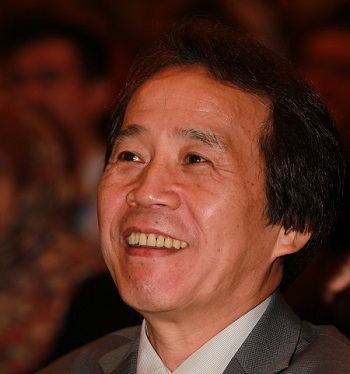
Noting that housing prices in the core of Taipei City have been skyrocketing for the past few years, Taipei City deputy mayor Charles Lin (pictured) said public housing units are “the answer to the problem”.
“The metro system in Taipei City has advanced greatly in the last two decades. However, housing prices have become unaffordable for younger generations, forcing them to move out to the outskirt areas and travel about an hour to the city centre to work,” he told TheEdgeProperty.com on the sidelines of the Smart City International Conference 2016 held last month.
All the public housing units are for rent only over a six-year period for eligible citizens with rental rates capped at 80% of the average rental rates.
“After six years, they will have to move out. Or, when their income level has grown to more than 50% of the Taipei residents’ average annual income (NT$1.19 million or RM166,590)”, explained Lin.
“We hope that through this effort, the public housing project can act as the buffer zone for them to save up for their first homes as well as reduce the outflow of young professionals,” said Lin.
According to Lin, 60% of each public housing project will be allocated for working citizens above aged 20, 30% for the socially disabled, and 10% for senior citizens. Day care centres will also be provided for children and senior citizens.
On the selected public housing units for the smart community initiative, Lin said: “Using smart technology, residents will be able to live in a much better environment. At the same time, through technology, residents can learn more about energy conservation.”
Facilities at these smart housing projects will include smart power grids and a smart metre which would help regulate power consumption.
Currently, 1,000 smart public housing units have been completed and occupied, where Lin claimed that more than 15% of electrical consumption is reduced.
Lin admitted there were challenges in implementing the project, especially the smart community initiative, as it requires policy modifications.
“It is quite challenging because the government has to break through the limitations of law. Also, a smart city requires a smart procurement policy.
“So, we have to modify the policies as we are working with entrepreneurs and the government in this. And every government is known for its bureaucracy and red tape. Some policies need to be eased in order for us to work with entrepreneurs.
“This is Taipei and we’re moving ahead. This cannot be done by just the local government, it has to involve the federal government, entrepreneurs and the public,” Lin stressed.
Never miss out
Sign up to get breaking news, unique insights, event invites and more from EdgeProp.
Latest publications
Malaysia's Most
Loved Property App
The only property app you need. More than 200,000 sale/rent listings and daily property news.