KL Local Plan 2040 gazetted, expert calls for authority-led urban renewal
- “Without a clear master plan led by the government, redevelopment risks becoming messy, disjointed, and even socially divisive,” said Mohamed Rafick.
KUALA LUMPUR (June 11): The Kuala Lumpur Local Plan 2040 (KLLP2040) has been gazetted and comes into effect today. It will be officially launched by the Prime Minister on June 24.
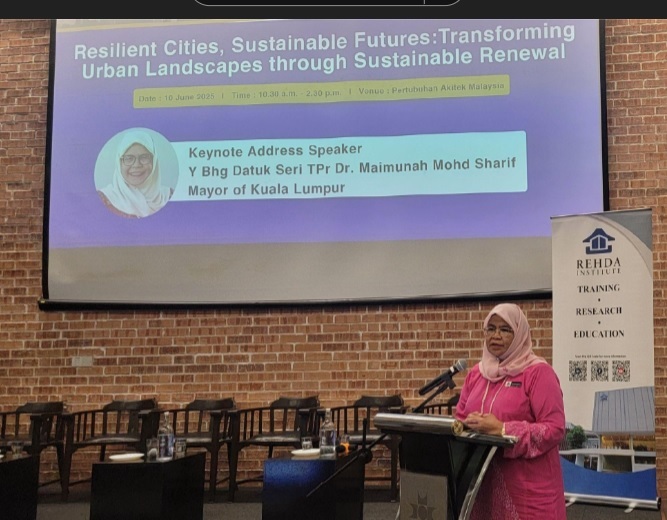
Kuala Lumpur Mayor Datuk Seri Maimunah Mohd Sharif said many planners and consultants had been involved in the process for years. It has also incorporated more than 28,000 public feedback submissions.
“The Local Plan is not just a planning document, it is our collective social contract,” she said during her speech at the Real Estate and Housing Developers’ Association (Rehda) Institute’s forum event titled “Resilient Cities, Sustainable Futures: Transforming Urban Landscapes through Sustainable Renewal” at the Malaysian Institute of Architects (PAM) Centre yesterday.
DBKL will establish task force to guide URA implementation
Maimunah also said that Kuala Lumpur City Hall (DBKL) will establish a task force to study the proposed Urban Renewal Act (URA) and guide stakeholders accordingly once the Act is implemented.
“We are here to facilitate. DBKL will also work together with professionals to assist the owners and developers who are interested in taking up the redevelopment works,” she said.
She explained that the task force aims to ensure DBKL is prepared to assist property owners with redevelopment matters under the upcoming Act.
“Urban development should be an owner-led initiative, and property developers should be the last to step in,” she stated.
Redevelopment must be authority-driven
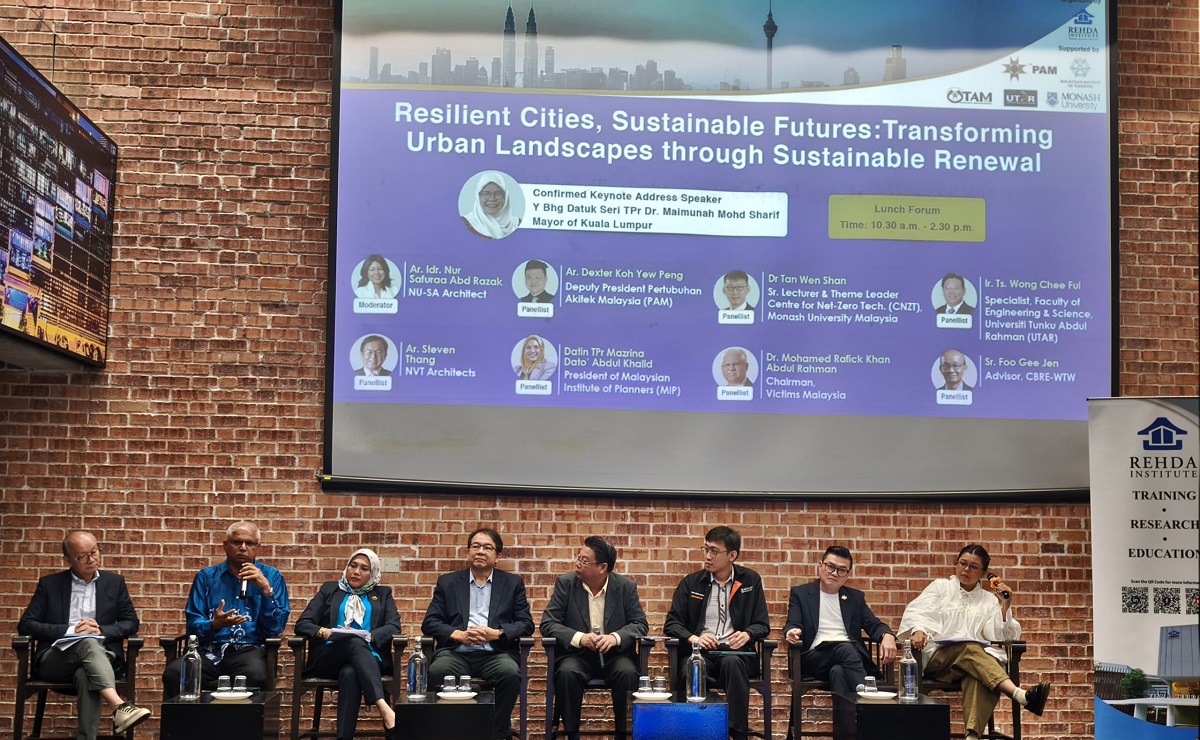
On the other hand, Victims Malaysia chairman Dr Mohamed Rafick Khan Abdul Rahman said urban redevelopment must be authority-driven, not left to individual owners or private developers to initiate.
“Without a clear master plan led by the government, redevelopment risks becoming messy, disjointed, and even socially divisive. The government needs to take the lead by outlining a comprehensive structural and local plan that details which areas should be redeveloped and why. Only then can individual owners or developers come into the picture. This top-down approach ensures that redevelopment meets broader public needs like transport, schools, and healthcare, not just private profit,” he said.
“Without proper planning for increased density, like enough schools, roads, and public transport, the problems of old developments would simply repeat themselves in new ones,” he said.
He concurred that while developers are important for their expertise in town planning, they should be the last players to come in after the government sets the direction.
“Without this, redevelopment efforts tend to be fragmented, with small groups of owners trying to strike private deals, which can trigger issues such as race sensitivities and public confusion,” Mohamed Rafick added.
He also pointed out that residents have a role to play. Redevelopment would be pointless if owners neglected responsibilities like paying maintenance fees, which often leads to the decline of even newly-built properties.
Urban renewal can drive affordable housing and sustainable growth
Meanwhile, Malaysian Institute of Planners (MIP) president Datin Tpr Hjh Mazrina Datuk Abdul Khalid said the URA initiative could help promote affordable housing within the city, which has yet to meet its targets.
She added that urban renewal efforts would also address safety concerns in the city by revitalising and redeveloping areas with potential for improvement.
“We want these areas to adopt universal design principles, ensuring they are safer and more accessible for walking, cycling, and other activities,” she said.
According to Mazrina, urban redevelopment also presents an opportunity to enhance the city’s green spaces and incorporate more low-carbon elements.
“Whether through redevelopment, regeneration, or revitalisation, urban renewal allows us to introduce more sustainable and eco-friendly features that support a low-carbon future,” she added.
Commenting further, PAM deputy president Ar Dexter Koh Yew Peng said the URA is a step in the right direction in supporting DBKL's efforts to achieve SDG (Sustainable Development Goal) 11: Sustainable Cities and Communities.
He added that the proposed Act would serve as an important enabler for urban regeneration, which is "not just about giving new life to neglected real estate”, but also about “providing a multitude of other benefits such as improved quality of life, as well as better social and economic opportunities for both existing and new communities”.
Does Malaysia have what it takes to become a Blue Zone, marked by health and longevity? Download a copy of EdgeProp’s Blueprint for Wellness to check out townships that are paving the path towards that.
Follow Us
Follow our channels to receive property news updates 24/7 round the clock.


Telegram


Latest publications
View AllFollow Us
Follow our channels to receive property news updates 24/7 round the clock.
Malaysia's Most
Loved Property App
The only property app you need. More than 200,000 sale/rent listings and daily property news.