Building costs rise in December 2025 on higher cement, sand—DOSM
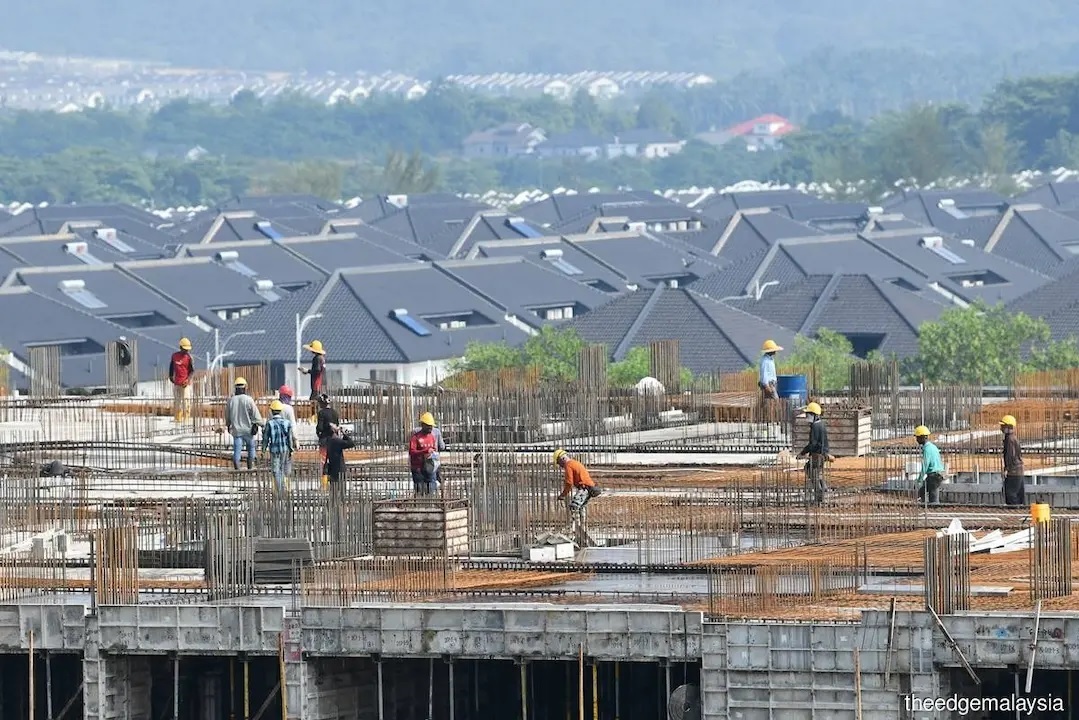
KUALA LUMPUR (Jan 12): Building costs rose in December 2025, driven by higher cement and sand prices, data from the Department of Statistics Malaysia (DOSM) showed.
The unit price index of cement increased by between 1.2% and 3.2% from the previous month, DOSM said in its Special Release for Building and Structural Works, December 2025.
Chief statistician Datuk Seri Dr Mohd Uzir Mahidin said the highest increase was recorded in Terengganu and Kelantan at 3.2%, followed by Penang, Kedah and Perlis at 1.8%, and Pahang at 1.6%.
Sand prices also edged higher in December, with month-on-month increases ranging from 0.1% to 4.8% across Peninsular Malaysia, Sabah and Sarawak, he said.
By contrast, the unit price index of steel slipped slightly, declining by between 0.1% and 1.0% on a monthly basis.
However, the price index of steel and metal sections posted modest gains of between 0.1% and 1.1% across all regions.
On a year-on-year basis, the unit price index of steel fell by between 3.2% and 7.1% in December 2025 compared with a year earlier, covering most areas nationwide. The steepest decline was recorded in Sibu at 7.1%, followed by Penang, Kedah and Perlis at 6.8%, and Kota Kinabalu at 6.5%.
Cement prices, however, rose on an annual basis, with the unit price index increasing by between 2.0% and 6.1% across all areas.
Mohd Uzir said the average price of steel, comprising mild steel round bars and Mycon 60 high tensile deformed bars, rose marginally by 0.1% to RM3,512.10 per metric tonne in December, from RM3,509.60 per metric tonne in November.
The average price of Ordinary Portland cement increased by 0.8% to RM24.55 per 50 kg bag, compared with RM24.35 previously.
Meanwhile, the Building Material Cost Index (BCI) with steel bars for all building categories in Peninsular Malaysia recorded month-on-month increases of between 0.1% and 2.0% in December. Sabah also saw gains of between 0.1% and 0.9% across all categories.
In Sarawak, the BCI with steel bars declined slightly by between 0.1% and 0.2% for several building categories in Sibu, while indices for all categories in Kuching and Miri rose by between 0.1% and 0.5%.
Unlock Malaysia’s shifting industrial map. Track where new housing is emerging as talents converge around I4.0 industrial parks across Peninsular Malaysia. Download the Industrial Special Report now.
Follow Us
Follow our channels to receive property news updates 24/7 round the clock.


Telegram


Latest publications
Follow Us
Follow our channels to receive property news updates 24/7 round the clock.
Malaysia's Most
Loved Property App
The only property app you need. More than 200,000 sale/rent listings and daily property news.