RM290m or up to RM13b? High Court to decide on Semantan Estate's mesne profit claim on May 19
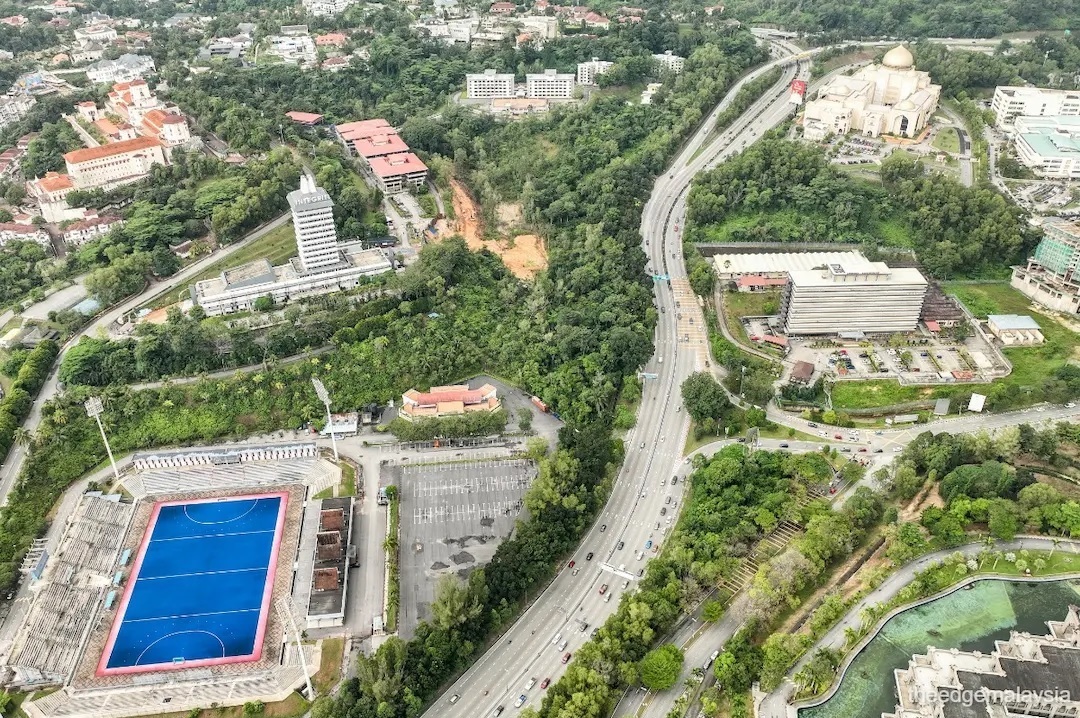
KUALA LUMPUR (Jan 22): The Seremban High Court has fixed May 19 to deliver its decision on mesne profit sought by Semantan Estate (1952) Sdn Bhd in its legal battle against the Malaysian government over the acquisition of the 'Duta Enclave'. This ruling will determine whether the government owes the estate hundreds of millions or billions of ringgit for its decades-long "trespass" on the Duta Enclave.
Mesne profits are essentially a form of monetary compensation for wrongful occupancy or trespass. They are calculated based on the rental income or profits the rightful owner could have expected to earn until the wrongful possession ends.
Judge Datuk Ahmad Shahrir Mohd Salleh fixed the date on Wednesday after hearing oral submissions from both parties. Semantan Estate was represented by its counsel Ira Biswas, while senior federal counsel Mohammad Al Saifi Hashim led the team for the government.
Before the final ruling, Ahmad Shahrir directed both parties to address several questions from the court by Feb 7. Further oral submissions, if required, would be heard on April 7.
The proceedings, which began in the Kuala Lumpur High Court in 2022, were moved to Seremban following the judge's transfer there late last year.
Background of the dispute
The 263.72-acre prime land in Jalan Duta was originally acquired by the government in 1956 for RM1.32 million. In 2009, the High Court ruled that the government had trespassed on the land, a decision upheld by the Court of Appeal and the Federal Court in 2012. A 2019 review filed by the government was also dismissed.
Then in August 2024, Ahmad Shahrir ordered the titles of this land be registered back to Semantan Estate. But this decision was reversed by the Court of Appeal in June, 2025, which ruled that the government would retain the land but must compensate the company based on 1956 valuations. The appellate court further ordered that the specific quantum of this compensation be determined by the High Court. The hearing for this compensation is set for April before judge Roslan Mat Nor.
The mesne profit claim is separate from the compensation for the land acquisition.
Semantan Estate has valued its mesne profit claim between RM3.1 billion and RM13.1 billion, while the government's estimate stands at RM290 million.
The enclave currently houses government buildings including the Inland Revenue Board headquarters, the National Archives, the Malaysian Examination Syndicate, the National Hockey Stadium, the Malaysian Anti-Corruption Commission Academy, and the Institute of Integrity.
Clashing valuation methods
During submissions on Wednesday, Semantan Estate's counsel Ira argued that the government's calculation was fundamentally flawed as it ignored current market realities.
“The government’s submissions are not grounded on facts, resulting in possible wrong valuation. Valuation must be on what is taking place on the ground and the comparison method is a permissible and recognised method,” said Ira, who appeared with Janet Chai Pei Ying and Alexie Ng Ying Ching for Semantan Estate.
Ira contended that the government incorrectly valued the land as agricultural, ignoring the massive development that has occurred on it over the last 70 years.
She said the company's valuation, conducted by independent valuer Foo Gee Jen, was based on historical acquisitions of agricultural/rubber plantation land in the surrounding area. It had also factored in developments in the surrounding prime areas like the Kuala Lumpur City Centre, the Tun Razak Exchange and Merdeka 118.
She also pointed out that the land is not currently used for agriculture. “The evidence shown (at present) is not being followed as there are a lot of government buildings,” she said.
She further pointed out that during cross-examination, even the government’s witness valuers conceded to the 2%-3% rate of return used in Foo's calculations—a key metric in determining rental yield.
In response, senior federal counsel Al Saifi defended the government's use of "extrapolation" over the company's five-year interval method. “The extrapolation method adopted by the government is more accurate and valid as it takes into account the annual changes to the economy, compared to a five-year period,” he said.
The government's defence rests on the 'Wragg Report'—a 1956 appraisal done by AA Wragg, the nation's first chief valuer. The state argues that because the land was registered as a rubber plantation and remains so, all compensation should be extrapolated from Wragg's 1956 baseline of RM3,784 per acre
Al Saifi argued that this approach—using a historical "base calculation" adjusted for annual economic changes—is a recognised legal benchmark under the Malaysian Valuation Standards. In contrast, the company's calculation did not have a baseline, Al Saifi pointed out. “Hence, the private valuation done is not based on a recognised method and should be rejected. Is the calculation a recognised standard?”
He further argued that the five-year interval method is typically based on rental agreements, which is why the government valuers did not dispute the 2-3% return rate in theory. But the reality is that no rental agreements exist for the Duta Enclave, he said, pointing out the fundamental dispute over how the rate of return should be applied to land with no commercial lease history.
Unlock Malaysia’s shifting industrial map. Track where new housing is emerging as talents converge around I4.0 industrial parks across Peninsular Malaysia. Download the Industrial Special Report now.
Follow Us
Follow our channels to receive property news updates 24/7 round the clock.


Telegram


Latest publications
View AllFollow Us
Follow our channels to receive property news updates 24/7 round the clock.
Malaysia's Most
Loved Property App
The only property app you need. More than 200,000 sale/rent listings and daily property news.