Powering smart industries: 5G expansion targets highways, industrial corridors
This article first appeared in the Industrial Special Report in November 2025.
Malaysia’s national 5G rollout is shifting strategy, moving beyond initial population targets to prioritise seamless high-speed connectivity along key transport routes and industrial corridors, ensuring both regulatory compliance and improved user satisfaction.
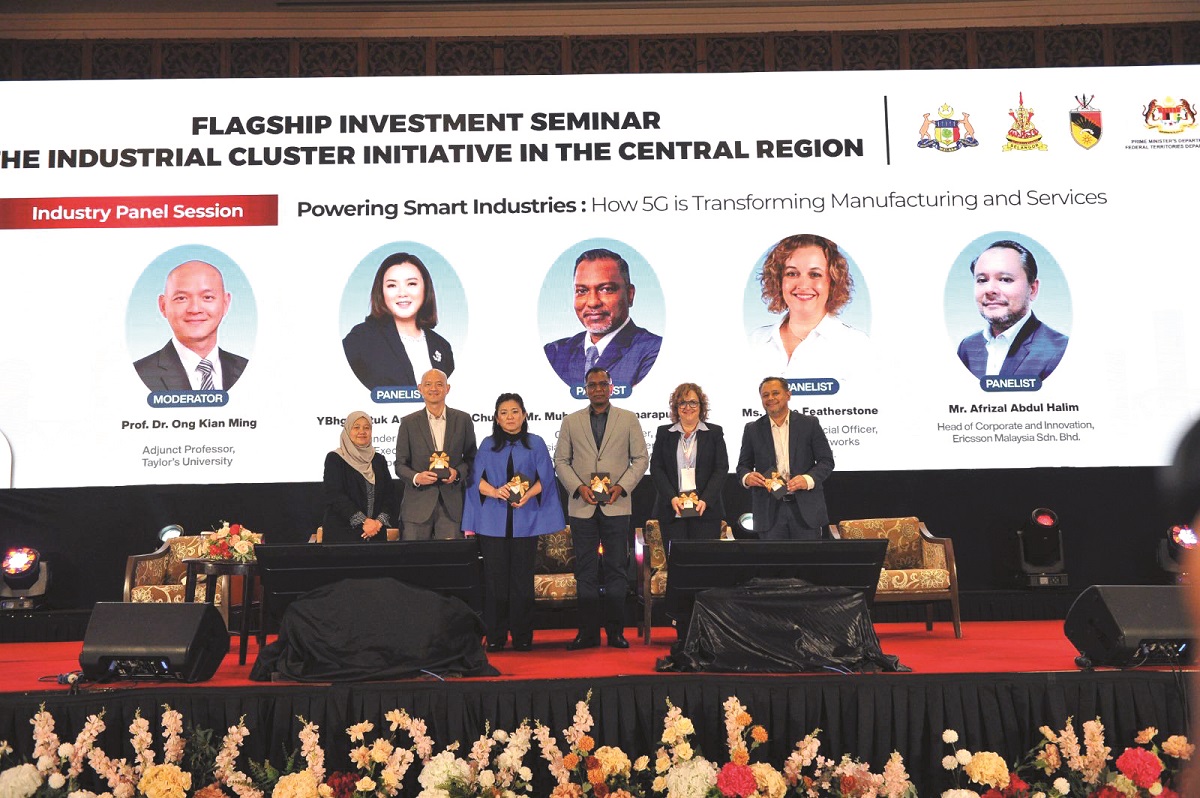
Speaking at Malaysian Investment Development Authority (Mida)’s “Central Region Industrial Cluster Development Initiative” seminar in Kuala Lumpur on Nov 11, Ericsson Malaysia head of corporate and innovation, Afrizal Abdul Halim highlighted the pivotal role of targeted enhancements once existing coverage obligations are met.
He noted that systematic tracking and performance reporting by the Malaysian Communications and Multimedia Commission (MCMC) are essential for identifying underserved areas, and making data-driven adjustments along strategic highways.
“These efforts are essential to ensure that network quality meets both the expectations of users, and the standards set by regulatory authorities,” Afrizal said.
This planned expansion aligns with the government’s broader vision under the 13th Malaysia Plan to extend high-speed connectivity to 98% of residential, industrial, and rural areas by 2030, underpinning the adoption of advanced technologies across the digital economy.
Industry taps 5G integration to solve labour and quality issues
The push for better connectivity is already yielding results in sectors where efficiency and consistency are critical. Industry leaders highlighted the transformative potential of 5G-enabled automation in enhancing productivity and operational insights, particularly in agriculture and manufacturing.
Hernan Corporation founder and group CEO Datuk Anna Teo Lee Chu of and known as the “Musang Queen”, shared how businesses are leveraging 5G to address critical challenges in food production, specifically contamination prevention, and quality control.
Hernan is the country’s largest cold chain manufacturer, and distributes and exports Malaysian durians and durianinspired products.
Her company introduced automated packing systems to reduce reliance on manual labour while ensuring superior hygiene standards. “The scale in China is huge, and relying solely on human labour wasn’t practical,” she explained.
Teo emphasised that technology was crucial for consistency. “The most critical factor was preventing contamination from human contact, protecting against diseases and hazards in food production,” she added, demonstrating how 5G is not just about speed, but about operational reliability, and standards enforcement.
AI and private networks drive efficiency
The deployment of 5G is swiftly moving towards integration with advancedintelligent systems, enabling real-time monitoring and predictive analyse across industrial operations.
Enfrasys Networks chief commercial officer Claire Featherstone noted that private 5G networks are emerging as a critical enabler for digital transformation.
Private networks allow for the deployment of AI-powered robotics, autonomous systems, and machine vision applications without interference from external networks, ensuring superior security and reliability.
“Enterprises reported reductions in production downtime, improvements in output, and enhanced collaboration across multiple facilities,” she explained.
For example, industrial robotics in smart factories can locally process data from thousands of sensors, ensuring realtime decision-making and operational efficiency.
This transformation extends to agriculture and remote operations, where IoT sensors and AI-driven analytics automate processes and predict crop yields, minimising waste. Critically, innovation ecosystems are being established to support local start-ups and SMEs, granting them access to testing facilities and guidance to successfully integrate 5G, and achieve measurable productivity gains.
The discussion was moderated by Taylor’s University, adjunct professor, Prof Dr Ong Kian Ming, with featured panelists: Teo, Malaysian Research Accelerator for Technology & Innovation chief digital officer Muhundhan Kamarapullai, Featherstone, and Afrizal.
Malaysia’s upper hand lies in forging supply chain alliances
Industry leaders said Malaysia must increase its focus on regional and international supply chain partnerships to enhance its industrial competitiveness and resilience.
Speaking at a panel session on “Strategic Supply Chain Development and Experience” at the Malaysian Investment Development Authority (Mida)’s Flagship Investment Seminar on Nov 11 in Kuala Lumpur, Netherlands-based high-tech manufacturing hub Brainport Industries Campus managing director John Blankendaal noted the shift in manufacturing strategies.
“A key trend is the shift from global to regional integration, with companies moving towards local-for-local production to reduce risks, shorten supply routes, and improve responsiveness to customers. Malaysia’s strategic location, skilled workforce, and industrial maturity make it well placed to become a regional hub in this emerging model,” he said.
On the competition from regional countries, American Malaysian Chamber of Commerce (AMCHAM) CEO Datuk Siobhan Das noted Malaysia retains an edge beyond just costing.
“The competition from China, Vietnam, and Thailand continues to shape strategies.
While Malaysia cannot compete purely on cost, it holds an advantage in quality, technical capability, and reliability,” she said.
Besides these factors, the speakers pointed out that innovation, and transparency are the foundations of modern, resilient supply chains; which are crucial differentiators in bolstering Malaysia as the preferred industrial investment destination.
Unlock Malaysia’s shifting industrial map. Track where new housing is emerging as talents converge around I4.0 industrial parks across Peninsular Malaysia. Download the Industrial Special Report now.
Follow Us
Follow our channels to receive property news updates 24/7 round the clock.


Telegram


Latest publications
View AllFollow Us
Follow our channels to receive property news updates 24/7 round the clock.
Malaysia's Most
Loved Property App
The only property app you need. More than 200,000 sale/rent listings and daily property news.