Local councils can act on abandoned vehicles in strata properties — the law already allows it
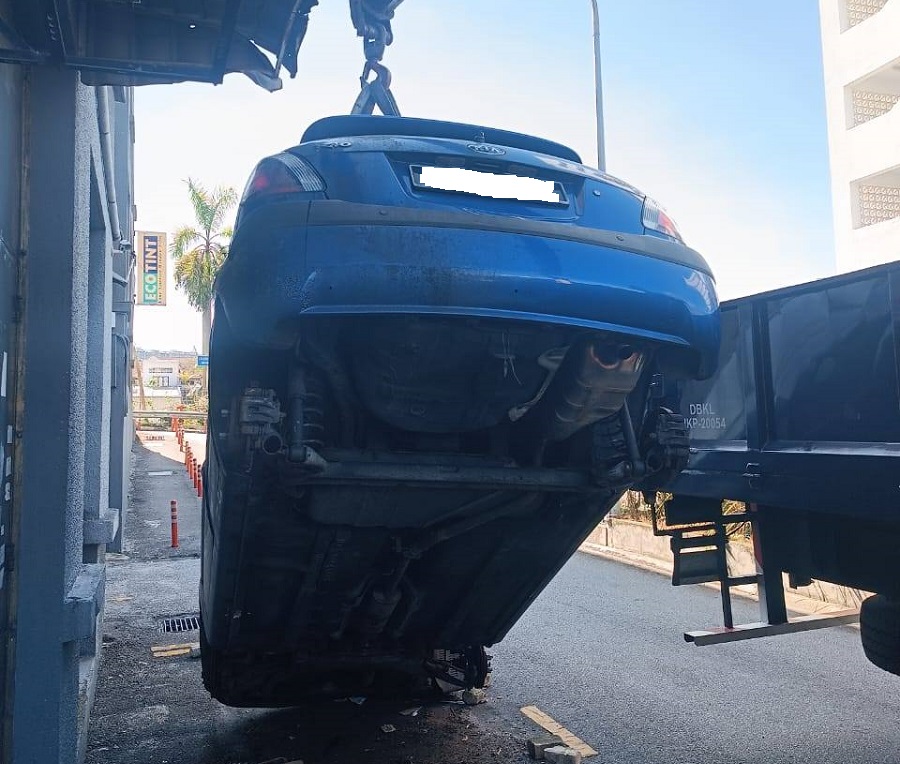
On Feb 26, 2026, the Deputy Minister of Housing and Local Government, Datuk Aiman Athirah Sabu, reportedly stated in the Dewan Rakyat that local councils in Peninsular Malaysia “have no authority to take action against abandoned vehicles within strata-titled properties — unless the Joint Management Body (JMB) or Management Corporation (MC) formally requests it”.
The statement has since circulated widely in media coverage and discussions among strata residents, many of whom are already dealing with the persistent problem of abandoned vehicles occupying visitor bays, blocking access roads or deteriorating in shared spaces.
However, a careful reading of the legal framework governing strata developments suggests that the position may be more complex than the statement implies. Existing legislation — particularly the Strata Management Act 2013 (SMA), together with the Strata Management (Maintenance and Management) Regulations 2015 (SMReg) and other related statutes — already provides mechanisms through which such situations can be addressed.
While the management of common property in strata schemes is primarily entrusted to management bodies such as the JMB and MC, the law does not create a regulatory vacuum within these developments. Instead, the statutory framework establishes a system where management bodies, the Commissioner of Buildings (COB), and local authorities each have defined roles that may intersect when issues of nuisance, safety or regulatory compliance arise.
Understanding how these mechanisms operate together is essential to clarifying what actions may already be possible under existing law.
Statutory responsibilities of management bodies
The Strata Management Act 2013 was enacted to ensure the proper maintenance and management of buildings and common property in strata developments. To achieve this objective, the Act establishes statutory management bodies responsible for overseeing the day-to-day administration of these properties.
Before the issuance of strata titles, the JMB is responsible for managing the development. Once strata titles are issued and the management corporation is established, these responsibilities are transferred to the MC.
Under Section 21(1)(a) of the SMA, the JMB must “properly maintain and manage the building or land intended for subdivision into parcels and the common property”.
Similarly, Section 59(2) of the Act imposes analogous duties on the MC once it has been established.
These statutory duties extend to all areas designated as common property within a strata scheme. This includes spaces such as visitor parking bays, internal access roads, driveways, loading areas and other shared facilities where vehicles may be parked or stored.
Management bodies are therefore expected to ensure that these areas are properly maintained and that their use does not interfere with the rights and safety of other residents.
By-laws governing the use of common property
Further guidance on how common property should be used is provided by the Strata Management (Maintenance and Management) Regulations 2015.
The Third Schedule of the SMReg sets out prescribed by-laws that apply to strata developments unless amended by the management corporation with the approval of the Commissioner of Buildings.
Among other things, these by-laws prohibit parcel owners or occupiers from:
*obstructing common property;
*causing nuisance or hazards; and
*using common areas in a manner that interferes with the lawful use and enjoyment of those spaces by other residents.
Vehicles abandoned for extended periods in visitor parking bays, fire access routes or other shared areas may therefore fall within the scope of obstruction or nuisance under these by-laws.
In such circumstances, the management body has a responsibility to enforce the relevant by-laws and take reasonable steps to restore proper use of the affected areas.
If a management body fails to address persistent obstructions or hazards on common property, questions may arise as to whether it is fulfilling its statutory obligations under the SMA.
Oversight by the Commissioner of Buildings
Although management bodies are responsible for the immediate administration of strata developments, the SMA also provides a supervisory structure through the Commissioner of Buildings (COB).
The COB is appointed within the local authority and is tasked with overseeing the implementation of the SMA within its jurisdiction.
Under the Act, the COB has various powers that include the ability to:
*investigate complaints relating to strata management;
*direct JMBs or MCs to perform their statutory duties;
*compound certain offences; and
*initiate enforcement action where breaches of the Act or its regulations occur.
Residents who believe their management body has failed to address issues affecting common property — including abandoned vehicles that create obstruction or nuisance — may therefore lodge complaints with the COB for investigation.
Because the COB operates within the structure of local government, this mechanism demonstrates that strata governance already involves an element of public regulatory oversight.
Continued application of municipal laws
Strata developments, although privately owned, do not exist entirely outside the scope of public law.
Local authorities continue to exercise powers under various statutes relating to public health, environmental management and nuisance control within their jurisdictions.
One relevant provision is Section 72 of the Local Government Act 1976, which empowers local authorities to take reasonably practicable measures to prevent or remedy any condition that is likely to be injurious or dangerous to health or constitutes a nuisance.
Abandoned vehicles may potentially fall within this category where they:
*obstruct emergency access routes or fire lanes;
*deteriorate and leak fluids that pose environmental risks;
*accumulate debris or become breeding grounds for pests; or
*create safety hazards within shared spaces.
Importantly, the Local Government Act does not explicitly restrict these powers only to public roads. The legislation allows local authorities to address conditions within their jurisdiction that affect health, safety or public welfare.
There is also no express provision within the Strata Management Act 2013 that completely removes strata developments from the reach of these broader municipal responsibilities.
Interpreting overlapping statutes
When different statutes interact, Malaysian law provides guidance on how they should be interpreted.
Under Section 17A of the Interpretation Acts 1948 and 1967, written laws are to be interpreted in a manner that promotes their underlying purpose.
The purpose of the Strata Management Act is to regulate the governance and maintenance of strata developments through management bodies. It was not intended to eliminate the broader regulatory responsibilities of municipal authorities.
In practice, this suggests that the various statutes should be read as operating concurrently rather than exclusively.
Management bodies are responsible for maintaining and enforcing rules relating to common property. The COB supervises compliance with strata management legislation. At the same time, local authorities continue to exercise powers relating to public safety, nuisance and environmental health.
Enforcement mechanisms available to residents
Where abandoned vehicles become a persistent issue within a strata development, residents are not without recourse.
Several mechanisms exist within the current legal framework.
Residents may first notify the JMB or MC and request enforcement of the relevant by-laws governing the use of common property.
If the management body does not take action within a reasonable time, residents may lodge a complaint with the Commissioner of Buildings, who has powers under the SMA to investigate and direct compliance.
Alternatively, disputes relating to strata management may be brought before the Strata Management Tribunal, which has jurisdiction to hear claims arising under the Act.
Under Section 120 of the SMA, an award made by the Tribunal is treated as a court order and may be enforced accordingly.
These mechanisms allow residents to pursue enforcement even when management bodies fail to act promptly or effectively.
Proposed legislative amendments
The Ministry of Housing and Local Government has also indicated that amendments to the Road Transport Act 1987 are being considered to enhance enforcement powers relating to abandoned vehicles.
Such amendments may help clarify administrative procedures and provide additional mechanisms for removing vehicles where ownership is uncertain.
However, these proposals should not necessarily be interpreted as evidence that no legal framework currently exists.
Rather, they may be understood as efforts to strengthen or streamline enforcement processes within an already established regulatory structure.
Avoiding regulatory gaps
The issue of abandoned vehicles highlights the importance of coordination between management bodies and public authorities.
If strata developments were treated as areas entirely beyond the reach of municipal regulation, practical difficulties could arise.
Vehicles left unattended for long periods may obstruct emergency access routes, create sanitation concerns, attract criminal activity or degrade shared facilities that are relied upon by residents.
These issues can affect not only individual property owners but also broader concerns of safety and urban management.
For this reason, the statutory framework governing strata living appears to contemplate a system in which private management responsibilities coexist with public regulatory oversight, rather than operate in isolation.
Conclusion
The management of abandoned vehicles within strata developments is a complex issue that involves several intersecting areas of law.
The Strata Management Act 2013, together with its regulations, places clear duties on management bodies to maintain and manage common property and enforce by-laws governing its use.
At the same time, the Commissioner of Buildings provides supervisory oversight to ensure these duties are carried out.
Beyond the strata framework, municipal legislation such as the Local Government Act 1976 continues to empower local authorities to address conditions that may affect health, safety or public welfare within their jurisdictions.
Taken together, these provisions suggest that the law already provides multiple pathways through which abandoned vehicles and similar hazards within strata developments may be addressed.
While policy discussions and proposed legislative amendments may help refine enforcement mechanisms in the future, the existing statutory framework already offers residents several avenues for seeking action when problems arise.
Understanding how these provisions interact is therefore essential to ensuring that strata communities are able to maintain safe and well-managed living environments.
This article is written jointly by Datuk Chang Kim Loong, Honorary Secretary-General of the National House Buyers Association (HBA), and Koh Kean Kang, HBA Legal Advisor and a practicing lawyer.
HBA is a voluntary non-government and not-for-profit organisation manned wholly by volunteers.
HBA can be contacted at:
Email: [email protected]
Website: www.hba.org.my
*Tel: +6012 334 5676*
Editor’s note: The views expressed are the writers' own and do not necessarily reflect EdgeProp's editorial position.
..........
Unlock Malaysia’s shifting industrial map. Track where new housing is emerging, as talents converge around Industry 4.0 parks across Peninsular Malaysia. Download the Industrial Special Report now.
Follow Us
Follow our channels to receive property news updates 24/7 round the clock.


Telegram


Latest publications
View AllFollow Us
Follow our channels to receive property news updates 24/7 round the clock.
Malaysia's Most
Loved Property App
The only property app you need. More than 200,000 sale/rent listings and daily property news.