The income shift reshaping Malaysia’s emerging townships
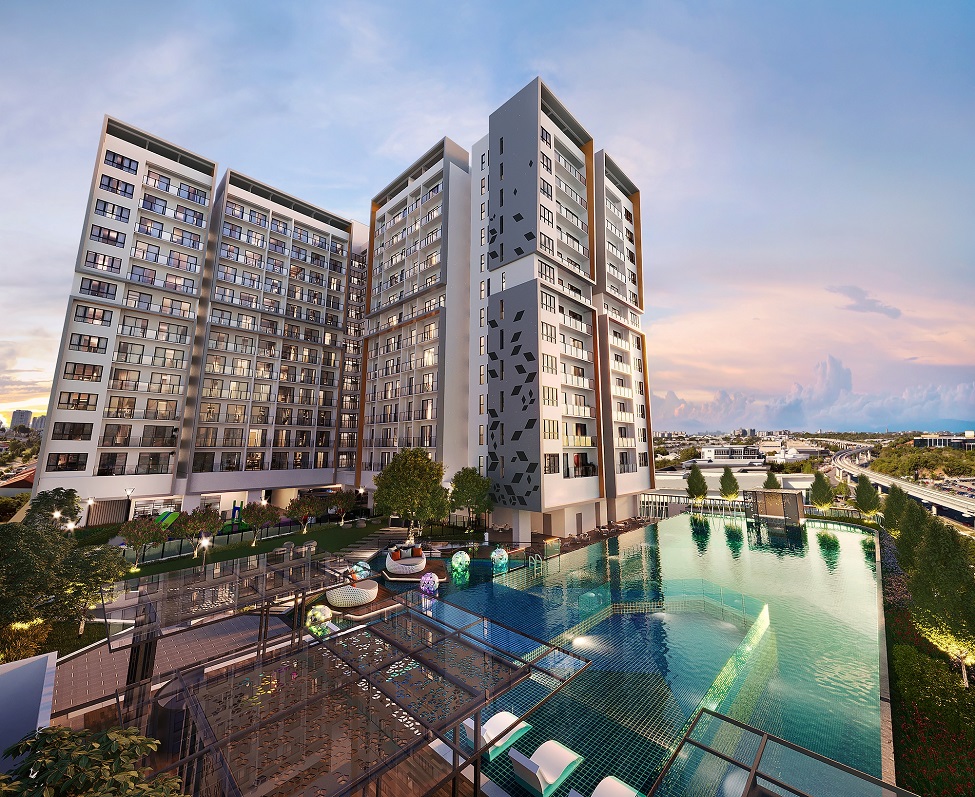
Despite changing lifestyles, one housing preference among young Malaysian families appears remarkably consistent: the aspiration to live in modern, well-designed communities.
EdgeProp analysed a segment of household demographics and income trends in Klang Valley’s emerging growth corridors and the population data suggests that demand is not driven by a sudden influx of younger buyers, but by something else entirely.
While the proportion of residents aged 30 to 49, often considered the prime homebuying demographic, has remained relatively stable over the past few years, household incomes in Semenyih, Kajang and Klang have grown significantly.
This suggests that many young families are not necessarily moving into these neighbourhoods in greater numbers — but are becoming financially ready to upgrade their quality of life.
A stable core of young families
EdgeProp’s analysis on EPIQ shows that the 30–49 age group consistently makes up roughly one-third of the population across the three areas.
Below 29 year olds remain a huge population across all of Klang Valley. But in Hulu Langat district, the proportion of residents in the 30-49 age group make up the second majority, at 33.7% in 2020 and 33.8% in 2024.
A similar pattern can be observed in Klang, where the demographic remained largely unchanged at 33.9% in 2020 and in 2024. Meanwhile in the Glenmarie-Kelana Jaya corridor, the proportion of residents aged 30 to 49 rose marginally from 33.8% to 34.1% during the same period.
In other words, the size of the prime homebuying demographic has not dramatically increased in these areas. Instead, the demographic structure has remained relatively stable, with younger residents aged below 29 making up the majority of the population across Klang Valley, and older residents aged 50 and above accounting for about one-fifth.
Income growth tells a different story
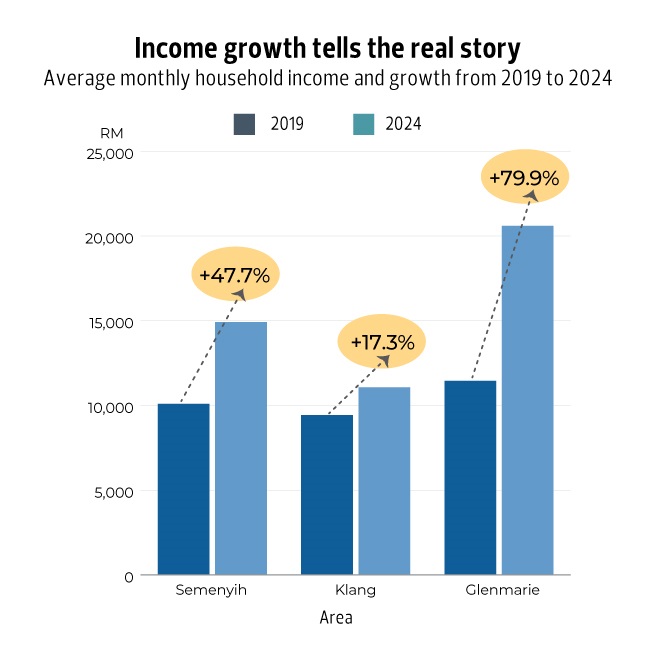
Where the most significant change appears is in household income. Between 2019 and 2024, average household income rose sharply across all three areas but at very different rates, according to data from EdgeProp EPIQ.
The most dramatic increase was recorded in around Glenmarie-Kelana Jaya neighbourhoods, where household income surged by 79.85%, rising from RM11,456 in 2019 to RM20,604 in 2024.
This makes the area the highest-income location among the three, reflecting its position within a mature urban corridor close to Subang Jaya and Shah Alam.
Around the Semenyih-Kajang corridor, household income increased by 47.7%, growing from RM10,097 to RM14,914 over the same period. Meanwhile in Klang, incomes grew at a slower but still notable pace of 17.3%, from RM9,431 to RM11,065.
The pattern suggests that while the demographic base remains stable, purchasing power within this group is rising, allowing more households to consider upgrading or moving into homes located in more developed communities.
The sharp increase in income levels in some locations may also be partly influenced by the types of residential projects entering the market. Newer developments, particularly in lifestyle-oriented townships, tend to attract buyers with higher household incomes.
This effect is most visible in areas such as Klang and Glenmarie-Kelana Jaya neighbourhoods, where a growing pipeline of modern, contemporary homes has drawn professionals and upgraders seeking larger living spaces and community-based neighbourhoods, with relatively accessible connectivity.
In contrast, areas where the housing supply remains dominated by older properties tend to show more moderate income growth. As a result, the introduction of newer developments can gradually reshape the socioeconomic profile of a neighbourhood.
Lifestyle-driven communities
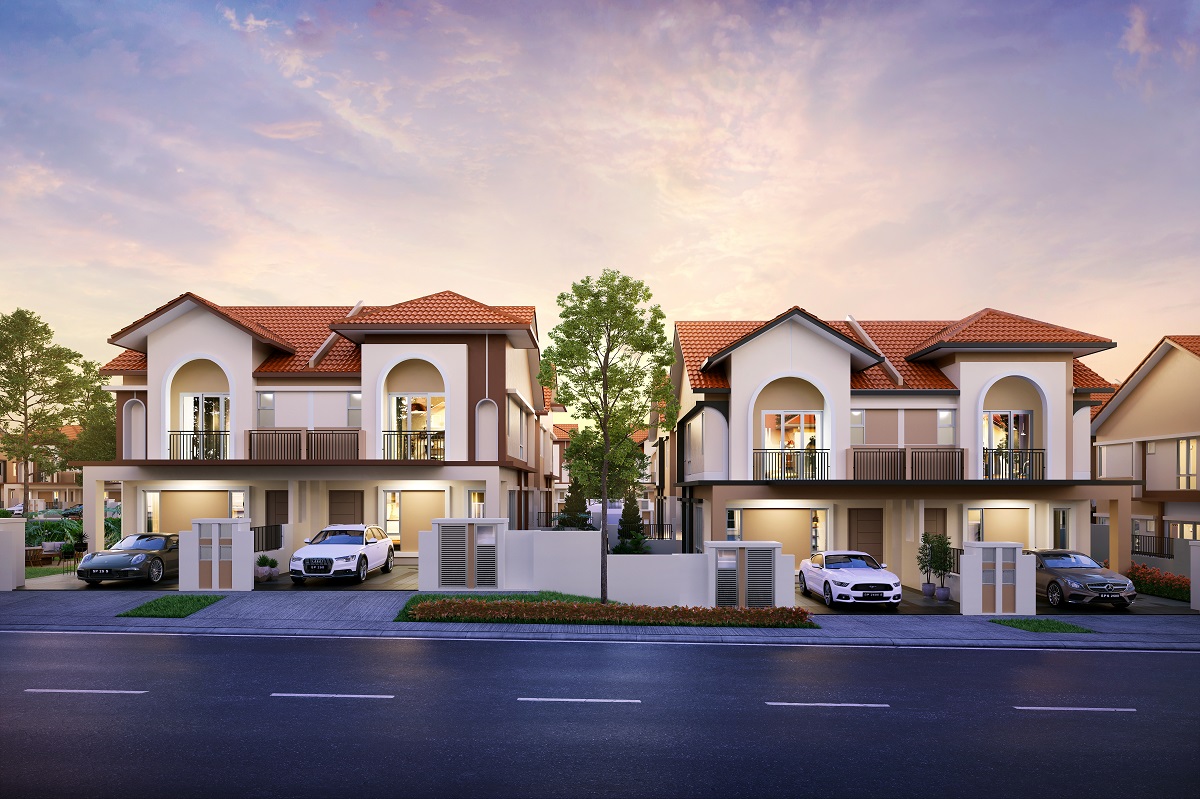
Despite the rise of high-density urban living, the aspiration to move into well-designed and well-connected communities remains strong among Malaysian families, particularly those entering their peak earning years.
Modern layouts today are designed for functionality and purpose, allowing families to accommodate children, elderly parents and visiting relatives more comfortably. Access to outdoor areas provides room for play and gatherings, while quieter neighbourhood environments appeal to families seeking long-term stability.
These factors help explain why townships offering community-oriented environments continue to attract young Malaysian families even as urban living patterns evolve. Rather than replacing other housing choices, modern lifestyles may simply be reshaping where and how these neighbourhoods are developed.
As newer developments enter the market, these areas are likely to continue attracting upgrader families in their peak earning years. Over time, this gradual shift may redefine the character of these townships as they reflect the lifestyle priorities and aspirations of a new generation of homeowners.
..........
In the coming weeks, EdgeProp will explore what this “Generasi Baru” truly represents, from the aspirations shaping their homes to the lifestyles influencing how new communities are built.
Follow Us
Follow our channels to receive property news updates 24/7 round the clock.


Telegram


Latest publications
View AllFollow Us
Follow our channels to receive property news updates 24/7 round the clock.
Malaysia's Most
Loved Property App
The only property app you need. More than 200,000 sale/rent listings and daily property news.