Policy shifts, lifestyle stays: What makes expatriates buy homes in Malaysia
This article appeared in the April 9, 2026 issue of the monthly print edition. Subscribe now.
The new policy for expatriate employment pass (EP) has spotlighted how broader employment and residency regulations influence foreigners’ housing decisions in Malaysia.
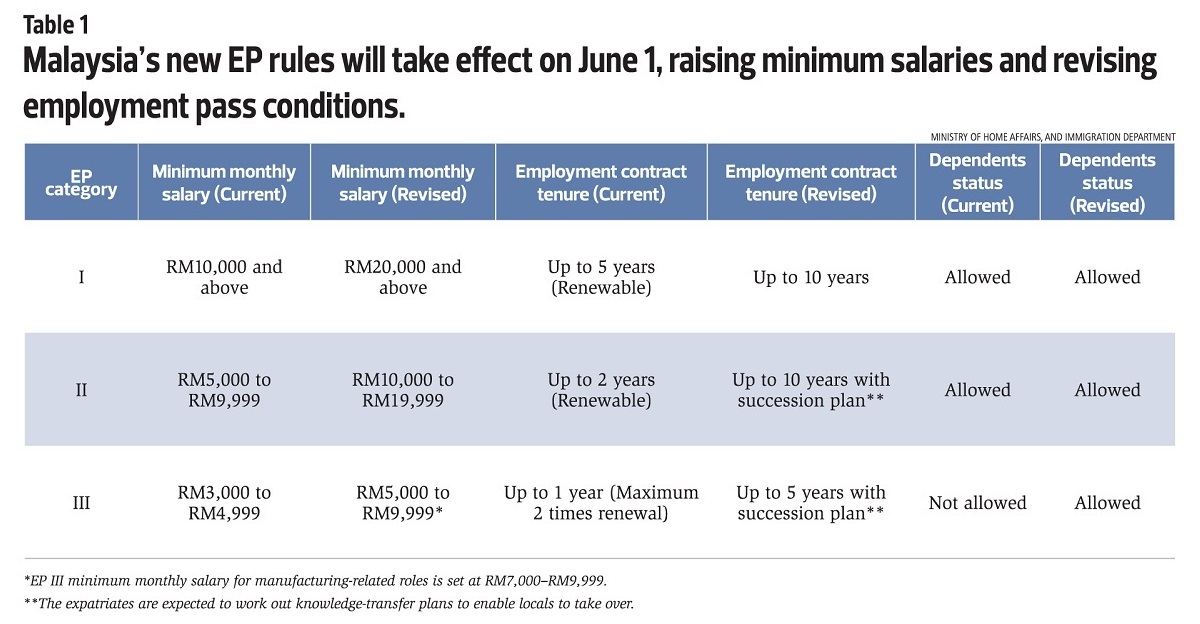
An announcement by the Ministry of Home Affairs (Moha) early this year stated that come June 1, the salary tiers for the three categories will be revised upwards. All categories will also be allowed to bring dependents.
However, instead of unspecified renewable terms, the new EP will be capped at 10 years for Tier II (RM10,000–RM19,999 monthly salary), and Tier I (RM20k-and-above monthly salary) (Table 1).
The EP is a work permit issued by the Immigration Department that allows foreign professionals to live and work in Malaysia, with different categories based on salary levels, contract duration, and eligibility to bring dependents.
“In addition to salary adjustments, this policy also introduces employment duration for expatriates, which previously had no specific limit. The setting of this duration is not only intended to recognise expatriates with high-level expertise to continue contributing to the country, but also serves as guidance for employers in planning a more structured succession plan with the involvement of the local workforce,” said the statement by Moha.
Notwithstanding, expatriate numbers in Malaysia have been trending downwards in recent years. According to the Immigration Department, 154,000 expatriate passes were issued in 2023, declining to 120,000 in 2024, and further to 105,000 in 2025.
Meanwhile, Housing and Local Government Minister Nga Kor Ming was reported saying on Aug 3, 2025 during a parliamentary session that foreigners accounted for 1,459 property purchas-es in 2024, representing 0.56% or RM3.054 billion of the 259,058 property transactions worth RM103.9 billion nationwide.
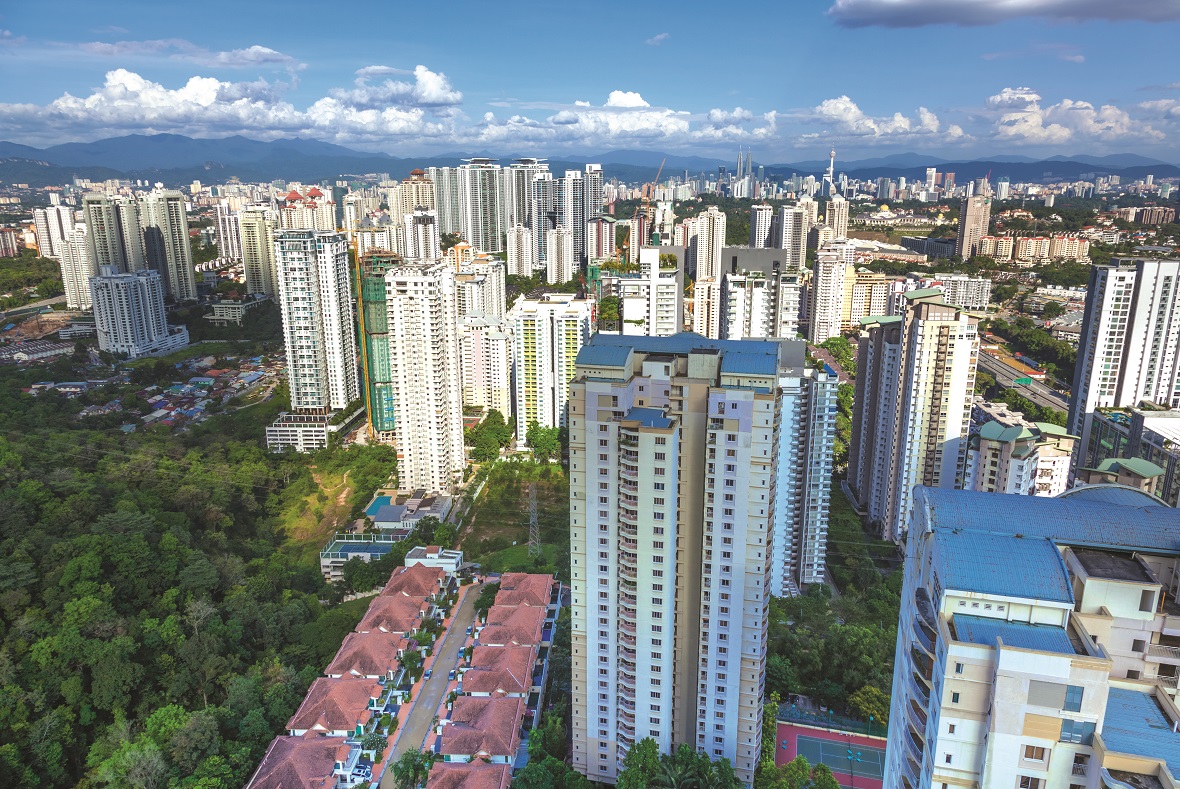
While the percentage may be small, the billion-ringgit total transaction value could be significant for developments targeting the expatriate market, such as Bangsar and Mont’Kiara in Kuala Lumpur. So, will the 10-year limit in the upcoming regulation impact expatriates’ property-buying decisions in Malaysia?
EdgeProp speaks to property consultants who specialise in the Mont’Kiara market, and an expatriate to find out more.
Long-term ownership driven by family and stability
Maxland Real Estate CEO Nicholas Yim says eligibility for dependent passes and family relocation plays a key role in housing decisions.
“Once family relocation becomes feasible, housing priorities shift decisively from flexibility to stability,” he tells EdgeProp.
Yim adds that career visibility and contract certainty, along with family milestones such as schooling, are key triggers moving expatriates from renting to buying.
“The upcoming changes to EP rules have accelerated the transition from renting to ownership, particularly among mid- to senior-level professionals planning multi-year stays,” he says.

Similarly, Kommons Realty business development strategist Freeman Woo says his client, an expatriate from China, who officially moved here three months ago, tells him that the recent changes to expatriate employment and residency rules have not deterred his long-term plans.
He plans to stay at least five years, having purchased a unit in Mont’Kiara, Woo tells EdgeProp.
In fact, Woo notes that the new EP salary requirements could change buyer profiles.
“Although volume may be lower, purchasing power is stronger. Prices here are still relatively affordable compared to Singapore, Hong Kong or China, and there is room for appreciation over the long term,” he says.
International schools and community keep expats anchored
For the expatriates who do buy properties in Malaysia, what are the factors influencing their purchase decisions?
Woo says schooling and family considerations remain a major draw for expatriates deciding whether to buy property, regardless of changes to EP policies.
“With several international schools around Mont'Kiara, many prefer to stay close for convenience,” he says.

Lifestyle, safety, and a proven expatriate-friendly environment also play a role.
“Mont’Kiara in particular is mature, secure, and already proven to be expatriate-friendly, so it feels familiar and comfortable for them,” he adds.
Concurring, Yim says, “Once expatriates begin to view Malaysia as a medium- to long term base rather than a temporary assignment, ownership in Mont’Kiara emerges as both a life-style-driven and financially rational choice”.
“International schools, family-oriented amenities, and expatriate networks are concentrated in Mont’Kiara,” he says.
Similarly, Woo’s mainland Chinese client says he has chosen to buy a unit in Mont’Kiara, citing: “It was for my children to study at Garden International School (GIS)”.

Meanwhile, a US citizen of Chinese descent tells Woo that work brought him to KL, but lifestyle and community have kept him here.
“Mont’Kiara was a no-brainer for my family because the apartments are high-end and the expat community makes it easy to feel at home,” he shares.
He has chosen to buy rather than rent, viewing the property as a long-term investment and potential retirement option, regardless of his employment status.
“While most expatriates rent, we wanted to anchor ourselves in the community, so we bought a unit in Seni Mont Kiara.
“Even after moving back to the US [after staying in Malaysia for four years], we decided to keep it as it’s a solid rental investment, and potentially a retirement option,” he adds.
Long-term investment more worth it
On the other hand, Vineeth Nair, an expatriate who has worked and lived in Malaysia for more than 10 years, says the current policy offers more flexibility, as renewal terms for higher-tier passes are less clearly capped compared with the revised system, which introduces a defined maximum duration.
As such, he says the new policy will make them think twice before investing in a property.
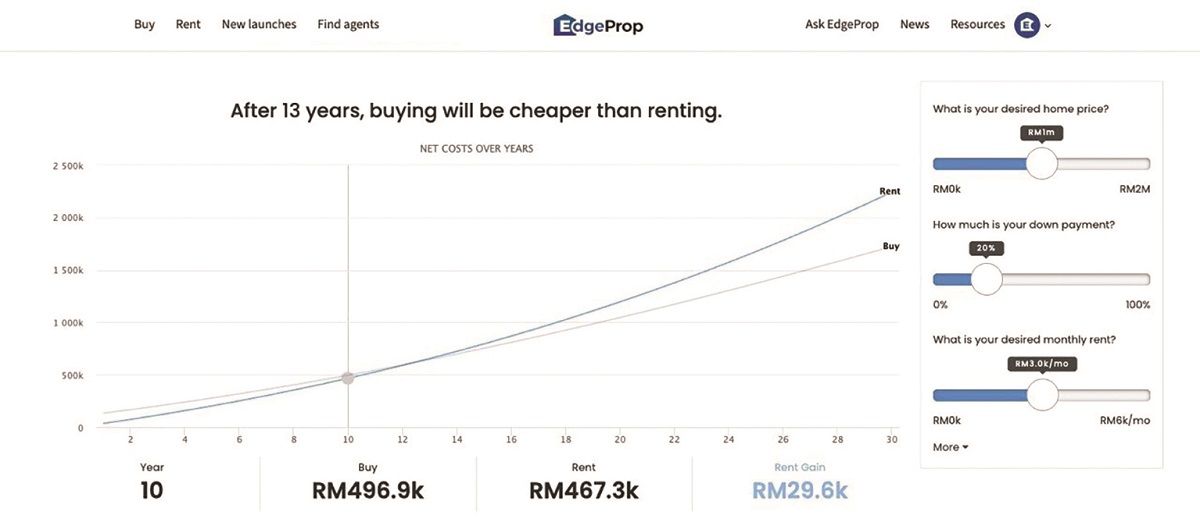
“Expatriates who live in KL already have to contend with a minimum price of RM1 million, with a 30% down payment if they want to buy a property. So, it will be more cost-effective to rent than to buy if you are allowed to stay only up to 10 years,” he tells EdgeProp.
Based on EdgeProp’s calculations of a RM3,000 monthly rent versus a RM1 million property purchase, the monthly installments would become cheaper than the rent from the 13th year onwards (Chart 1).
Vineeth warns that some expatriates might consider other countries like Australia: “Buying property there plus long-term benefits becomes a better option. In Malaysia, the longterm growth is limited”.
..........
EdgeProp's monthly print edition is out! Free delivery is available for selected regions. Subscribe now.
Follow Us
Follow our channels to receive property news updates 24/7 round the clock.


Telegram


Latest publications
View AllFollow Us
Follow our channels to receive property news updates 24/7 round the clock.
Malaysia's Most
Loved Property App
The only property app you need. More than 200,000 sale/rent listings and daily property news.