Strata Conference 2026: Malaysia reviewing Act 757 as strata challenges evolve — Aiman Athirah
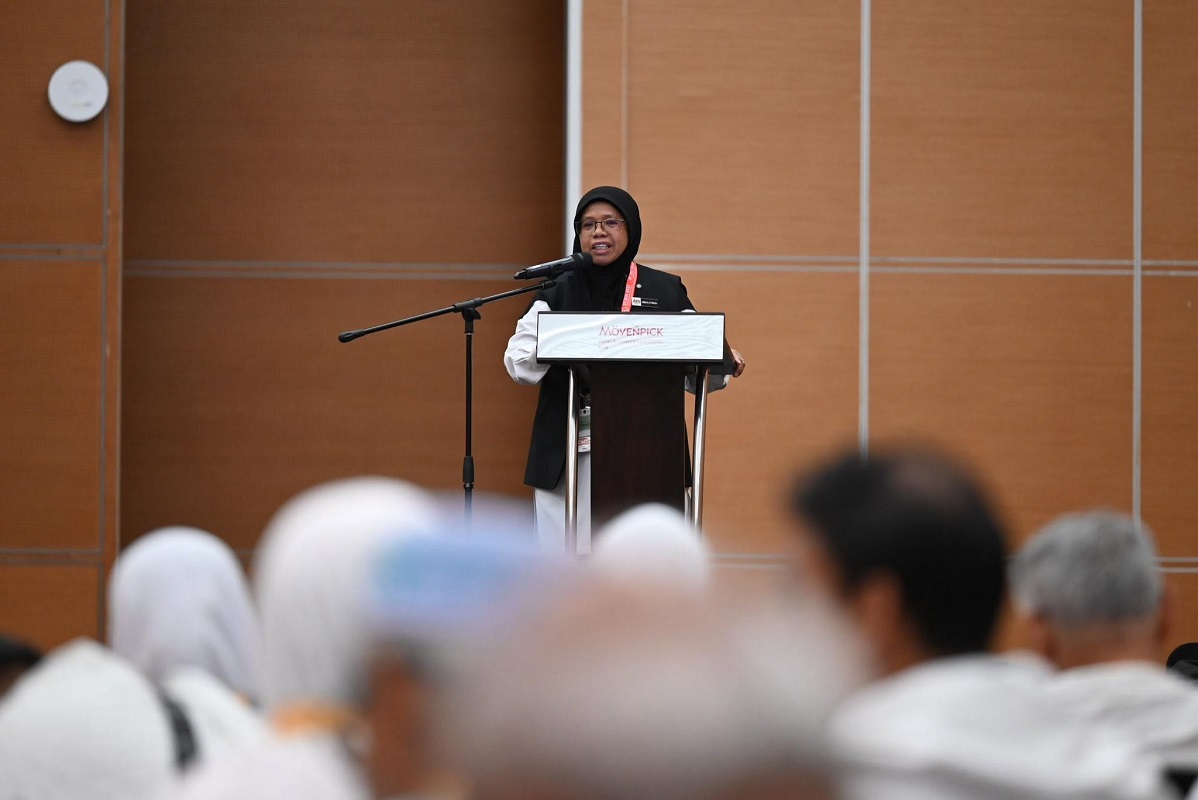
SHAH ALAM (June 11): Malaysia is reviewing Act 757 to ensure strata governance keeps pace with rapid urbanisation and the growing shift towards stratified housing.
The Strata Conference 2026 Toward First Class Strata Management organised by the Kuala Selangor Municipal Council (MPKS) today brought together around 130 participants from across the country, with EdgeProp as media partner.
In officiating the event, Housing and Local Government deputy minister Datuk Aiman Athirah Sabu (pictured) said in her opening speech that this conference provides important input on what needs to be improved moving forward.
“Malaysia is moving towards more stratified housing because of population growth and limited space. That makes this discussion very important for us at the government level,” she told the press after the opening ceremony.
On whether the Act will resolve existing strata-related issues, she said the legislation remains central to managing strata governance, but requires periodic updates to stay effective.
“Yes, Act 757 is the core law governing strata management. It was introduced in 2013, but it needs to be refined based on current developments and experience,” she stated.
Clarifying strata classification gaps
Land and Mines Selangor assistant administrative officer Aziz Hairon explained that one of the most debated issues is the classification and treatment of common facilities such as swimming pools, lobbies, and lifts within strata schemes.
“There is no specific law that says a swimming pool cannot be sold, so disputes often arise because of differing interpretations in development submissions,” he said during his session on “Navigating Challenges and Progress in Strata Title Delivery with Vacant Possession”.
He explained that developments are frequently rejected when facilities are submitted as individual parcels under strata applications, despite being listed as amenities in the original development plans.
“What law or which government agency clearly states that a swimming pool is classified as common property?” he asked.
He added that discrepancies between development approvals and strata titles often create long-term compliance issues for developers and management bodies.
Aziz also highlighted ongoing policy development to introduce a more structured strata categorisation system, including additional classifications beyond existing parcel definitions.
“We are in the process of introducing a third category, which includes accessory parcels, public facilities parcels, and improved classifications for mixed developments,” he said.
He explained that the proposed framework would allow clearer segmentation between private units, shared facilities, and public-use components within a single development.
Addressing enforcement challenges in delayed or uncompleted developments, he said current laws provide limited recourse for authorities to take over abandoned phases.
“The law does not allow us to simply take over a delayed phase. At most, we can impose conditions or refund processes depending on compliance mechanisms,” he said.
He also stated that development deposit requirements for certain phases may be revised, although changes remain subject to feasibility and industry conditions.
On strata management charges, he said unit share calculations remain a core issue affecting maintenance fees, especially in stratified residential schemes with varying usage rights.
“Maintenance fees are based on unit share, not usage. Even if residents cannot use certain facilities, they are still required to contribute based on the formula,” he said.
From reactive to preventive and predictive maintenance culture
Avancer FM Services Sdn Bhd founder Mohd Mazhar Mohd Marzuki said most strata maintenance systems currently operate in a reactive mode, where issues are only addressed after failures occur.
“That is not what you want in building management,” he said during his session on “Mastering Asset Reliability: Balancing Preventive and Corrective Maintenance in Strata Schemes”.
He stressed that essential systems such as lighting, elevators, doors, and water infrastructure should be maintained through scheduled inspections rather than emergency intervention.
“You don’t wait for a lift to fail before acting. You need inspection schedules and preventive maintenance planning,” he said.
Mazhar added that planned maintenance should extend beyond mechanical systems to include architectural, civil and building infrastructure elements, supported by structured inspection cycles.
He also highlighted the importance of distinguishing between routine maintenance and capital expenditure planning, noting that major upgrades should be scheduled over longer cycles.
“Every five to ten years, there should be planned capital works. That is capital renewal, not just maintenance,” he said.
He also stressed that maintenance systems should be built on data collection and analysis rather than isolated repair decisions.
“Maintenance records are not just records. They are data. Without data, you cannot predict failure,” he said.
He added that predictive maintenance tools, including temperature monitoring and technical diagnostics, can help prevent critical infrastructure failures before they occur.
..........
Read about emerging trends, data-backed insights, growing subsectors, and expert commentaries in EdgeProp print. Subscribe now for your free copy!
Follow Us
Follow our channels to receive property news updates 24/7 round the clock.


Telegram


Latest publications
View AllFollow Us
Follow our channels to receive property news updates 24/7 round the clock.
Malaysia's Most
Loved Property App
The only property app you need. More than 200,000 sale/rent listings and daily property news.