Strata developments grow more complex, exposing governance and legal gaps — experts
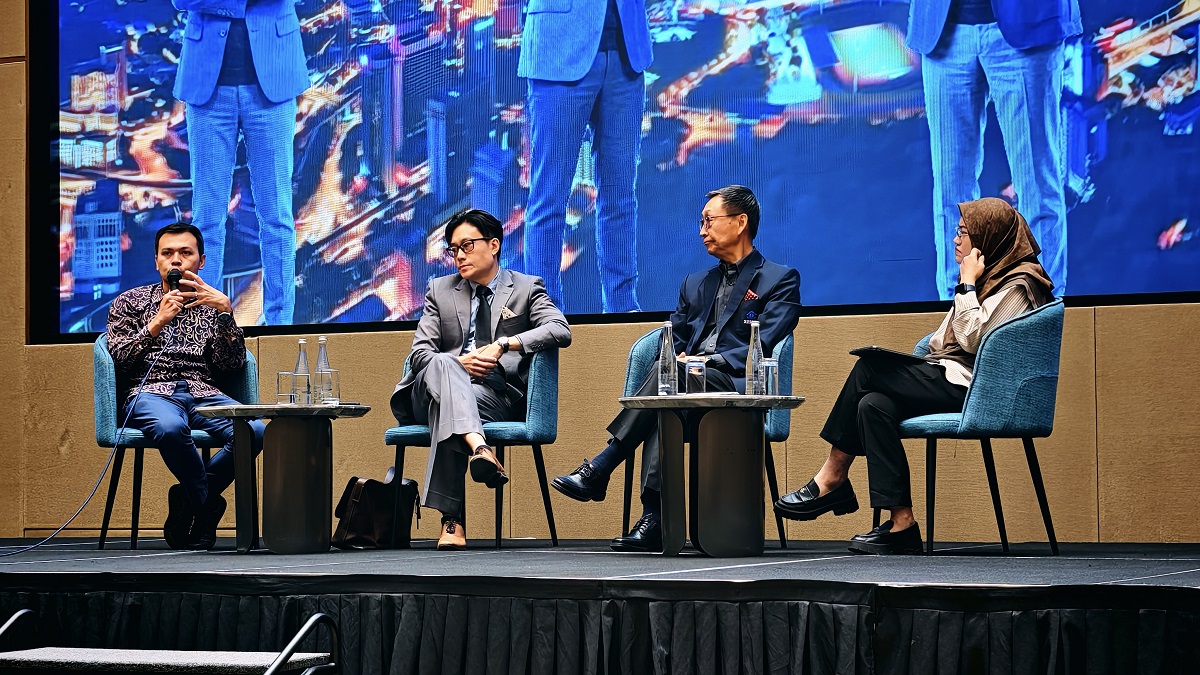
SHAH ALAM (June 12): Malaysia’s growing strata complexity is exposing gaps in governance, prompting calls for clearer rules as mixed-use developments and resident expectations evolve.
National Housing Department Strata Management Division assistant director Zamri Ishak said Malaysia's urban centres, particularly Kuala Lumpur, have seen a sharp rise in strata developments, shifting from predominantly landed properties to high-density mixed developments.
“In KL today, strata developments are everywhere. It is like rapid growth after rain.
“The sector has expanded beyond residential schemes to include integrated developments comprising retail, small-office home-office (SoHo), and small-office versatile-office (SoVo) components,” he said during the forum on “Act 757 Reforms: Addressing Ongoing Issues in Property Management and Governance” at the The Strata Conference 2026 Towards First-Class Strata Management organised by the Kuala Selangor Municipal Council (MPKS).
He said this evolution has significantly increased management complexity, requiring more technical and structured governance approaches that go beyond traditional maintenance models.
According to Zamri, strata residents today also differ from previous generations, with many parcel owners now being professionals, including lawyers and industry practitioners who are well-versed in the Strata Management Act (SMA).
“Residents today are more informed and understand the Act better than before,” he said.
He said any future amendments to the Act must take into account feedback from all stakeholders, including regulators and industry players, to ensure that legal gaps are addressed in line with current market realities.
He said strata governance is increasingly shaped by human behaviour, requiring more than just legal provisions, as management corporations (MCs) and joint management bodies (JMBs) must also deal with social dynamics and community disputes.
“Strata management is not only about buildings, it is about people and behaviour,” he said.
Developers remain liable for common property defects
Nor & Co partner Datuk Pretam Singh Darshan Singh explained that courts have ruled developers remain responsible for defect rectification even after paying the statutory deposit to the commissioner of buildings (COB).
"The courts have held that payment of the deposit does not relieve the developer of its obligation to rectify defects, which remains a contractual duty under the sale and purchase agreement," he said during his session on “From Promises to Delivery: Legal Realities in Strata Developments”.
He also cited Court of Appeal decisions affirming that JMBs and MCs are the proper parties to initiate legal action relating to common property.
"Claims involving common property should generally be pursued by the JMB or MC for the benefit of all parcel owners, rather than by individual owners," he said.
On tenancy restrictions, Pretam explained that management bodies cannot arbitrarily prohibit owners from renting out their units unless such restrictions are properly established through additional by-laws in accordance with the law.
He stressed the importance of Sections 148 and 149 of the SMA, describing them as among the most significant provisions in the legislation.
Section 148 provides that once the Act applies, any prior agreements or arrangements relating to the maintenance and management of common property cease to have effect if they are inconsistent with the Act.
Meanwhile, Section 149 prohibits parties from "contracting out" of the Act, meaning management bodies, parcel owners and even enforcement authorities must operate within the framework prescribed by the legislation.
Rehda calls for practical governance reforms
Real Estate and Housing Developers' Association Malaysia (Rehda) exco member Datuk Charlie Chia Lui Meng said treating MCs and JMBs like corporate entities with rigid year-end audited accounts does not fully reflect how strata schemes function.
“The bigger issue isn’t just ‘did we audit the accounts’, but whether the funds were actually spent properly and transparently,” he said during the forum.
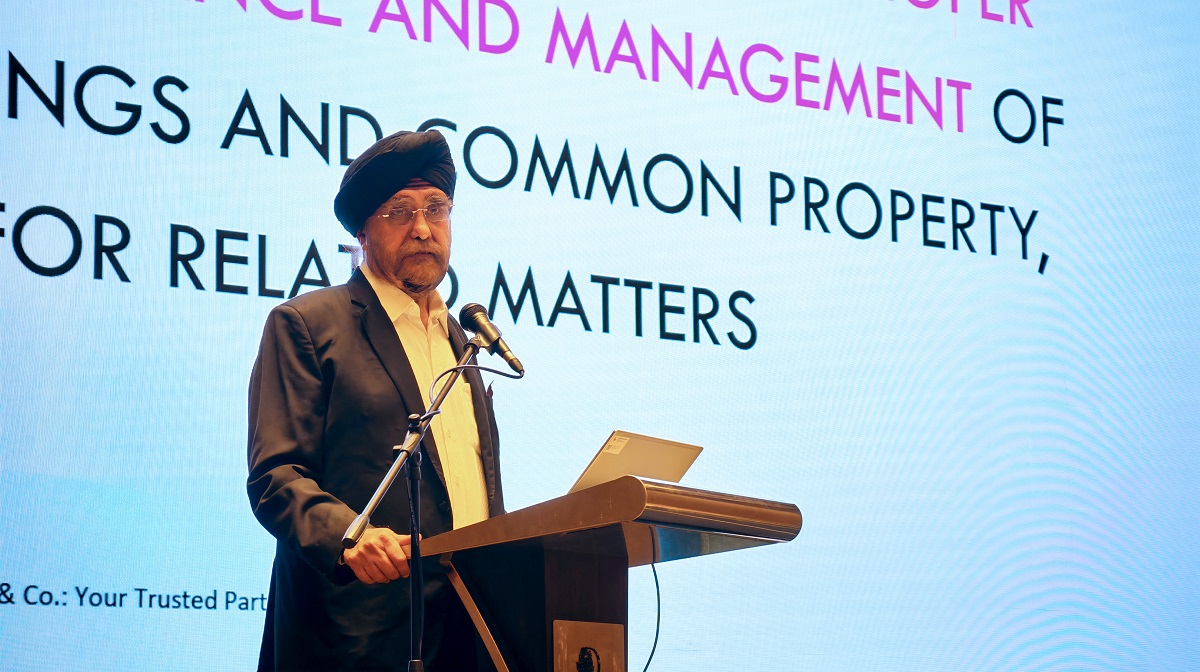
He flagged a structural timing issue, noting that AGM cycles can stretch up to 15 months, creating a gap between accountability and actual committee turnover.
“Audited accounts should be tied to tenure cycles, not strict calendar years. That would align accountability with whoever is actually managing the funds during that period,” he added.
On drafting issues in the Strata Management framework, Chia said much of the friction in the Act stems from weak or unclear definitions.
“Terms like ‘provisional block’, ‘weightage’, ‘shared units formula’, and ‘significantly different purposes’ are not tightly defined, and that opens the door to interpretation gaps and disputes,” he said.
Complexity, not the law, is the main challenge
Chee Hoe & Associates litigation partner Lai Chee Hoe said strata management today is fundamentally about adapting to complexity, not just building ownership structures.
“When the Strata Titles Act first came in, the focus was simply enabling shared ownership of land and issuing strata titles.
“But over time, especially after the SMA came into force in West Malaysia in 2015, the focus shifted into management: once possession kicks in, everything becomes about how you run and sustain the development,” he said.
Across Malaysia, Lai stated the rollout has been uneven, earlier in Peninsular Malaysia, later in Sarawak in 2020, and only recently in Sabah with its Building Enactment 2026.
“It covers layered realities like differential rates, Airbnb regulation, EV charging infrastructure, and how costs are fairly split across mixed developments,” he said.
He also stressed that the law itself is not necessarily weak, but interpretation and understanding among stakeholders is inconsistent.
“As developments evolve into dense, multi-use vertical cities, the system is being pushed to its limits and future amendments are mainly about adding clarity, not reinventing the law,” he said.
The conference was officiated by Housing and Local Government deputy minister Datuk Aiman Athirah Sabu yesterday. It brought together around 130 participants from across the country, with EdgeProp as media partner.
..........
Read about emerging trends, data-backed insights, growing subsectors, and expert commentaries in EdgeProp print. Subscribe now for your free copy!
Follow Us
Follow our channels to receive property news updates 24/7 round the clock.


Telegram


Latest publications
View AllFollow Us
Follow our channels to receive property news updates 24/7 round the clock.
Malaysia's Most
Loved Property App
The only property app you need. More than 200,000 sale/rent listings and daily property news.