Rise of ‘branded’ living adds new value to Malaysia’s luxury property landscape
This article appeared in the June 11, 2026 issue of the monthly print edition. Subscribe now.
Following the pandemic-induced lull in the early half of the decade, the property sector staged an emphatic rebound, with core segments regaining momentum and confidence. Beyond this resurgence, new subsegments have also begun to emerge, carving out distinct niches and steadily capturing attention on the global property stage.
Among the most notable is the rise of branded residences, which fuse luxury living with hospitality-style services to deliver an elevated lifestyle experience that is anchored in the prestige of a marquee brand. Initially tied to leading hotel groups, the concept has since broadened to include collaborations with fashion houses, automotive icons, and even fine-dining institutions, reflecting the growing appetite for branded living as a lifestyle statement.
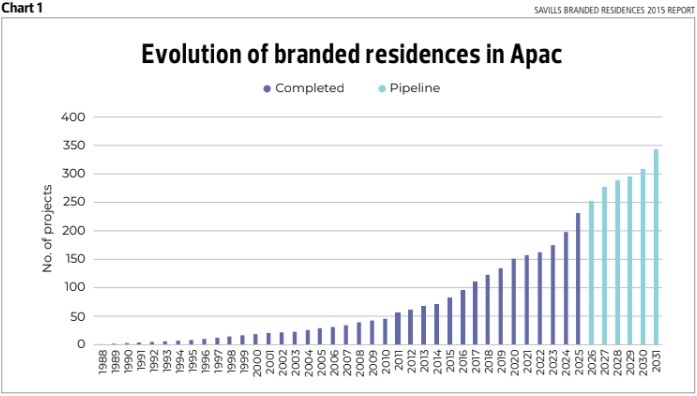
Hospitality brands, however, remain the primary drivers of momentum in Asia Pacific (Apac). Savills’ Branded Residences 2015 report identifies Apac as the fastest-growing region globally, expanding by 55% over the past five years and forecasted to surge by 180% by 2031 (outpacing the Americas as the current global leader). Rising individual wealth across the region is cited as a key catalyst behind this rapid growth (Chart 1).
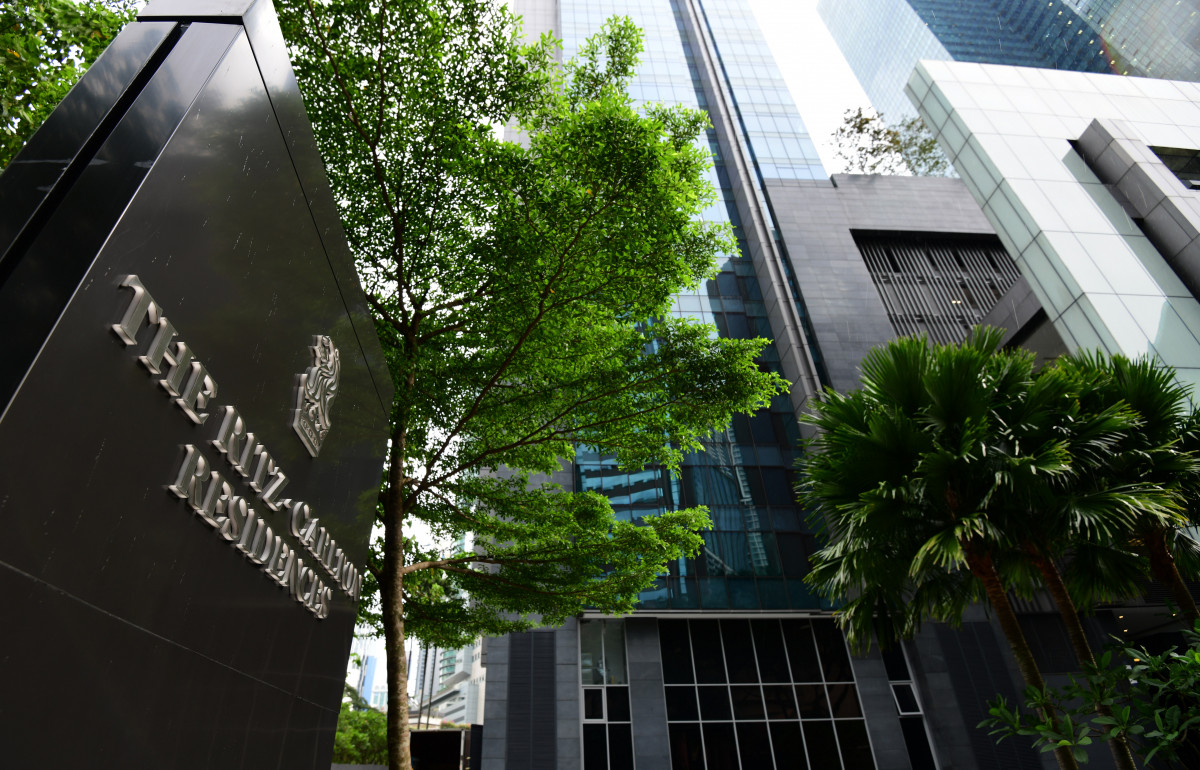
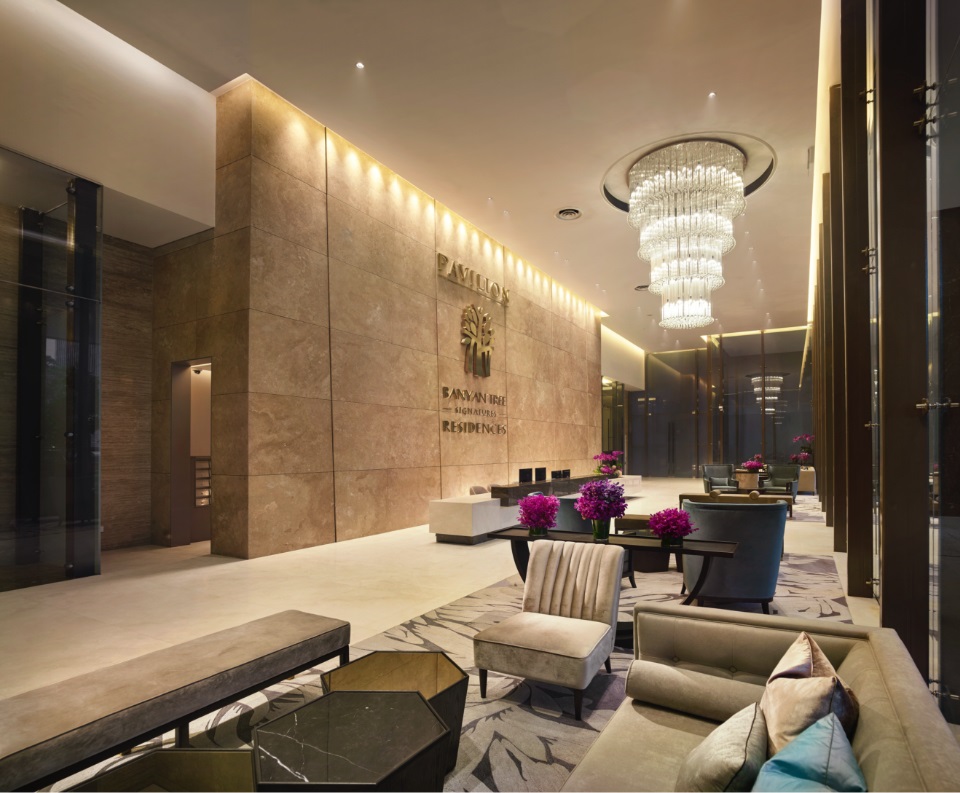
Malaysia has not merely participated in this evolution; it has helped shape it. Knight Frank’s Global Branded Residences Index highlights Kuala Lumpur as one of Apac’s earliest adopters of the concept, with landmark projects such as Four Seasons Place, The Ritz-Carlton Residences, St Regis, and Pavilion KL Banyan Tree Signatures Residences establishing the city as a pioneer.
Between 2010 and 2015, KL was regarded as Southeast Asia’s largest branded-residences hub, thanks to a concentration of hotel-linked developments in the city centre. While more aggressive markets such as Vietnam and Thailand have since overtaken it in project volume, Malaysia remains firmly in the global top-10, offering international buyers a mature, stable market with the added appeal of freehold ownership — an advantage over Singapore’s ultra-premium but leasehold-dominated landscape.
Keeping Malaysia in the game is the fact that the country’s branded living appeal is set to evolve beyond the lure of KL’s ultra urban lifestyle, with Penang and Johor entering the fray as the country’s next frontiers, each with distinct strengths.
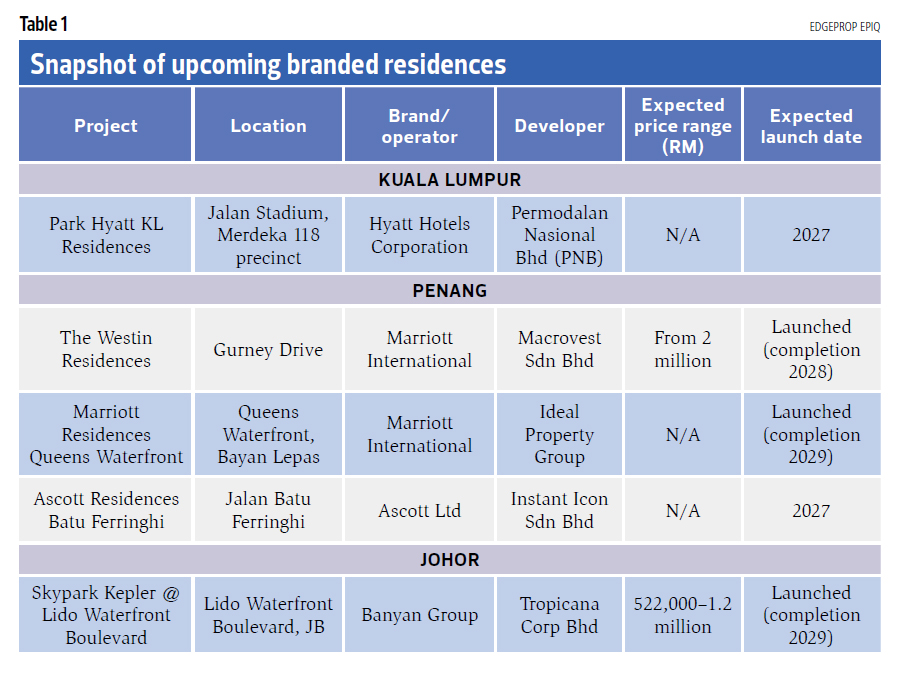
To date, there are several existing and upcoming projects in KL. In Penang, adding to the existing Marriott Residence @ Gurney Drive, Marriott has launched another branded residential project at Queens Waterfront at Bayan Lepas, while big hospitality names like Ascott are also entering the arena there (Table 1). Johor is also poised to announce more branded projects in the future, following ventures such as Anantara Desaru Coast Residences, offering luxury beachfront villas (completed), and Tropicana Corporation Bhd’s Skypark Kepler @ Lido Waterfront Boulevard (launched in 2025).
Penang is positioning itself as a lifestyle-driven hub, anchored by seafront prestige projects that blend heritage with modern luxury. Johor, meanwhile, is leveraging its proximity to Singapore and strong international demand to anchor large-scale branded developments. Together, these two markets are expected to drive Malaysia’s national supply of branded residences in the coming years, attracting both domestic and global investors eager to secure a foothold in this dynamic lifestyle segment.
Definition of branded residence
In describing the branded living proposition, Pavilion Hospitality’s director of hotels Adrian Ee says it is first important to distinguish it from the branded serviced residences experience.

“Branded serviced residences are typically owned by a single entity and managed by a luxury hotel brand operator, and it is run similarly to a hotel. It is designed for an extended stay period for those who opt for a larger apartment-sized experience, to generate recurring income for the building owner and operator,” Ee explains.
“Branded residences offer that same exclusive luxury hotel feel to private owners. The property is sold on a strata basis to buyers, who will enjoy all the hospitality benefits of a renowned brand through ownership, as well as the prestige of an address that is attached to the brand.
Owners can choose to occupy the units themselves and enjoy the perks of that lifestyle, or decide to lease out the property on a mid- to long-term basis, of which the building services will be managed on their behalf by the hospitality brand,” he says.
Ee notes that such luxury properties are seldom offered for short-term leases, a practice that underscores both the prestige of the address and the exclusivity prized by high-net-worth individuals (HNWI). In line with this, leading brands typically impose a minimum rental tenure of six months.
“The branded residences concept is certainly growing into a property sub-sector of its own.
Whereas initially the outlook may have been investment-motivated, we see owner-occupiers on the rise as the preference for this five-star lifestyle and convenience appeals to an exclusive segment of buyers. This segment is growing, and big brands are starting to take note and make their way into Malaysia’s branded hospitality living market,” Ee adds.
Why it is gaining traction
Malaysia’s branded residences appeal on multiple fronts. For local luxury seekers, they embody prestige — delivering well-managed properties, heightened security, and access to five-star facilities complete with concierge services. For foreign investors, the presence of a globally recognised brand offers trust and assurance, while Malaysia itself provides the added advantage of owning a luxury second home at a comparatively attractive price.
For MUI Group senior vice president Pel Loh, the expansion of the branded residence concept into the Penang and Johor markets bodes well for the future growth of the emerging sector. An investment holdings company, MUI Group’s hospitality arm has owned and operated hotels under the Corus brand in Malaysia and the UK, and it is currently heavily focused on hotel management and third-party operator (TPO) services.
“Penang has long been a favourite destination under the MM2H (Malaysia My Second Home) programme, with its blend of cultural heritage, historical character, and beachfront leisure making it an attractive choice for those seeking a luxury second home in a vibrant, well loved locale. Johor, by contrast, offers a distinct cross-border appeal, particularly to Singaporeans, who are drawn to an exclusive lifestyle now made accessible at a comparatively affordable entry point,” says Loh.
She also says the evolving needs of travellers offer a broader scope for branded living, one that local investors will be keen to tap into.
“Today, multinational companies operate across multiple locations and require long-term accommodation for visiting c-suite company leaders, or project leads who need to be in the country for extended periods. This opens up the potential for long-term leases with corporate entities,” she says.
Leisure travellers too are taking extended retreats for their families, and there are even those from within the region who travel here for better healthcare or long-term treatment.
In many of these cases, those with the means seek out the convenience and comfort of a hotel stay, while enjoying the familiarity of a home environment.
Aligned with global growth
Malaysia now offers a branded residential market with a proven track record, given the success of pioneering KL ventures, as well as opportunities to invest in alternative new hubs. The timing of this expansion coincides with the rising profile of branded residences across the world.
Knight Frank’s Global Branded Residence Survey 2025 projects that the global market will double in size by 2030. It says the segment has already seen rapid growth for such a niche and exclusive market, rising from 169 schemes in 2011 to 611 active projects by the end of last year.

The international real estate consultancy forecasts that there will be around 1,019 schemes worldwide in the next four years, representing over 162,000 luxury branded units.
Similarly, the Savills report notes that branded residences are currently experiencing an approximate growth rate of 19% year-on-year, and the Apac region’s 55% increase over the past five years marks it as a leading contributor to the global growth of the market. It also notes that 2025 saw a sizeable entry of new players to the game, with 25 countries launching their first-ever branded residential projects.
Growing appreciation for finer way of living
Driven by a desire for effortless living, prestige and high-quality services, a segment of HNWI have traditionally been willing to pay a premium to enjoy branded hospitality lifestyle and five-star amenities like concierge services, spa facilities, and hotel-style housekeeping at home.
However, this ultra niche segment is now growing larger, and a number of factors are contributing to this changing dynamic. In part, much of these can be traced to a shift in priorities following the pandemic experience, where a “turnkey” lifestyle of anticipated needs and an ecosystem of convenient services is finding greater appreciation among those who can afford it.
From this perspective, acquiring a residence aligned with a trusted hospitality brand provides reassurance through quality surroundings, meticulous property upkeep, and a reputation for service excellence. Beyond that, branded addresses are typically anchored in prime urban districts or world-class resort destinations, offering not only status but also enduring utility.
The shift towards hybrid work practices has also increased demand for flexible home spaces. Large and adaptable homes with easy access to services and lifestyle amenities within vibrant urban hubs appeal to corporate leaders seeking a healthy work-life balance, especially if they have to split time between different locations. At branded residences, owners benefit from curated community events, high-end amenities, and the support of on-site professional management.
Investment value adds attraction
Beyond lifestyle appeal, there is also a strong investment proposition that savvy buyers are clued into. Many owner-occupiers utilise their units as secondary homes in strategic urban centres or holiday homes in upmarket resort locations.
When not in residence, they may choose to leverage on rental programmes to earn a side-income stream, or to help offset maintenance costs.
Using the established KL market as a guide, recent listings reveal that branded residences can command rents of between RM5,500 and RM12,500 per month in the KLCC/Bukit Bintang vicinity.
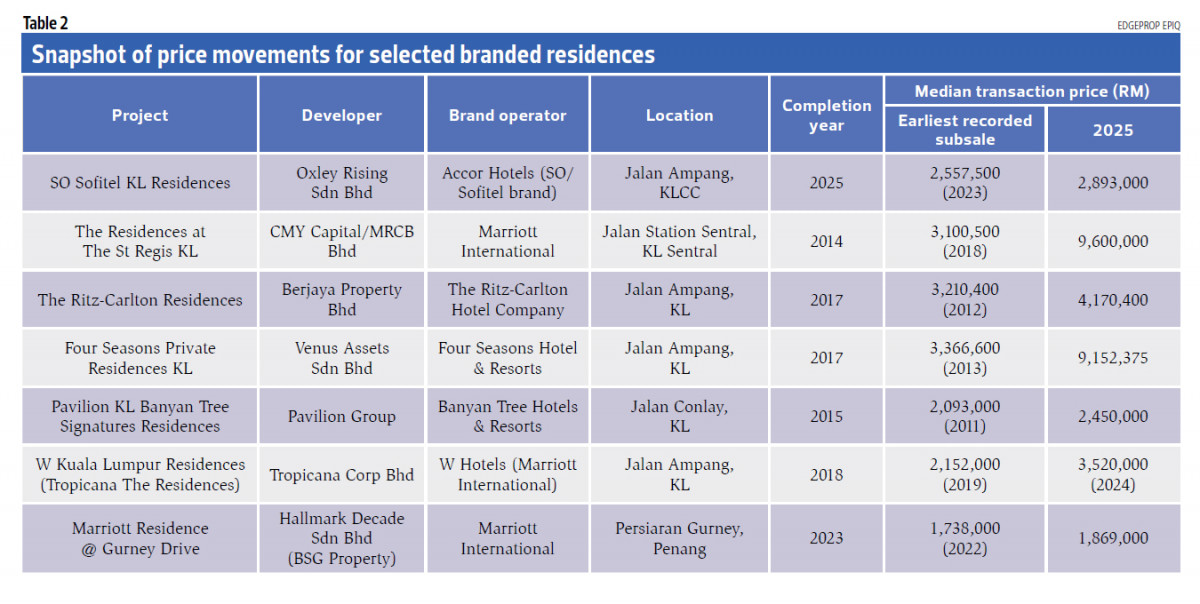
In terms of property value, past transactions have shown that the upfront premium of 20– 35% paid at the point of purchase is often retained in the subsale market, and sometimes increased, depending on the profile growth of the property, brand or location. This is paired with the healthy capital appreciation buyers can expect from properties located in prime districts.
While it is still early days to accurately track the resale performance of branded residences in Johor and Penang, as a guide, branded projects in KL’s city centre have witnessed an average appreciation of about 3-5% annually over the past decade, according to Global Property Guide’s 2026 report. At the same time, EdgeProp EPIQ data shows that there is a notable increase in value between early and current transaction prices for key branded residences in the country (Table 2).
Additionally, past price performance trends also show that branded residences in KL retain better value during economic downturns, as international brand recognition adds a layer of reassurance to potential buyers.
In fact, branded residences have proven to be the highest performers in the KL resale market, consistently outperforming standard luxury property benchmarks. For example, resale transactions for The Ritz‐Carlton Residences KLCC have held above RM2,500 psf throughout various economic climates — a benchmark in the city — indicating strong premium retention.
Understanding premium-brand connection
However, because premiums are closely related to brand recognition, MUI Group’s Loh points out that buyers should be aware that most branded residences operate under brand management contracts, which are typically based on a 20- to 30-year period.
“In most cases, reputable brands will commit to long-term operational periods, and continue to renew contracts to protect their reputation and ensure consistent service delivery.
However, buyers should be aware that this is an expectation, and not a guarantee,” she says.
Pavilion Hospitality’s Ee qualifies that because branded residences are sold on a strata basis, once the developer hands over management rights to the management corporation (MC), that body then becomes the custodian of the management agreement with the brand operator.
“In most cases, the MC continues with the brand operator, or appoints the developers as a managing agent if it is closely tied with the brand.
After all, continuing with the brand is critical to maintaining value and exclusivity. Yet, it is plausible that an MC, based on a consensus of owners, may not choose to extend a management agreement with a hospitality brand operator after the contractual period, or choose to seek out an alternative operator,” Ee says.
As new players come into the market, the reputation of the brand and the commitment of the developer are factors buyers should take into account, as well as property fundamentals such as location, accessibility and sustained demand, as these will ultimately provide value security in the long run.
Beyond this, global advisory platform Brand Atlas cautions that “brand devaluation” is a potential risk to owners too. When capital appreciation is closely tied to the operational health of a hospitality group, then there is a risk that if the brand suffers global reputational harm or lowers its standards, the value of associated properties may contract proportionally.
Advantage for developers in ‘branding it’
Simply put, developers are embracing the concept of branded residences because they deliver higher property premiums, faster pre-sales, and stronger long-term value retention compared to conventional condos.
“In a scenario where land costs are extremely high, like in prime city centre districts, it can be very challenging for developers to maximise their return on investment and generate a healthy profit. With the right brand association, projects can immediately command a premium, attract early interest, and even appeal to an international pool of buyers,” says Loh, who, as part of her company’s services, helps connect developers with the right hospitality brands to enhance the appeal of their projects.
By partnering with luxury brands, developers tap into the power of associated prestige, generating niche demand and attracting affluent buy-ers, while differentiating their developments in a crowded urban skyline.
Globally, branded residences generally command prices that are 20–30% higher than typical luxury condos surrounding it. In Malaysia, that premium can be as high as 35%, depending on how much recognition and reputation the associated brand enjoys in the country.
Despite the premium pricing, developers are also likely to experience quicker sales, as the properties are targeted at a very specific segment of buyers. The market is niche and the supply is selective, which means developers benefit from stronger pre-sale demand, thereby reducing their financial risks.
In saturated markets like Malaysia, where the supply of luxury condominiums is in surplus, brand differentiation and the draw of prestige help a development stand out, both on a local and international stage. The reputation of a global brand also helps reinforce confidence in the project, overcoming a number of marketing hurdles.
Hospitality brands broadening their horizons
The key driver motivating hospitality brands getting into the game is the fact that the branded living concepts allow them to extend their core “luxury service and lifestyle” business to the real estate sector. This creates both new revenue streams and reinforced brand equity.
It transforms their hospitality philosophy into lifestyle philosophy and ownership, which can be seen as a very strategic move; it enhances brand recognition and loyalty, as well as boosts global visibility. Owners essentially become a part of the brand’s global ecosystem, reinforcing loyalty across hotels, resorts and residences.
On the business end, it provides a new avenue for long-term recurring income, through management fees, service charges, and brand licensing. Developers pay for the brand association, while owners pay premiums for the lifestyle services.
For example, the Ascott brand enjoys an elevated stature in the country, not just because it is a leading international serviced residence and hospitality brand, but also because it was a pioneer in bringing the luxury branded lifestyle experience to Malaysia — with the Ascott KL serviced residences.
Ascott’s recent expansion into the branded residences market, with the upcoming Ascott Residences Batu Ferringhi Penang, provides added market confidence in the growth of the sector, as well as the potential of alternative hubs outside KL.
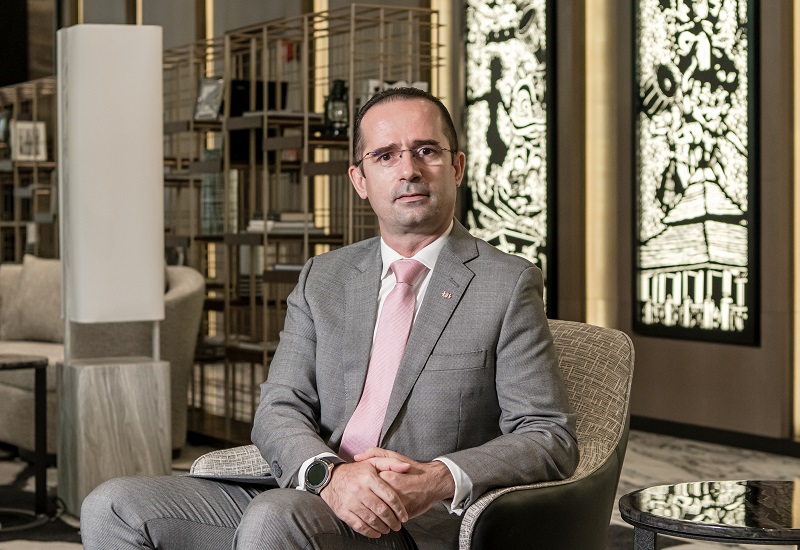
“For hospitality operators, branded residences represent an opportunity to extend brand presence beyond traditional accommodation offerings into long-term residential living. It allows hospitality brands to build deeper and more enduring relationships with residents and owners while diversifying revenue streams,” says The Ascott Ltd country general manager (Malaysia) Mondi Mecja.
Having operated serviced residences globally for decades, Mecja says Ascott has seen how consumer expectations continue to evolve towards more flexible and service-oriented living experiences. Branded residences reflect this shift by combining the benefits of private ownership with the consistency and assurance associated with hospitality management.
“Operationally, branded residences differ from traditional serviced residences or serviced apartments because the focus extends beyond transient stays towards long-term asset stewardship and community building. There is a greater emphasis on owner relations, property value preservation, personalised services, and consistent management standards over time,” he says, adding that branded residences involve deeper community-building and preserving the long-term quality and reputation of the development itself.
On working with developers to deliver a benchmark luxury address, Mecja points out that it is very much a collaborative process.
“Increasingly, developers approach established hospitality brands early in the planning stage because branded residences can enhance market differentiation, buyer confidence and overall positioning of a development. At the same time, hospitality operators such as Ascott may also identify opportunities where a branded residential concept can complement an integrated development or enhance the long-term value proposition of a project,” he says.
He adds that as the branded residence segment becomes more established across the region, developers are also becoming more strategic in selecting hospitality partners. Beyond branding alone, there is a growing recognition that operational capability, service delivery, and long-term management expertise are critical to sustaining the value and reputation of a branded residential development.
“Ultimately, successful branded residences require strong alignment between both parties,” Mecja states.
Sustained appeal and potential expansion
Despite currently being overshadowed by hyper-aggressive regional neighbours, the Savills Global Branded Residences report identifies Malaysia as a continued standout performer in luxury hospitality living, based on its well-established market and the fact that it has quietly become a critical hotspot for premium master-planned schemes.
From a global standpoint, the country’s branded residences market continues to attract attention and outrank regional peers for buyers because it represents stability and affordability, with value-based pricing, freehold tenure, and an English-speaking business environment.
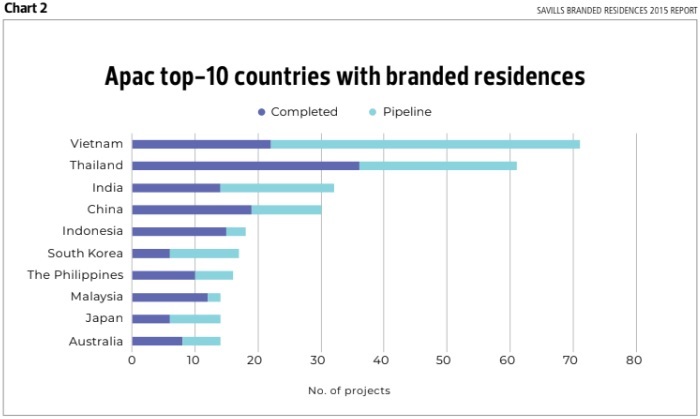
Average prices are significantly more attractive than Singapore, while offering comparable modern infrastructure. There are clear foreign ownership protections, featuring a transparent English-speaking legal framework with direct freehold strata titles — a major advantage over the complex, long-term leasehold restrictions common in Thailand or Vietnam (Chart 2).
Furthermore, policy catalysts such as revisions to the MM2H residency visa tiers and extended travel exemptions have created a reliable pipeline of international HNWI buyers.
And, unlike peer nations that rely entirely on a single mega-city, Malaysia stands out for a multi-node ecosystem. Branded residential opportunities are now split across three distinct economic corridors.
The landscape is evolving too, observes Ee. Where branded residences were once attached or connected to traditional hotels operated by the brand (to reinforce the same standard across both components), we are now seeing the emergence of standalone branded residences.
“This indicates greater confidence for both buyers and hospitality operators. Buyers are showing increased trust in the quality promise of established luxury brands, while luxury brands are growing confident in the overall branded residential concept and the strength of the local market,” Ee says.
Mecja also believes that advancing urban landscapes and urban perspectives will sustain demand for the hospitality-linked lifestyle.
“We are seeing cities evolve towards more integrated and experience-driven ecosystems, where residential, retail, hospitality and commercial elements increasingly coexist within the same development. Branded residences fit naturally into this environment because they introduce hospitality expertise, service consistency, and curated lifestyle experiences into everyday urban living,” Mecja says.
“As cities become denser and more connected, consumers are placing greater value on environments that support wellbeing, social interaction and quality-of-life experiences alongside functionality,” he adds.
Mecja notes that several structural trends continue to support the segment — including rising urbanisation, greater international mobility, growing interest in integrated developments, and increasing demand for lifestyle-oriented experiences.
HOSPITALITY LIFESTYLE INSPIRING ALTERNATIVE DEVELOPMENTS
The appeal of branded living and hotel-like lifestyle is being noticed across the industry, and it has begun to catalyse a broader shift in how properties are being marketed.
Developers and investors are now embedding lifestyle branding into serviced apartments, mixed-use projects, and wellness communities. Properties that target the travelling crowd have also upped their game with more affordable alternatives that offer the same hospitality-linked feel within larger apartment-sized accommodation options.
The branded residence idea itself may inevitably be adapted to appeal to alternative buyer segments, observes MUI Group senior vice president Pel Loh.
“As part of our business, we help developers, who wish to include hospitality presence in their developments, procure appropriate hotel brands that fit their needs. In some cases, they opt to self-brand, and in those scenarios, we step in as a white-label operator to manage it for them, without the additional branding costs,” she explains.

“Developers are attuned to the rising appeal of a hospitality-linked lifestyle, and it might be a natural progression for them to apply the same philosophy to drive their residential components. It gives them an opportunity to bring this lifestyle to a more affordable segment, by engaging a trusted four-star brand or developing a brand of their own to showcase their own lifestyle philosophy and values,” Loh points out.
Other market observers suggest that such a strategy could be applied to enhance the appeal of mix-use projects and township projects, or even as a means to repurpose and re-energise stagnating high-rise projects.
Beyond this, branded residences have raised the bar for experiential lifestyle expectations, and this halo effect is boosting the appeal of other forms of hospitality-inspired properties such as apartels and condotels. These options are already seen as more accessible ways to enjoy hotel-style services and brand assurance, especially for investors and long-stay tenants who want flexibility without paying the full branded residence premium.
The apartel concept is a hybrid of a hotel and apartment, targeting long-stay business travellers, expatriates, and lifestyle seekers who want more space than a hotel room but with similar services. These come fully furnished and offer hotel-style services such as concierge, housekeeping, and lifestyle amenities. Sometimes positioned as serviced apartments (though not quite the same), these too are often branded by well-known hospitality brands.
A condotel is similarly operated like a hotel, but individual units are sold to buyers.
These are then managed collectively as hotel units by the operator on behalf of owners. Owners can use their units part-time and place them into a rental pool when not in use. The revenue is shared between the owner and the operator. Condotels are targeted at investors seeking properties for both personal use and rental income.
Additionally, property concepts that are specifically designed to cater to Airbnb-style short-term rentals are another offshoot of the hospitality-lifestyle wave. Though these do not offer the same level of luxury services or experience, they borrow heavily from the same logic: lifestyle positioning, service assurance, and identity.
Key players such as Tropicana Corporation Bhd have recently moved its own brand in a similar direction with the launch of T-Journey, its first exclusive hospitality and services arm.
Via memorandums of understanding with 10 strategic partners, Tropicana aims to deliver extended value to property purchasers while contributing to the growth of the tourism ecosystem under the T-Journey label.
“For more than 47 years, Tropicana has prided itself on being a community builder, creating wholesome and liveable townships. T Journey is a milestone that reflects our commitment to building a strong hospitality ecosystem through strategic collaborations while delivering extended value to our property purchasers, and a complete, seamless travel experience for guests and visitors,” managing director of marketing & sales and business development Ixora Ang tells EdgeProp.
Ang says that at the core of this ecosystem is the T Concierge platform, a centralised, in-house-built, guest-facing service layer that curates, bundles, and converts travel demand into seamless, end-to-end journeys.
By transforming travel needs into meaningful, bookable experiences, T Journey blends the warmth of home with the sophistication of modern hospitality.
For property purchasers, T Journey extends value beyond ownership through professionally-managed short-stay operations, exclusive privileges, and reward points, supporting long-term asset value.
Read about emerging trends, data-backed insights, growing subsectors, and expert commentaries in EdgeProp print. Subscribe now for your free copy!
Follow Us
Follow our channels to receive property news updates 24/7 round the clock.


Telegram


Latest publications
View AllFollow Us
Follow our channels to receive property news updates 24/7 round the clock.
Malaysia's Most
Loved Property App
The only property app you need. More than 200,000 sale/rent listings and daily property news.