Cafes, community, connectivity keep Wangsa Maju moving
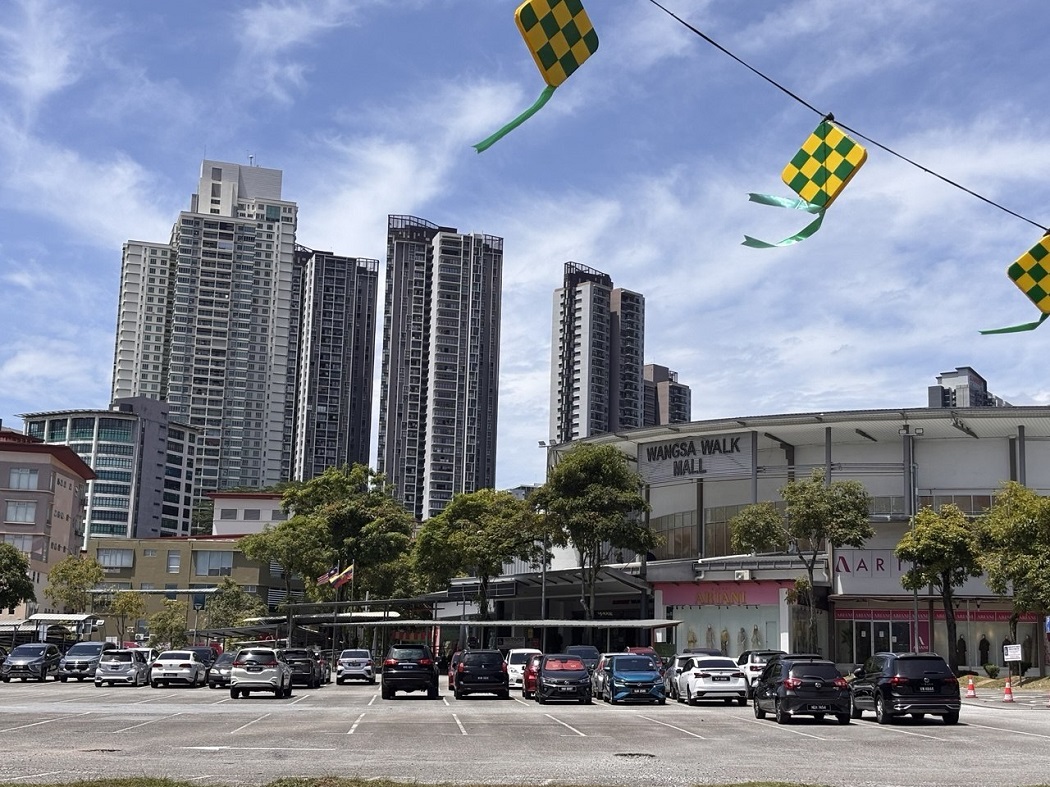
PETALING JAYA (June 16): Around midday, the commercial streets along Jalan Wangsa Delima move at a steady pace. Rows of old shoplots line the road, while high-rise apartments and condominiums rise behind them, reflecting the residential density that defines much of Wangsa Maju.
The neighbourhood has a history that dates back to February 1984, when Wangsa Maju was officially established as a major township in Kuala Lumpur.
Once part of the Hawthornden rubber estate, it gradually transformed into a residential and commercial area through the 1980s, with growth gaining momentum following the opening of institutions such as Tunku Abdul Rahman (TAR) College, now known as TAR University of Management and Technology.
This mix of heritage and development continues to shape the area’s current rhythm.
A short walk from Wangsa Walk Mall reveals how closely connected the neighbourhood’s amenities are. Within roughly 10 minutes on foot, the area links to surrounding commercial buildings such as Wangsa 118, a boutique commercial development, along with eateries and services occupying existing shoplots.
The streets of Wangsa Maju slope gently in places, giving the neighbourhood a slightly hilly feel without making it difficult to navigate on foot. Even so, the commercial pocket around Jalan Wangsa Delima remains easy to move through, allowing residents to shift between shops, cafes, and community spaces without relying on a car.
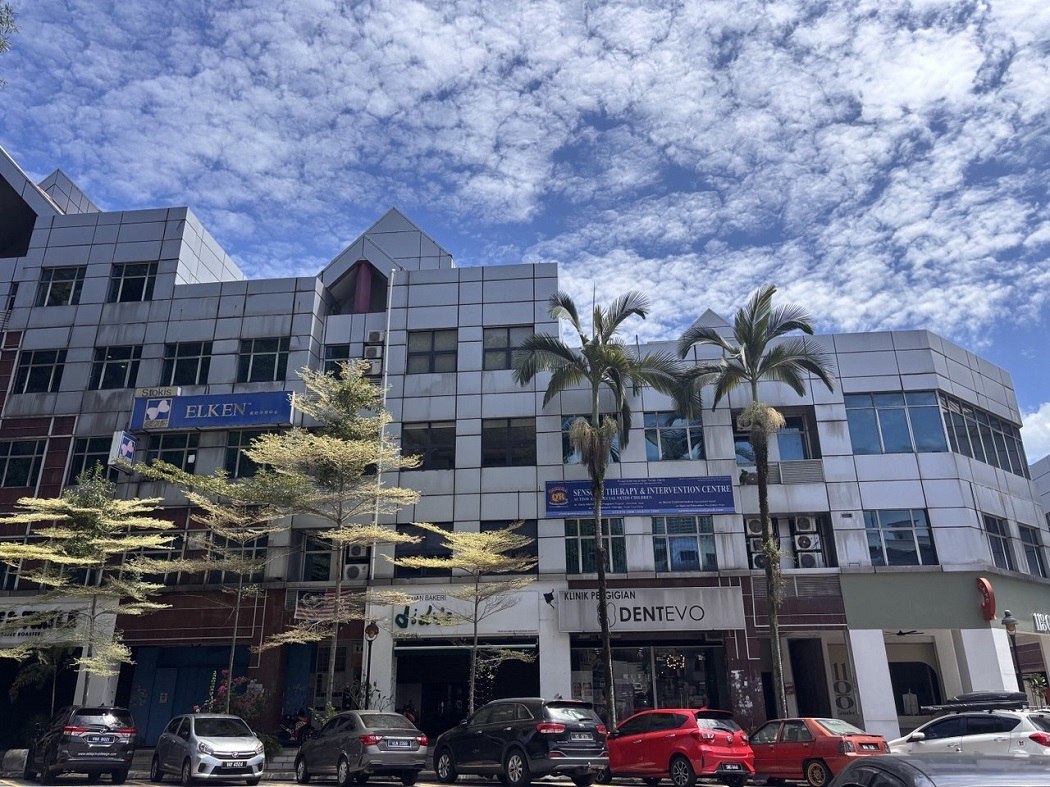
A commercial pocket active along Jalan Wangsa Delima
Much of the neighbourhood activity centres around the streets surrounding Jalan Wangsa Delima. Here, retail, small stores, and F&B cluster within a short distance of one another, creating a compact commercial grid.
The proximity to Wangsa Walk Mall positions this area as a natural neighbourhood hub. Nearby office and commercial buildings add to the mix of activity operating here.
Amid the familiar storefronts, newer lifestyle businesses are appearing, including cafes and bakeries that introduce contemporary hangout spaces into the neighbourhood’s established commercial blocks.
Randevú Coffee, for example, opened in October 2023 along Jalan Wangsa Delima, serving specialty coffee and beverages. Another recent addition, Didi’s Cafe & Bakery, opened in February 2025, offering pastries and light meals.
These establishments demonstrate how older commercial spaces are being adapted for modern concepts, catering to a younger, lifestyle-focused crowd.
Green corners and hiking trails nearby
Wangsa Maju is also close to several outdoor recreational areas. Bukit Dinding, a forested hill, offers hiking trails popular with families and fitness enthusiasts. Another trail, Bukit TM, similarly attracts local hikers and nature lovers.
Within the suburb itself, landscaped areas such as Laman Jalanan Hijau Wangsa Maju provide green space for strolls or spending time outdoors. Community initiatives such as Bazaria Wangsa Maju bring together food vendors and small businesses, further energising the neighbourhood.
What the data show
The residential landscape of Wangsa Maju is largely defined by high-rise developments. Walking through the area, numerous condominiums, serviced residences, and apartment towers are visible, while landed homes are limited in the immediate commercial vicinity.
Transaction data from EdgeProp reflects the differing trends across Wangsa Maju’s residential and commercial property segments over the past decade.
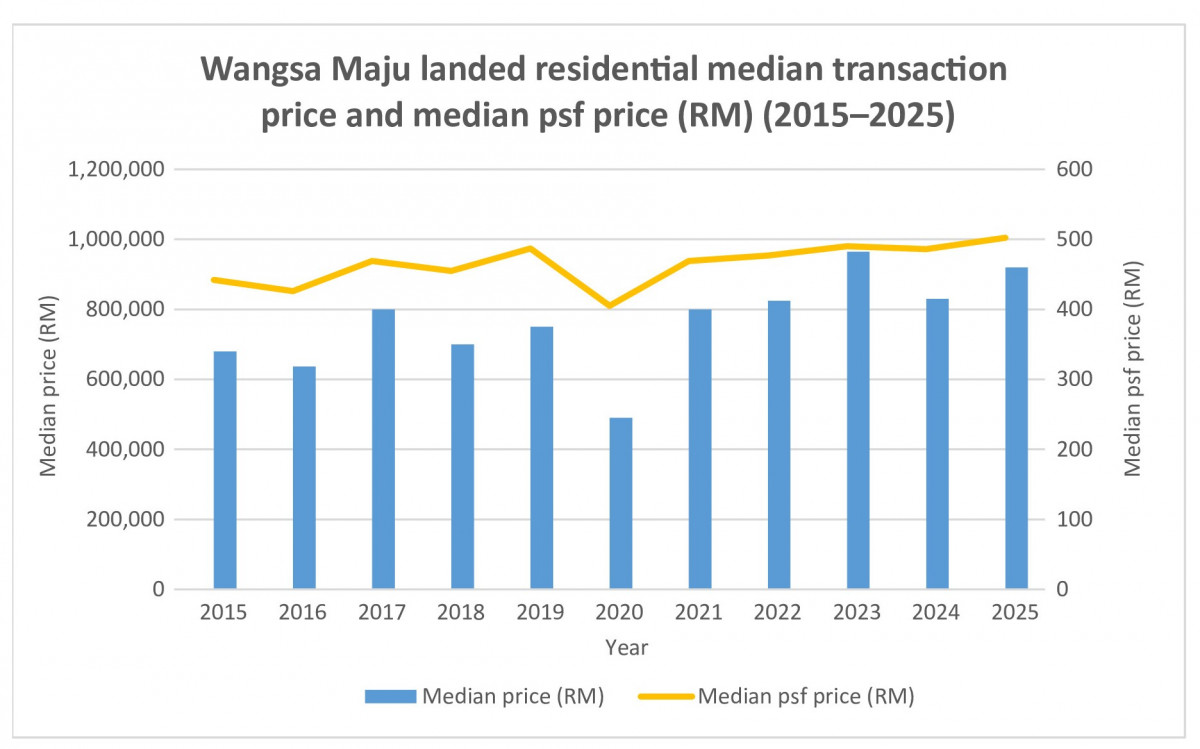
For landed homes, including cluster houses, townhouses, terrace houses and semi-detached homes, the median transacted prices increased from RM690,000 in 2015 to RM920,000 in 2025. Median prices psf also rose from RM441.89 psf to RM502.17 psf during the same period.
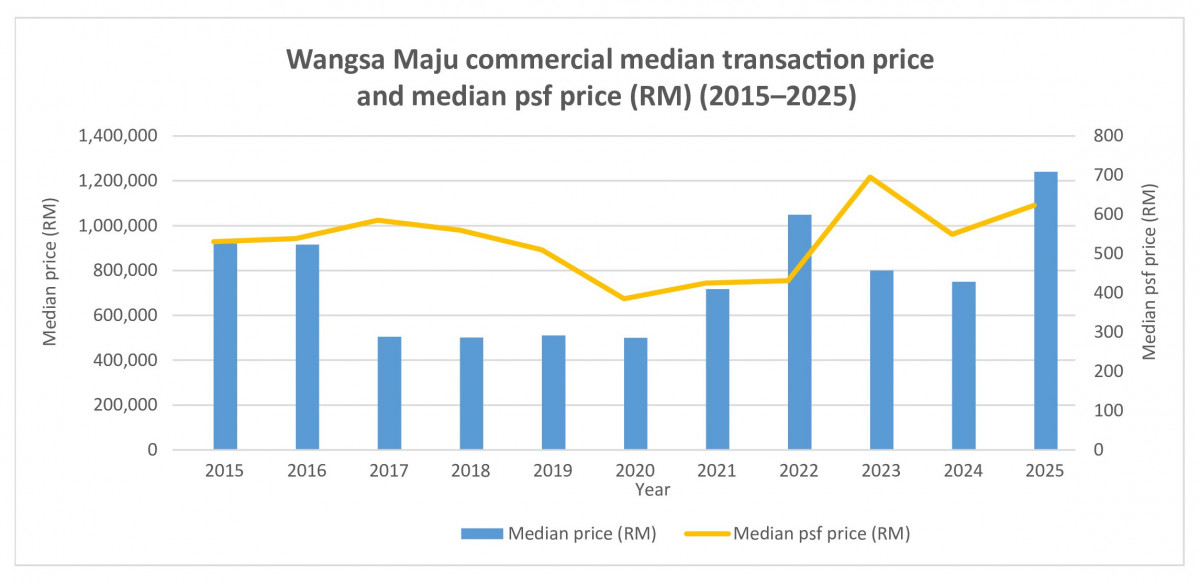
Commercial properties, comprising shoplots, office lots, lock-up shops, and terrace shops recorded a similar upward trend. Median transacted prices increased from RM920,000 in 2015 to RM1.24 million in 2025, while median psf rose from RM530.15 psf to RM622.92 psf.
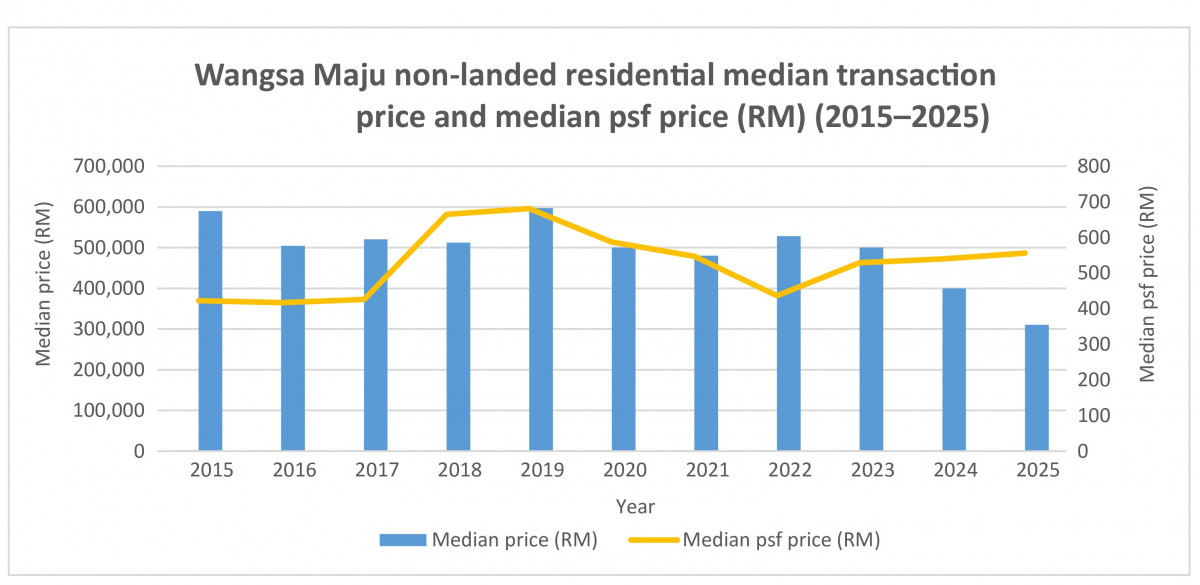
In contrast, the non-landed residential segment, which includes serviced apartments, condominiums and flats, saw median transacted prices decline from RM589,500 in 2015 to RM310,000 in 2025. However, median prices psf increased from RM422.17 psf to RM556.30 psf over the same period.
Snapshot of newly completed and upcoming residential developments
Several projects illustrate continued development activity within the neighbourhood:
*Milla Residence by Beverly WM Sdn Bhd is a freehold serviced apartment development with 1,406 units, priced from RM549,260 and expected to be completed in 2028.
*Altris Residence, also by Beverly WM, consists of 551 units and has obtained its certificate of completion and compliance (CCC).
*Sunway Artessa, developed by Sunway Artessa Sdn Bhd, a subsidiary of Sunway Integrated Properties Sdn Bhd, comprises 468 condominium units, and was completed in 2025.
*Sfera Residences by MCL Land (Malaysia) Sdn Bhd comprises 494 units and is targeted for completion in December 2026.
*Residensi J Satine by Jayyid Land Sdn Bhd, a joint venture between Gandingan Jakel and Platinum Victory, is a mixed-use development comprising 3,600 Residensi Wilayah apartment units, 661 small-office home-office (SoHo) units, and 42 commercial units, and is expected to be completed in late 2026 or 2027.
*Among the few landed housing projects in the area, Puncak Wangsamas by Low Keng Huat Bhd comprises 30 semi-detached homes, and is expected to be completed in 2027.
The presence of these residential developments reflects ongoing housing demand, particularly for high-rise living close to established amenities.
Combined with a dense residential population, accessible commercial amenities, and proximity to recreational spaces, Wangsa Maju continues to see activity across both its residential and commercial landscape, with new businesses and developments adding to the neighbourhood’s evolving character.
..........
Read about emerging trends, data-backed insights, growing subsectors, and expert commentaries in EdgeProp print. Subscribe now for your free copy!
Follow Us
Follow our channels to receive property news updates 24/7 round the clock.


Telegram


Latest publications
View AllFollow Us
Follow our channels to receive property news updates 24/7 round the clock.
Malaysia's Most
Loved Property App
The only property app you need. More than 200,000 sale/rent listings and daily property news.