From Medan Pasar to Jalan Melayu, old KL retains heritage roots amid rising modernity
This article appeared in the June 11, 2026 issue of the monthly print edition. Subscribe now.
Kuala Lumpur’s historic core is often framed as a heritage district, but on the ground it operates more like a continuously running urban system where religious institutions remain functional, and pre-war shophouses and colonial-era buildings remain economically active through adaptive reuse, long-term tenancy, and layered commercial survival.
From Medan Pasar through Jalan Melayu to Masjid India and Masjid Jamek, the old city is not preserved as a static backdrop, but reactivated as working real estate occupied by cafes, family trades, craft operators, and generational retailers.
Medan Pasar: a hybrid heritage-commercial node
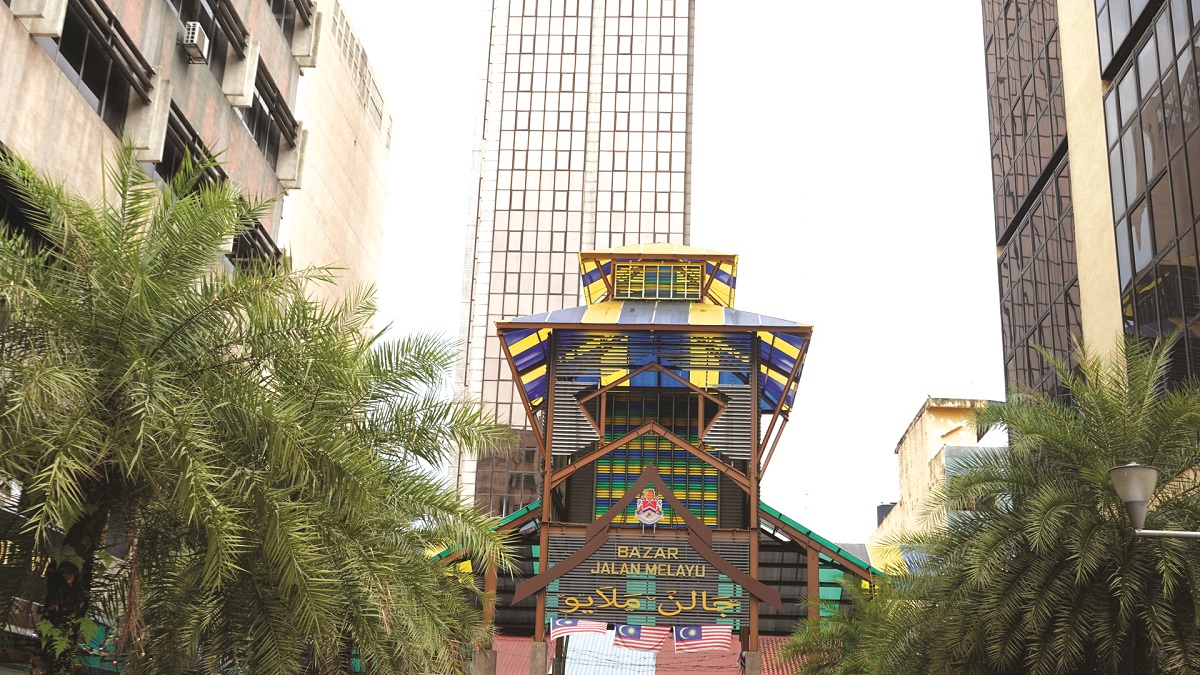
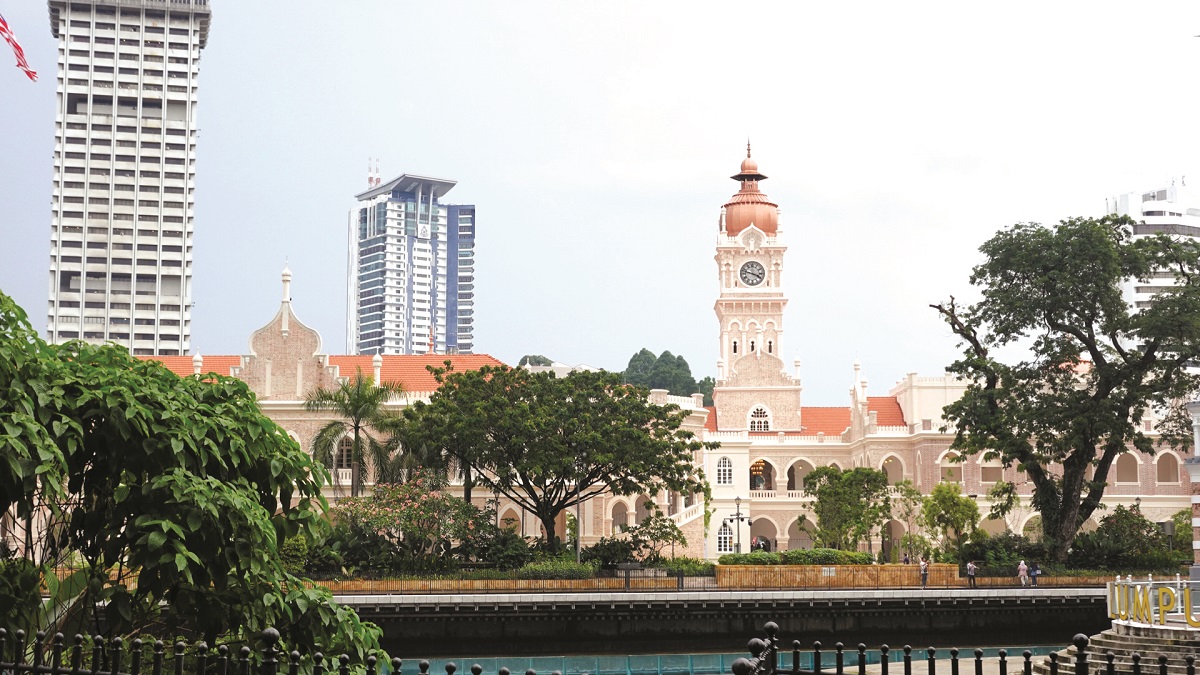
The walk begins at Medan Pasar (Market Square), one of KL’s earliest commercial grids, where restored decades-old structures now sit alongside businesses reactivated for modern retail and F&B use.
What was once a dense trading square has evolved into a hybrid zone — part heritage precinct, part living commercial node.
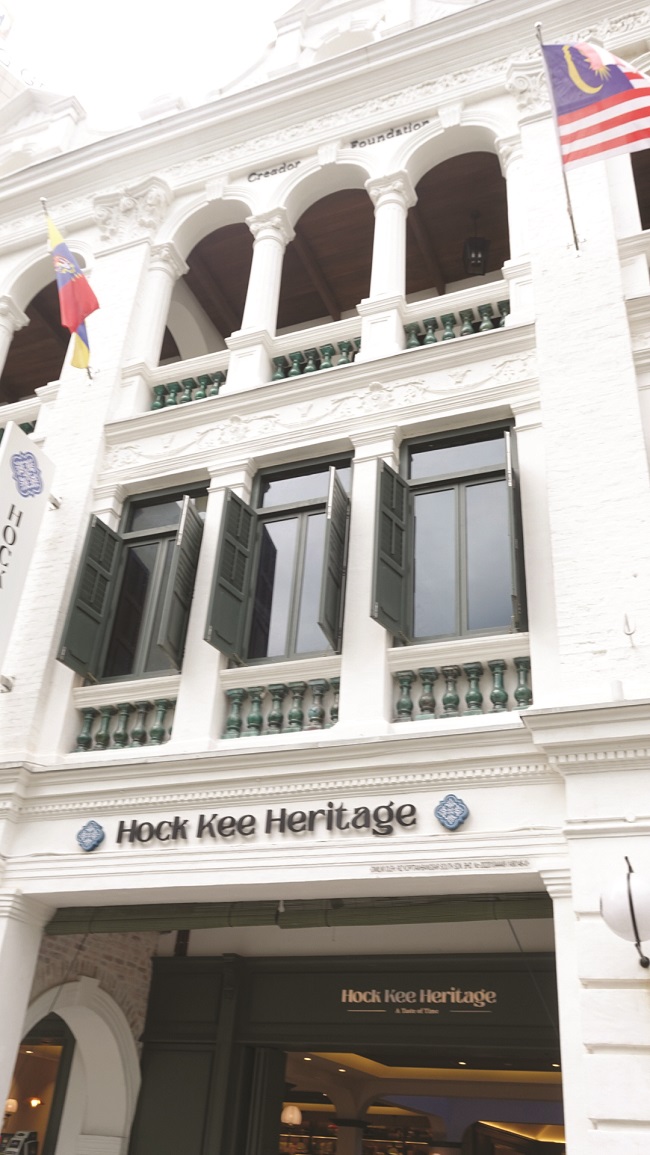
Inside one of these refurbished buildings is Hock Kee Heritage, which officially began operations in February. The cafe occupies the ground floor of the shophouse, reflecting early KL’s vertical urban logic, where narrow land parcels were maximised through stacked commercial use.
Hock Kee founder Ng Cheng Kiat says the decision to enter Medan Pasar was driven by more than just location.
He describes it as an area with “strong heritage and colonial-era atmosphere”, where “the old buildings, the historical Medan Pasar clock tower, and the nostalgic feeling of old KL create a very special charm that is difficult to find elsewhere today”.
For him, space is not just operational real estate, but cultural infrastructure.
“For us, this place is not just a business location. It is a place filled with stories, memories, and the soul of old KL,” he says.
He paints Medan Pasar as a district with a dual rhythm shaped by time of day and user flow.
“In the morning, it feels vibrant and alive.
During lunch hours, it becomes energetic and full of movement. At night, it slows down and becomes more nostalgic,” he says.
That shift defines its value proposition. “It is almost like experiencing two different characteristics of the same place within one day,” he adds.
Despite its central location, encircled by towering skyscrapers, Ng believes Medan Pasar still carries a distinct identity, with creatives, office workers, photographers, and tourists naturally converging here.
“In recent years, we can clearly see positive changes happening. More creative businesses, cafes, and galleries are slowly bringing life back,” he shares.
Jalan Melayu: trade routes, migration, and buy-sell activity
From Medan Pasar, the walk moves into Jalan Melayu, a narrower corridor of pre-war shophouses where continuity of tenancy and family-run businesses still anchor the street economy.
Tour guide Jane Rai places this area not as an isolated heritage, but part of a wider trade system shaped by migration and river-based settlement patterns.
“There were already Chulia or Indian Muslim traders at the old market square and street next to it,” she says, pointing to early commercial activity dating back to the late 1800s and early 1900s.
She explains that the buildings here reflect the layered urban development through the years.
“At the end of this block was the former Naina Mohamed store in a two-storey building, which is now being restored. All the buildings at the square are three storeys with attractive facades,” she says.
She adds that trade networks were never confined to a single street.
“The Indian Muslim population was not only here, but also across the Klang River, near the confluence of the muddy rivers,” Jane says.
That river-linked geography formed the backbone of early KL, a decentralised system where commerce, settlement and mobility evolved together rather than in secluded zones.
Sahjaya Sama Enterprise: traditional craft stays true to form, unyielding
One of the stops along the route is Sahjaya Sama Enterprise, known for its tanjak-making demonstration inside a traditional shophouse unit. The business has been operating in the area for around 25 years.
This is not a production workshop in an industrial sense, but a live demonstration space where craft is performed for visitors.
The tanjak process is fully manual and material-led. Cardboard forms the structural base, layered with fabric such as songket or batik, then reinforced using glue, stitching, and wire to maintain shape.
The owner’s daughter Elidawati Zulkarnain explains that the way the tanjak folds indicates status distinctions such as royalty or non-royalty, and that variations in design reflect cultural coding tied to identity, occasion, and social context, with different styles depending on whether someone is a bachelor or from a particular community.
“The tanjak is [still] used in weddings, ceremonies, performances, and formal cultural events.
“The pricing varies based on materials, with tenun (woven) fabric considered more expensive,” she adds.
Jai Hind: tenant since 1946 and generational continuity
Further along Jalan Melayu sits Jai Hind, one of the district’s longest-running food operators.
Established in 1946 and still operating within the same shop lot structure, it now pays a rent of RM10,000 per month for the two shoplots.
The business produces Punjabi confectionery and savoury delicacies using traditional base ingredients of wheat flour, rice flour, milk, ghee, sugar and nuts, all prepared on site.
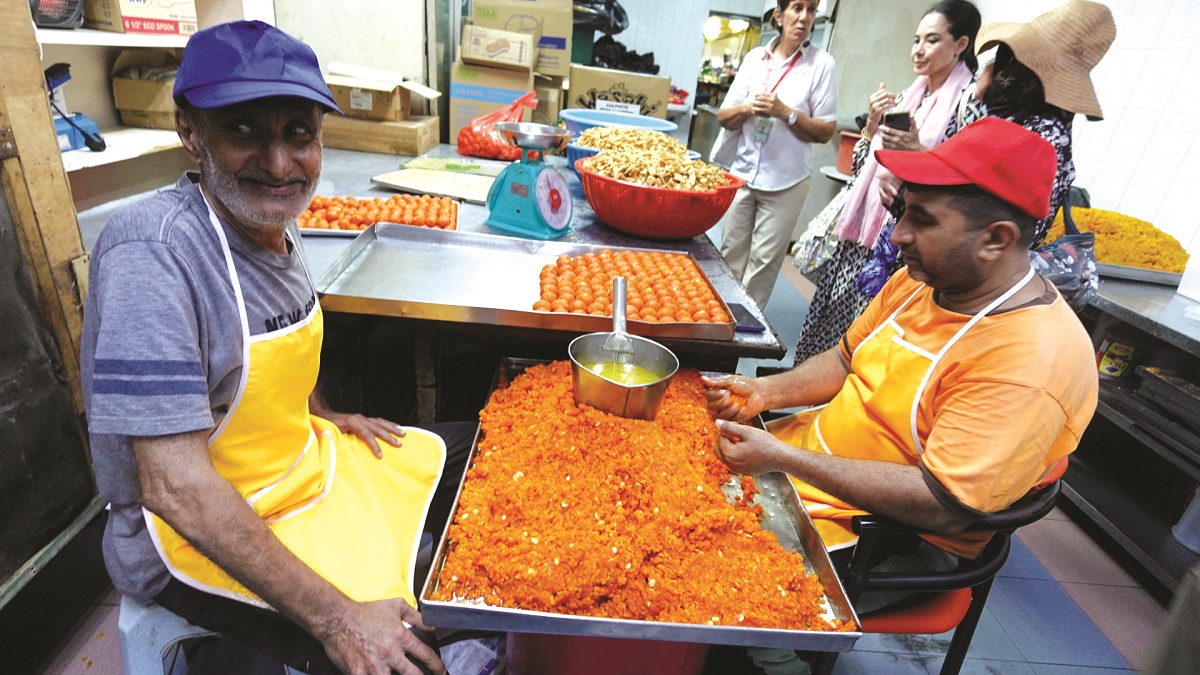
Owner Bhoopender Singh describes the business as generational but fragile in succession.
“We’ve been here since 1946. My father started it,” he says.
“This shop has seen political movements from independence to Reformasi right up to Covid-19,” he shares.
Masjid India: religious infrastructure as urban system
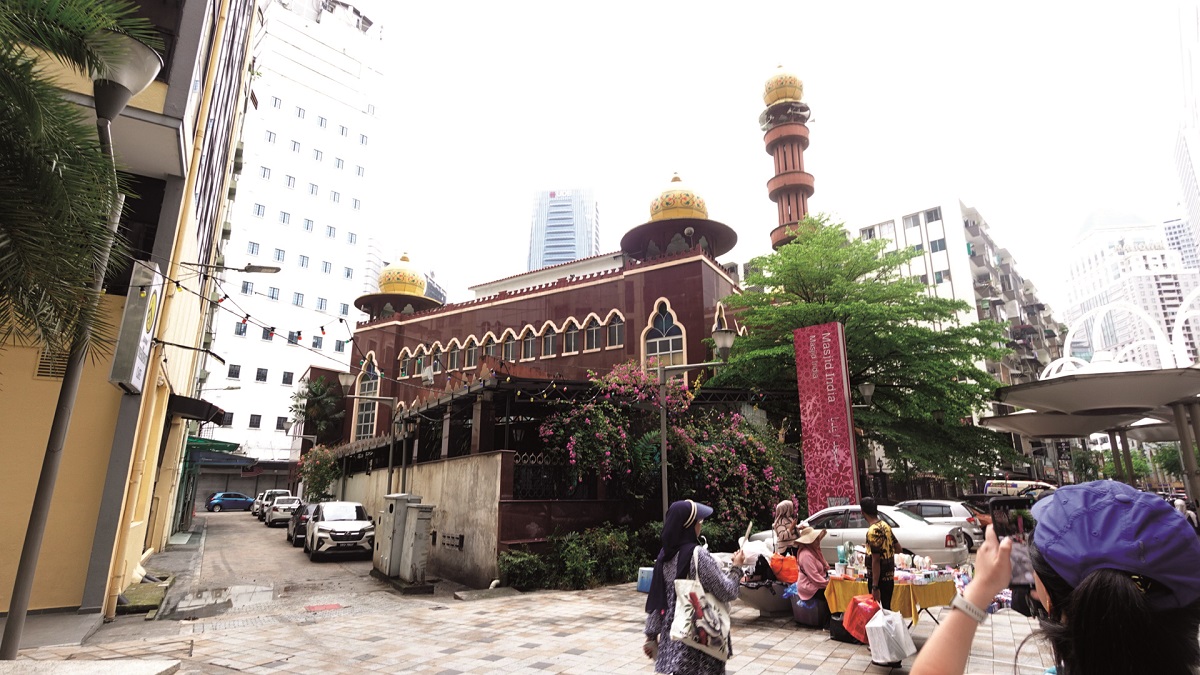
The route continues towards Jalan Masjid India, located within one of the city’s earliest settlement zones formed by a river confluence and trade-based urban planning.
A key clarification is made during the walk: Masjid Jamek, although a prominent icon, is not the oldest mosque in KL.
The earliest mosque was established by the Chulia Indian Muslim community after receiving land from the fifth Selangor Sultan, initially functioning as a simple wooden structure before evolving into a full community system.
Masjid India volunteer guide Mohd Latiff S Mohd Shaffie says: “This mosque was built by a clan called Chulias. [The late] Sultan Alaeddin Sulaiman Shah granted them this land, and they built this mosque”.
The original building was later demolished to make way for the modern three-storey mosque seen today, featuring South Indian-style onion-domed cupolas. The foundation was laid in September 1964, and it was officially inaugurated in June 1966. The structure was later upgraded and refurbished between 1998 and 2002, introducing its granite slab façade.
Beyond worship, Mohd Latiff explains the mosque now functions as a civic anchor for the community, covering “marriage, education, socialising, everything”.
PH Hendry: fourth-generation retail and royal legacy
The final stop is PH Hendry, a fourth-generation jewellery business operating from a heritage commercial unit that has remained active across colonial, post-independence, and modern KL.
The family’s Malayan roots began with great-grandfather PH Dines Hamy, a harbour pilot who later established Ceylon Bakery in 1895 on Jalan Melayu.
From that foundation, the next major shift came in 1902, when PH Hendry started the family’s jewellery and giftware business, initially operating in a corner of the bakery before expanding into a standalone practice.
“The person who started the jewellery business was my grandfather, PH Hendry. He started it in 1902,” Suren Hendry says.
By 1929, the firm had received two royal appointments, followed by a third royal warrant in 1949.
Today, PH Hendry remains one of KL’s surviving heritage jewellers, with royal appointments to Negeri Sembilan, Selangor, and Kelantan.
The production and design process has evolved over time, with earlier craftsmanship and stones sourced from Sri Lanka while design work is now carried out locally by artisans in the workshop above the store.
“In the mid 1980s, the bakery moved behind the jewellery and giftware shop along Jalan Tuanku Abdul Rahman,” Suren adds.
Still breathing life
Across Medan Pasar, Jalan Melayu, Masjid India and surrounding corridors, the walk reveals a consistent pattern: KL’s historic core is not frozen heritage, but a dynamic present-day system still walking with time.
Shophouses remain productive. Religious institutions continue to function as civic anchors.
Family businesses persist across generations.
And restored buildings are steadily reinserted into modern consumption cycles.
Old KL is still functioning as real estate, not on a nostalgic note, but continuity through adaptation.
..........
Read about emerging trends, data-backed insights, growing subsectors, and expert commentaries in EdgeProp print. Subscribe now for your free copy!
Follow Us
Follow our channels to receive property news updates 24/7 round the clock.


Telegram


Latest publications
View AllFollow Us
Follow our channels to receive property news updates 24/7 round the clock.
Malaysia's Most
Loved Property App
The only property app you need. More than 200,000 sale/rent listings and daily property news.