Rehda Institute RIYI mentors stress sustainability, industry readiness
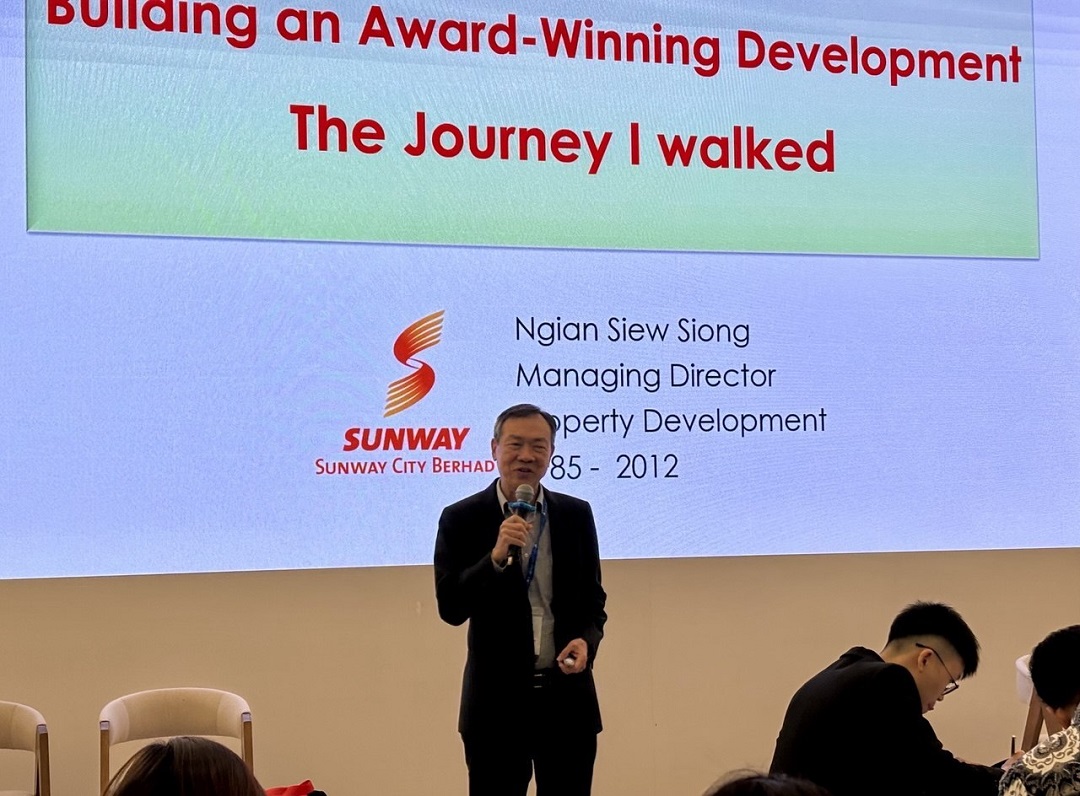
SUBANG JAYA (June 25): Sustainability matters more than profit, with long-term survival taking priority over short-term gains in business strategy, as companies are pushed to focus on resilience, discipline and continuous value creation over quick wins.
Chin Hin Group board adviser Ngian Siew Siong said companies must prioritise sustainability in making money, stressing that long-term survival is more important than short-term profits.
“Making money is very important, but being sustainable is even more important,” he said during the morning session of the Real Estate and Housing Developers’ Association (Rehda) Institute Youth Initiative (RIYI) 2026 corporate mentorship programme.
He added that his early strategy focused on differentiation through landscaping, design, specifications and customer service, rather than just product delivery.
Read also
Rehda Institute’s RIYI 2026: Corporate mentors prep Gen Z for property careers
Ngian said the company also refined its vision in 1988 with the help of McKinsey, focusing on creating environments for living, working and leisure, not just housing products.
“We were not just selling houses. We wanted to create an environment for living, working and leisure,” he said.
Ngian also said sustainability in business requires process efficiency, supply chain capability, total quality management and continuous innovation.
“Innovation should focus less on research and development (R&D) and more on ‘copy and develop’ (C&D) by improving existing ideas rather than reinventing everything,” he said.
“Because many ideas already exist. Learn from them and improve them,” he added.
Product, cost and people as core drivers
Avaland Bhd chief operating officer Aw Sei Cheh said the property industry operates similarly to the tech sector, where product development sits at the core, supported by the right team, execution and understanding of costs and market demand.
“Product is the number one thing. When it comes to a product, it’s the location, the size and the look,” he said.
Aw said developers must also understand costs beneath the surface, including construction, finance and other development-related expenses.
He added that artificial intelligence (AI) is increasingly used in market research, but its value depends on the quality of questions being asked.
“The quality of answers that AI can give us really depends on the quality of the questions we ask,” he noted.
Aw said beyond strategy and cost, people remain the core of any organisation.
“People are what form the company and make the company really strong,” he said.
From distribution to discipline
Feruni chief commercial officer Roger Ong said the tile and sanitaryware specialist began more than 30 years ago during China’s early opening of the sanitaryware industry, when the Malaysian market was still dominated by local manufacturers.
“The housing industry in Malaysia is about 55 years old. At that time, 30-odd years ago, there were no major importers. About 95% of the market was mainly served by local manufacturers,” he said.
Ong said the company later shifted from a distribution model to a retail showroom model, drawing inspiration from global brands such as Starbucks and Apple Stores.
“We changed it to the first retail store,” he said.
He said the company expanded rapidly after adopting an EBITDA (Earnings Before Interest, Taxes, Depreciation, and Amortisation)-positive approach, a metric commonly used in other industries to evaluate operating performance (running a business with a strict focus on core operational profitability).
However, rapid expansion into multiple showrooms eventually led to operational strain due to insufficient training and execution capacity.
The business later experienced losses for three years following a long period of profitability, and recovery required restructuring, including closing underperforming stores and reassessing business segments.
Ong said trust remains a key factor in sustaining long-term business relationships and project execution.
“Sustainable growth depends on balancing expansion with execution capability and operational discipline,” he added.
Mindset, resilience and long-term opportunities
Fairview Development founder and chairman Datuk Muztaza Mohamad said adopting a “migrant mindset” helped him navigate uncertainty, framing it as a willingness to accept rejection repeatedly while continuing to pursue opportunities.
He also said opportunities exist widely across everyday interactions and environments, and individuals should remain alert to potential business and life opportunities.
“Trust remains a critical foundation in business relationships. Long-term collaborations are often built over many years of consistent engagement,” he said.
Early exposure and soft skills for graduate readiness
Universiti Teknologi MARA (UiTM) Faculty of Communication and Media Studies deputy dean (Student Affairs) Ahmad Faisal Mohamed Fiah said one of the biggest gaps facing graduates is the lack of real-world industry exposure.
“While universities provide students with strong theoretical knowledge and technical foundations, many students only experience the realities of the workplace during their internship, which is often too late in their academic journey.
“Industry exposure should begin much earlier, ideally from the first year of university. Early engagement with industry allows students to connect classroom learning with real business practices, understand workplace expectations and appreciate why certain knowledge and skills are important.
“It also helps them develop confidence, adaptability and a better understanding of how their academic studies translate into professional careers,” he said in a statement.
Ahmad Faisal added that technical knowledge will always remain important, but soft skills are what truly differentiate graduates in today’s workplace.
“Students need to develop strong communication skills so they can collaborate effectively, present ideas confidently and build professional relationships.
“Equally important is critical thinking. In an environment where technology and artificial intelligence (AI) continue to evolve, employers increasingly value graduates who can analyse situations, solve problems, make sound decisions and adapt to changing circumstances.
“These skills, combined with a willingness to continuously learn, will help graduates remain relevant throughout their careers,” he added.
Ahmad Faisal said initiatives such as RIYI play an important role in connecting academia with industry.
“They create valuable opportunities for students to interact directly with experienced industry professionals, understand employer expectations and gain exposure to real workplace challenges.
“From the university’s perspective, programmes like RIYI also help educators stay informed about the latest industry trends, technological developments and emerging skills that employers are looking for.
“This closer collaboration enables universities to better align academic learning with industry needs, ultimately producing graduates who are more prepared for the workforce,” he said.
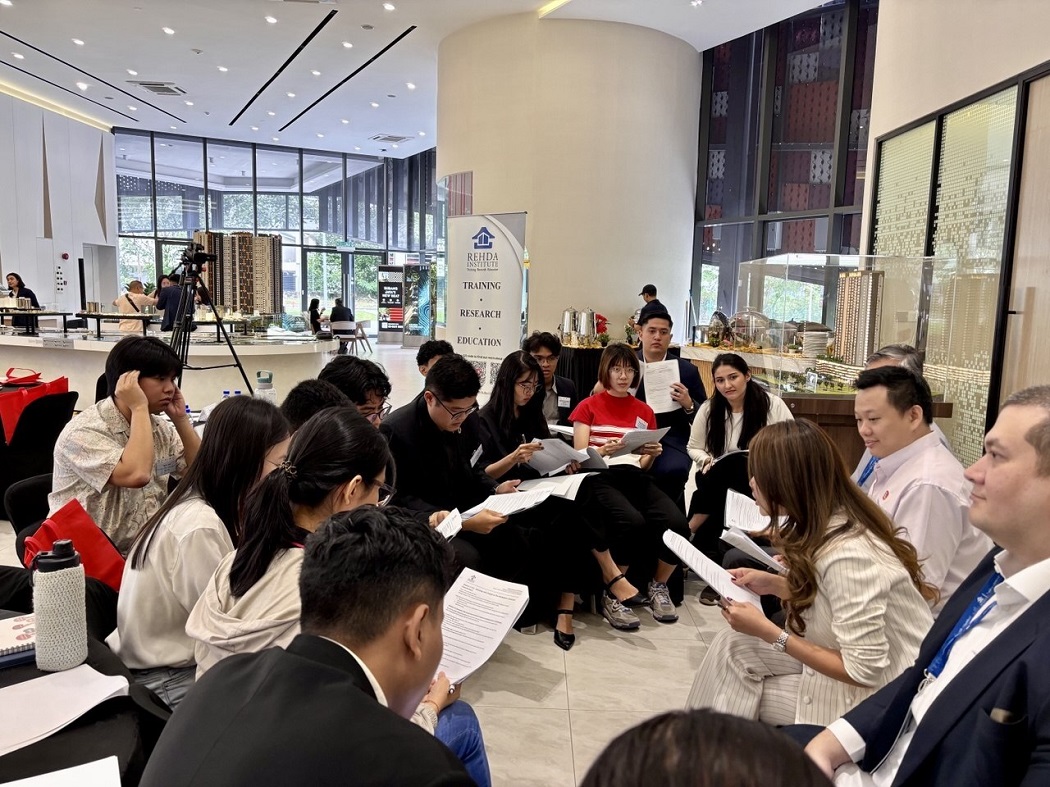
Thematic pod-based rotations simulate real workplace scenarios
Beyond keynote sharing, students also took part in thematic pod-based small-group rotations, where they were placed in real-world workplace simulations across topics such as time and task management, as well as emotional intelligence and stakeholder engagement.
In each station, participants engaged directly with industry practitioners including Muztaza, Henry Butcher Malaysia (Mont Kiara) managing director Low Hon Keong, Aw, TalentCorp independent director Chan Leng Wai and Ong, alongside other facilitators, through scenario-driven discussions, question-and-answer exchanges and role-play exercises designed to test decision-making, collaboration and communication under workplace conditions.
The RIYI 2026 second corporate mentorship session brought together about 50 students from over 15 universities nationwide to engage directly with industry leaders and gain early exposure to workplace expectations in the built-environment sector.
The session forms part of a structured three-part programme running throughout 2026, aimed at strengthening graduate readiness and bridging the gap between academic learning and industry requirements.
RIYI was first introduced during the Rehda Institute CEO Series in January 2026 and was officially launched by Transport Minister Anthony Loke Siew Fook, reflecting the institute’s commitment to strengthening university–industry collaboration as part of Malaysia’s broader human capital development agenda.
..........
Read about emerging trends, data-backed insights, growing subsectors, and expert commentaries in EdgeProp print. Subscribe now for your free copy!
Follow Us
Follow our channels to receive property news updates 24/7 round the clock.


Telegram


Latest publications
View AllFollow Us
Follow our channels to receive property news updates 24/7 round the clock.
Malaysia's Most
Loved Property App
The only property app you need. More than 200,000 sale/rent listings and daily property news.