Housing affordability in focus as Rehda Institute launches report, KPKT outlines Cambridge collaboration
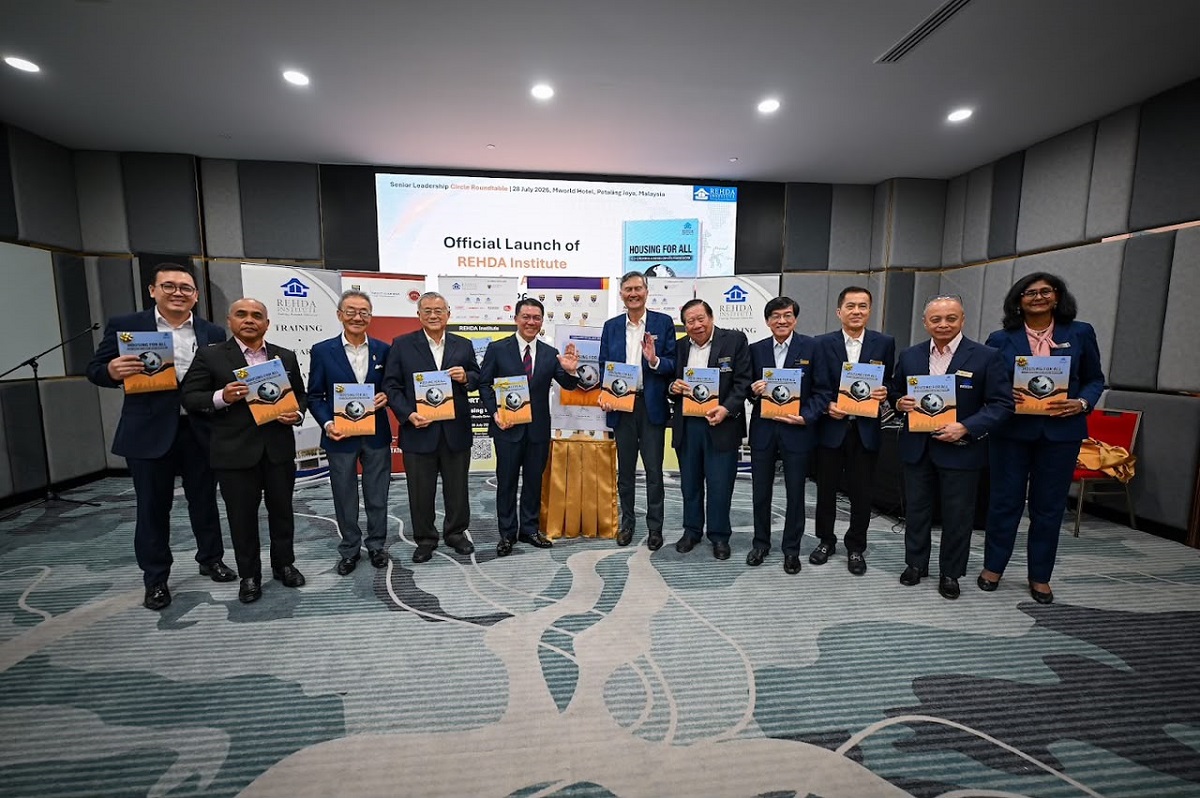
KUALA LUMPUR (July 29): Rehda Institute launched its latest housing research publication on Tuesday (July 28) as the Ministry of Housing and Local Government (KPKT) outlined plans for the proposed Malaysia–Cambridge Urban Platform (MCUP), a long-term collaboration with the University of Cambridge aimed at strengthening housing affordability, urban planning and sustainable development policies in Malaysia.
The book launch coincided with the inaugural Senior Leadership Circle Roundtable held under the proposed MCUP, an initiative led by KPKT with Rehda Institute as its strategic collaboration partner.
The closed-door session brought together representatives from the Ministries of Housing and Local Government, Economy, Transport, and Natural Resources and Environmental Sustainability, alongside senior industry leaders and academics from the University of Cambridge.
Discussions centred on two priorities shaping Malaysia's future housing agenda: refining how housing affordability should be measured to better inform decisions on housing supply, subsidies, financing and infrastructure investment, and exploring how smart city technologies, advanced data analytics and digital tools can improve spatial planning while balancing affordability, sustainability and liveability.
Housing and Local Government Minister Nga Kor Ming described the proposed platform as an opportunity to strengthen collaboration between researchers, policymakers and industry stakeholders.
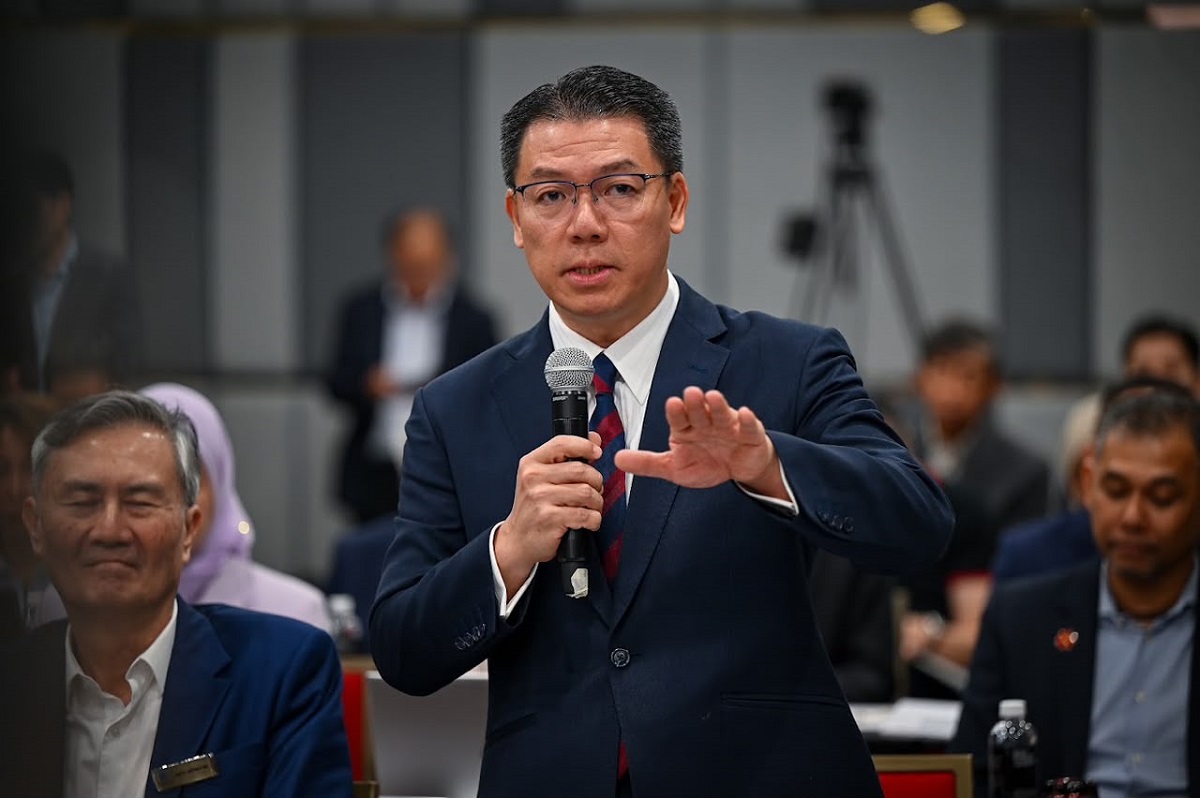
"The Malaysia–Cambridge Urban Platform has great potential to become an intellectual bridge between research, policymaking and implementation. By bringing together scholars, governments and industry leaders, this platform can help translate research into practical solutions, not only for Malaysia, but also for the wider Asia-Pacific region," he said.
The event also marked the launch of Rehda Institute's latest publication, Housing for All: Co-Creating a Needs-Driven Framework.
National Housing Policy to launch Aug 10
Speaking after the launch, Nga said the government will unveil the National Housing Policy 2026–2036 on Aug 10, setting out reforms aimed at improving housing affordability while addressing delayed and abandoned housing projects.
He said the policy is guided by the objective of providing inclusive access to quality and affordable housing while tackling longstanding structural challenges within the housing sector.
Among its key targets is eliminating abandoned housing projects nationwide by 2030 through initiatives under the National Housing Reform agenda, including the Housing Integrated Management System (HIMS), the Transforming and Empowering Data Usage in Housing portal, the electronic sale and purchase agreement (eSPA) system and scheduled audits under the housing development framework.
Nga said these measures would strengthen governance, improve project delivery and reduce the risk of future abandoned projects.
He also noted that Rehda Institute's latest research found homeownership among the M40 group had fallen below that of the B40, underscoring the need for broader measures of affordability beyond conventional indicators.
"Housing affordability today is far more complex than conventional measures alone can explain. Traditional indicators such as the Median Multiple remain valuable, but they no longer fully capture the realities faced by many middle-income families," he said.
Nga added that Malaysia's urbanisation rate had risen from 28% in 1970 to 77% in 2025 and is projected to reach 85% by 2040, highlighting the need for more sustainable urban planning supported by data and digital technologies.
Housing policy should reflect household needs
Rehda Institute chairman Datuk Jeffrey Ng Tiong Lip said housing policy should move beyond measuring the number of homes delivered to ensure developments meet household needs in terms of location, accessibility and long-term affordability.
"Malaysia's housing challenge is not simply about how many homes we build. We must also ask whether we are building the right homes, in the right locations and at prices that households can genuinely afford — not only at the point of purchase, but throughout the period of ownership."
Ng said the proposed Malaysia–Cambridge Urban Platform aims to bridge the gap between academic research and policymaking by translating international research into practical, evidence-based policy recommendations grounded in implementation realities.
"Our aim is to establish a shared knowledge base from which clear, evidence-based definitions of the issues can emerge. This will be built through a model of partnership, co-creation and knowledge co-production, bringing together academia, government and industry," he said.
He added that discussions initiated during the roundtable would continue at the Regional Housing Conference 2026.
The findings of Housing for All: Co-Creating a Needs-Driven Framework, together with recommendations from the Senior Leadership Circle Roundtable, will be further discussed at the Regional Housing Conference 2026 on July 29 at the Malaysia International Trade and Exhibition Centre (Mitec).
Menara Merdeka Maybank
Following the event, participants toured Menara Merdeka Maybank (renamed from Merdeka 118 on Tuesday, July 28), where PNB Merdeka Ventures Sdn Bhd CEO Datuk Izwan Hasli Mohd Ibrahim said the tower is about 72% occupied, with two additional tenants expected to move in, lifting occupancy to around 80%.

Izwan said the Menara Merdeka Maybank precinct is designed to be activated by three main drivers — the office tower, which is expected to accommodate 10,000 to 11,000 workers, two event-hosting stadiums, and the observation deck, which is projected to attract one million to 1.5 million visitors annually.
He added that the precinct is connected to three rail transit lines, provides about 8,000 parking bays, and incorporates smart building systems that automatically optimise energy consumption based on occupancy levels, alongside continued efforts to improve connectivity, walkability and integration with surrounding heritage landmarks.
..........
Read about emerging trends, data-backed insights, growing subsectors, and expert commentaries in EdgeProp print. Subscribe now for your free copy!
Follow Us
Follow our channels to receive property news updates 24/7 round the clock.


Telegram


Latest publications
View AllFollow Us
Follow our channels to receive property news updates 24/7 round the clock.
Malaysia's Most
Loved Property App
The only property app you need. More than 200,000 sale/rent listings and daily property news.