Tech Real reflects on two decades of change in Malaysia's property market
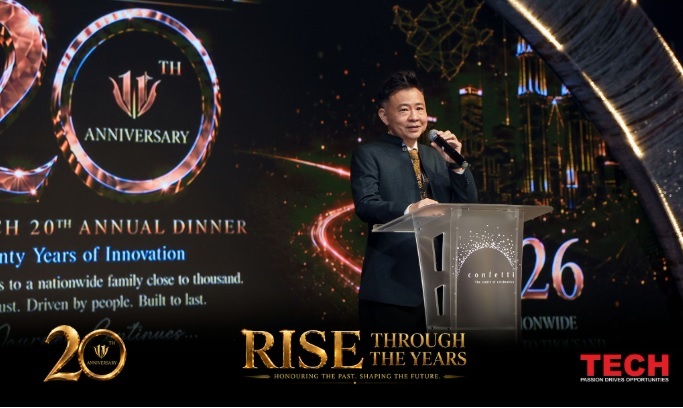
KUALA LUMPUR (July 31): Two decades in Malaysia's property industry have been marked by significant shifts in market dynamics, digital adoption and changing consumer expectations, according to Tech Real founder Alex Lee, who said long-term relevance depends less on longevity than on the ability to adapt to evolving industry conditions.
Reflecting on the company's 20-year journey, Lee said the property market has become increasingly data-driven, with digitalisation, changing buyer expectations and evolving business models reshaping how agencies, developers and negotiators operate.
Among the most significant changes has been the integration of digital tools into the real estate business. Customer relationship management (CRM) systems, artificial intelligence (AI), data analytics and online platforms have become integral to agency operations, reducing reliance on traditional marketing methods and manual processes.
Lee also observed that buyers and sellers now expect more comprehensive advisory services. Beyond facilitating transactions, property professionals are increasingly expected to provide market intelligence, pricing analysis, legal guidance and timely responses grounded in reliable data.
The career model for negotiators has likewise evolved. While commission-based earnings remain important, experienced negotiators are increasingly building teams and generating recurring income through leadership and mentoring, creating a more scalable business model.
Digitalisation reshapes the property industry
Looking back at major industry milestones, Lee identified the Covid-19 pandemic as the key event that fundamentally changed how developers approach projects, although he acknowledged that the 2008 Global Financial Crisis influenced financing and debt management.
He said the pandemic prompted developers to adopt phased project launches to better align supply with demand and manage financial risk, while also reshaping product planning as buyers placed greater emphasis on larger living spaces, home offices, improved ventilation, flexible layouts and lifestyle-oriented facilities.
The pandemic also accelerated the industry's digital transformation. Virtual property tours, online bookings, digital documentation, e-signatures and data-driven marketing became mainstream, while higher construction costs — driven by supply chain disruptions, rising material prices and labour shortages — pushed developers to improve cost efficiency, strengthen budgeting discipline and rely more heavily on market intelligence to assess buyer demand, pricing and project absorption before launching projects.
"The pandemic forced the entire industry to adopt changes that might otherwise have taken another five to ten years," Lee said.
Better-informed buyers raise expectations
He noted that today's buyers are considerably more informed than they were two decades ago, with easy access to pricing information, market trends, developer track records and location research before engaging property professionals.
As a result, developers, agencies and consultants can no longer rely solely on conventional sales presentations but instead need to provide accurate, timely and data-driven advice while combining technology with professional expertise.
Lee also said assumptions that were common two decades ago no longer apply, particularly the belief that property prices will inevitably appreciate over time.
Instead, investors and property owners are increasingly required to enhance the value of their assets through improvements such as better design, renovations, layouts and features that strengthen rental appeal and resale potential.
"Today's successful investors don't just wait for the market to reward them — they create value that the market is willing to pay for," he said.
Leadership and adaptability underpin longevity
Commenting on why some companies have remained in business while others have exited the market, Lee attributed long-term sustainability primarily to leadership.
He said agencies that endure are typically led by founders with a clear vision, strong commitment and the ability to remain focused despite changing market conditions. Continuous innovation, investment in technology, staff development and responsiveness to customer expectations were also identified as important factors supporting long-term competitiveness.
He added that while a long-term vision provides direction, adaptability is equally essential as markets, customer expectations and technology continue to evolve.
"My philosophy is simple: keep your vision, but be flexible in your execution. The destination may remain the same, but the path to get there must evolve with the times," Lee said.
Drawing on the company's experience across multiple property cycles, Lee said developers that consistently outperform generally share several characteristics, including a clear understanding of market demand, particularly within the affordable and mid-market segments, consistent delivery standards and strong reputations built on fulfilling commitments.
He added that maintaining quality workmanship, completing projects on schedule and preserving buyer confidence remain critical to sustaining long-term performance across market cycles.
Reflecting on common mistakes made during periods of strong market growth, Lee said some companies overextend themselves by pursuing opportunities beyond their core strengths in an attempt to capitalise on favourable market conditions.
Instead, Tech Real has remained focused on strengthening its core business in the sub-sale market while continuing to invest in technology, talent development and operational improvements.
According to Lee, leadership principles centred on discipline, innovation, long-term commitment and perseverance have guided the company's decisions over the past two decades, with an emphasis on sustainable growth rather than short-term gains.
"Markets will always go through cycles, but a company with a solid foundation, a clear vision and the discipline to stay focused is far more likely to endure and continue growing for decades," he said.
..........
Read about emerging trends, data-backed insights, growing subsectors, and expert commentaries in EdgeProp print. Subscribe now for your free copy!
Follow Us
Follow our channels to receive property news updates 24/7 round the clock.


Telegram


Latest publications
View AllFollow Us
Follow our channels to receive property news updates 24/7 round the clock.
Malaysia's Most
Loved Property App
The only property app you need. More than 200,000 sale/rent listings and daily property news.