How Sungai Nibong could become the blueprint for Penang's rail-led future
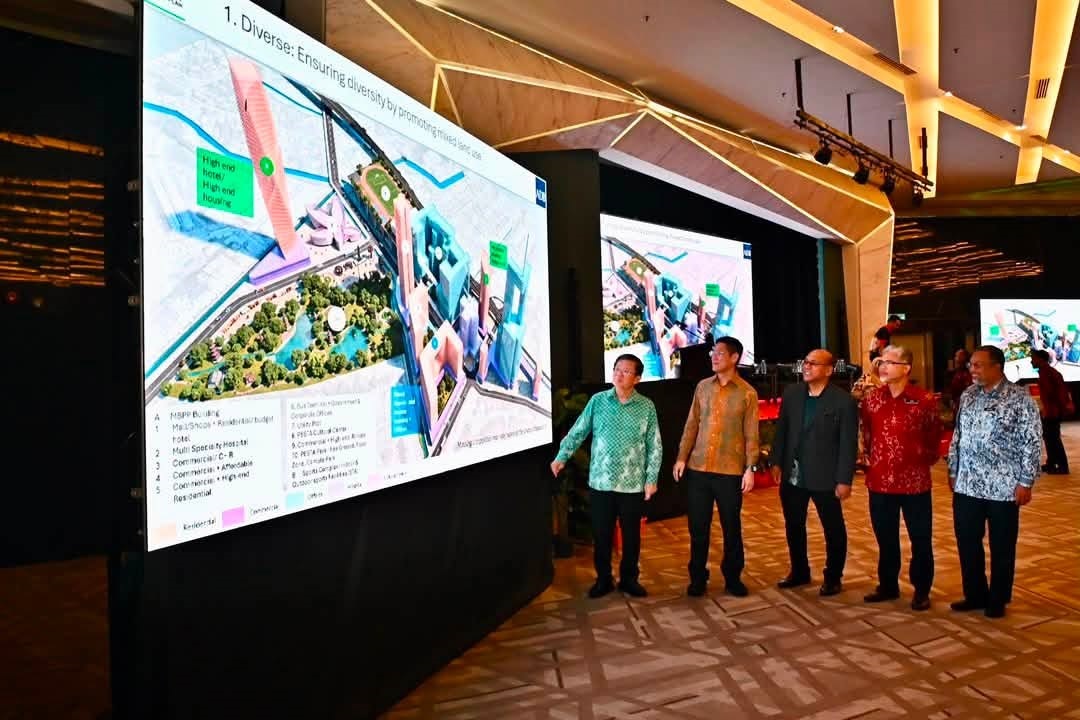
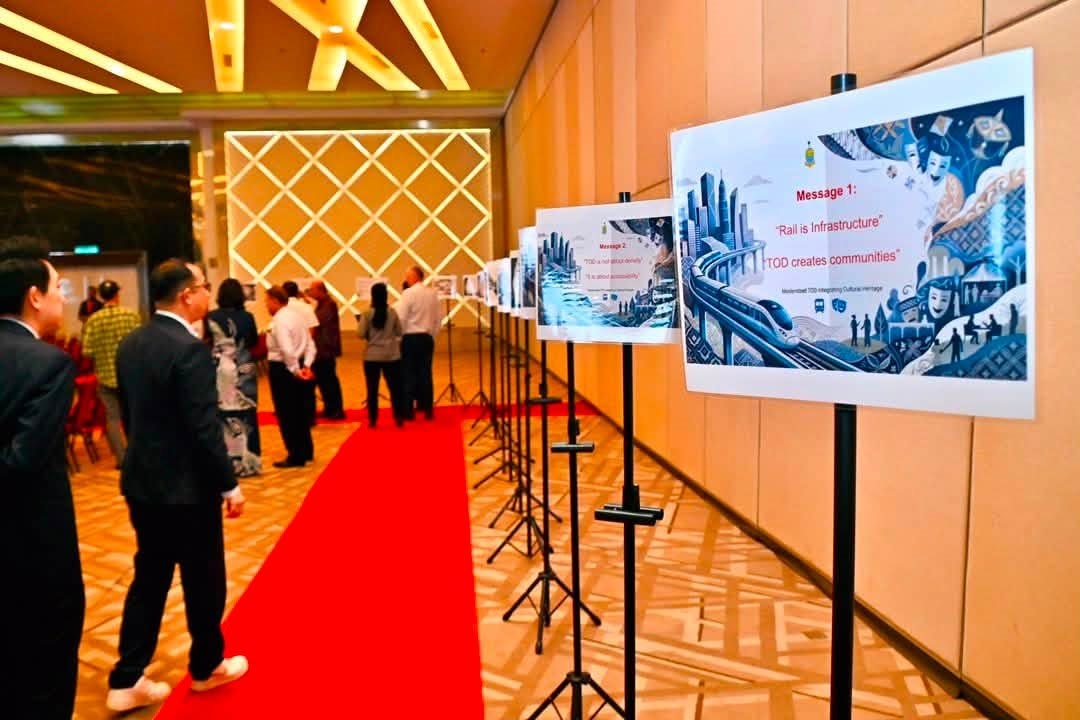
PENANG (Aug 4): The future Sungai Nibong LRT station may eventually become one stop along Penang's first urban rail network, but the state's ambitions extend well beyond building another station. At a Stakeholder Participation Workshop on the Draft Master Plan for Public Transport-Oriented Development (TOD) at Tapak Pesta, Sungai Nibong on July 30, the Penang state government outlined plans to transform the site into what it describes as Malaysia's first Inclusive Transit-Oriented Development (ITOD).
Around the former Tapak Pesta Sungai Nibong fairgrounds, the Penang government is planning what it describes as Malaysia's first Inclusive Transit-Oriented Development (ITOD) — an attempt to use the Mutiara Line not simply to move people, but to anchor the long-term redevelopment of an entire mixed-use district.
If realised, the project would transform one of the island's best-known transport interchanges into a neighbourhood where housing, commercial activities, public facilities and green spaces are planned alongside rail infrastructure rather than added incrementally over time, revealed the state government.
For developers, landowners and investors, Sungai Nibong also offers an early glimpse of how major transport investment could influence future planning and development across Penang's southern corridor. While rail projects often shape surrounding land use, the extent of any impact on property values will ultimately depend on market conditions, planning decisions and the pace of implementation.
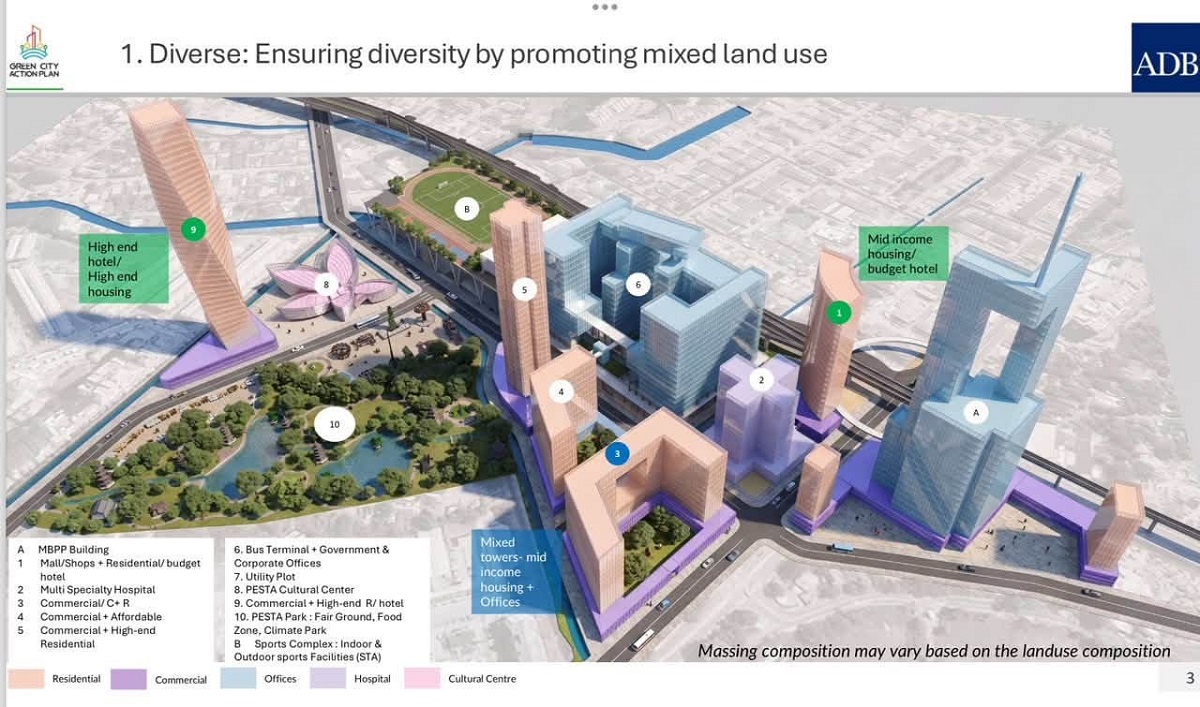
Unlike many TODs that emerge after rail infrastructure is established, Sungai Nibong is being planned in tandem with the Mutiara LRT project. That allows transport infrastructure, land use and public amenities to be considered within a single long-term planning framework. Although the railway scheme has been approved, much of the surrounding ITOD remains at the draft planning stage and will be refined through stakeholder consultation before implementation.
From depot to district
According to the revised Railway Scheme published for public inspection by Mass Rapid Transit Corporation Sdn Bhd (MRT Corp), the 29.67km Mutiara Line will comprise 22 stations — 20 permanent stations and two provisional stations — linking Silicon Island, George Town and Penang Sentral. Passenger services are targeted to begin in December 2031.
The line is expected to form the backbone of Penang's first urban rail network, improving public transport connectivity between the island and the mainland while serving key residential, commercial and employment centres.
Within the overall scheme, Silicon Island has been designated as the location of the main depot, while Sungai Nibong will house a secondary depot together with an LRT station integrated with interstate and local bus services.
Yet the state views the site as considerably more than supporting railway infrastructure.
Penang Chief Minister Chow Kon Yeow has said the proposal extends beyond building a depot, with the site planned to accommodate an LRT station, bus terminal and taxi facilities as part of a broader TOD.
State planning documents similarly show that only part of the former Tapak Pesta site will be occupied by railway infrastructure. The balance of the land is earmarked under the draft ITOD master plan for residential, commercial, civic and recreational uses, allowing the transport hub and surrounding urban district to evolve together.
That transformation is already underway.
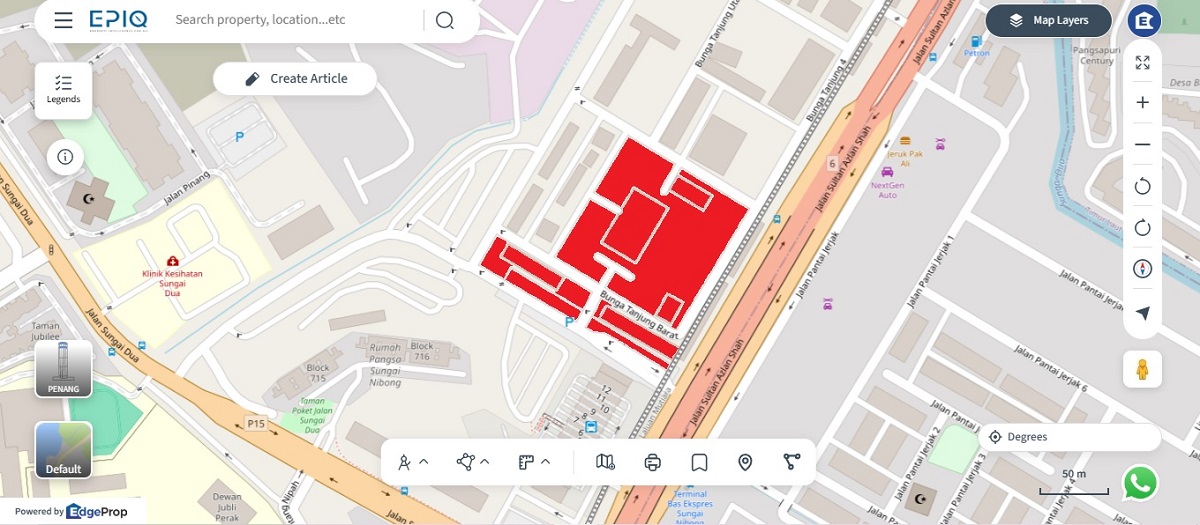
According to the Penang state government's land handover announcement, about 9.9 acres of the 20.1-acre Tapak Ekspo Sungai Nibong site have been transferred to MRT Corp in phases under Civil Main Contract 1 (CMC1) and Civil Main Contract 3 (CMC3) to facilitate construction of the LRT station and secondary depot.
The sequencing is significant. Railway construction will begin well before much of the surrounding mixed-use development, meaning the transport infrastructure is intended to provide the framework around which the wider district will take shape over the coming decade.
Why Sungai Nibong?
Location was only one factor behind the state's decision.
According to discussions during the Sungai Nibong stakeholder workshop and remarks by Penang Infrastructure, Transport and Digital Committee chairman Zairil Khir Johari, the area already functions as one of the island's busiest transport gateways. It accommodates interstate coach services, local buses and sits close to Penang International Airport, the Bayan Lepas Free Industrial Zone and established residential neighbourhoods.
Those existing connections make Sungai Nibong well suited to become a genuine multimodal interchange rather than simply another station on the Mutiara Line.
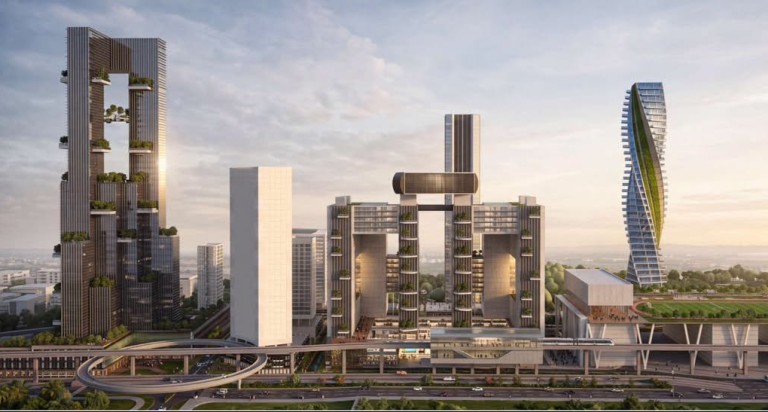
MRT Corp similarly describes the station as a community-serving transport hub within walking distance of surrounding residential areas, schools and public facilities. Instead of treating the secondary depot as back-of-house engineering infrastructure, the broader concept integrates rail operations with housing, commercial development and civic amenities.
For the property market, that distinction matters.
Rather than viewing the station as a standalone transport asset, the state is attempting to use public transport to shape future land use, concentrating homes, workplaces, services and public spaces around a high-capacity transit network. The objective is not merely to improve mobility, but to encourage a more compact pattern of urban growth as Penang continues expanding southwards.
The redevelopment also marks the beginning of a symbolic transition for one of the state's most recognisable public sites.
For decades, Tapak Pesta Sungai Nibong has been synonymous with the annual Pesta Pulau Pinang. As reported by Buletin Mutiara, Malay Mail and other local media, the relocation of the fair paves the way for the site's gradual transformation from a seasonal event venue into a year-round mixed-use district centred on public transport.
That shift reflects a broader change in how the state intends to approach urban development. Rather than delivering transport infrastructure, housing and commercial projects as separate initiatives over time, Sungai Nibong is intended to bring them together under a single long-term master plan — one where mobility serves as the organising principle for future growth.
ITOD versus TOD
At the heart of the Sungai Nibong proposal is a planning concept the Penang government deliberately distinguishes from a conventional TOD.
Traditional TODs typically focus on concentrating higher-density development around rail stations to maximise accessibility and encourage public transport use. The proposed ITOD, however, seeks to broaden that approach by integrating transport infrastructure with housing, public amenities, employment, cultural facilities and environmental planning within a single neighbourhood.
Rather than treating the LRT station as the project's end point, the station becomes the organising centre around which an entire district is planned.
According to the draft master plan presented during the stakeholder workshop, the objective is to create a community that accommodates residents of different income groups and age profiles while reducing reliance on private vehicles through better public transport connectivity, walkability and access to essential services.
Developed with technical support from the Asian Development Bank (ADB), the proposal also reflects broader planning principles contained in Penang's Green City Action Plan (GCAP), including climate resilience, integrated transport, sustainable land use and improved public spaces.
What the draft master plan proposes
The draft master plan covers approximately 23.4ha (about 58 acres) of predominantly state-owned land surrounding the future Sungai Nibong station and secondary depot, excluding parcels owned by Penang Island City Council (MBPP).
The proposal is organised around three broad components: mixed-use development, civic and environmental facilities, and an integrated transport hub.
Mixed-use development
Residential development forms a significant part of the proposal.
The draft master plan provides for up to 700 affordable housing units and about 350 high-end residential units, supporting an estimated population of around 3,600 residents.
The housing component will be complemented by retail outlets, government offices, corporate offices and hotels of varying categories, creating an environment where homes, workplaces and daily services are located within walking distance of the LRT station.
Instead of creating a conventional residential township centred on private vehicle ownership, the proposal seeks to establish a neighbourhood where residents can live, work and access everyday services within a compact, transit-oriented environment.
Civic and environmental uses
Public facilities are another key feature of the draft master plan.
The proposal includes a hospital and other healthcare facilities, a sports complex, indoor and outdoor recreational amenities, together with a network of public open spaces intended to improve liveability for both residents and visitors.
One of the proposal's more distinctive elements is a five-acre cultural and arts precinct.
Rather than replacing the former Pesta Pulau Pinang fairgrounds with another seasonal attraction, the concept envisions year-round performance venues, exhibition spaces and community facilities that would expand the site's civic role beyond transport and residential development.
Environmental resilience also features prominently in the planning framework.
The master plan incorporates a substantial public park together with retention ponds and water features intended to improve stormwater management in an area that has experienced recurring flash floods, while contributing to broader liveability and climate adaptation objectives.
Transport and movement
Transport remains the organising principle of the redevelopment.
The proposed transport hub will integrate the LRT station, secondary depot, interstate and local bus services, taxi facilities and pedestrian infrastructure within a single interconnected precinct designed to simplify transfers between different modes of transport.
To reduce dependence on private vehicles, the draft master plan proposes extensive covered walkways, elevated pedestrian links, underground connections and cycling routes linking residential neighbourhoods, commercial buildings and public facilities.
According to remarks by Zairil, reducing reliance on private vehicles remains one of the project's central objectives despite the higher-density development planned around the station.
Together, these elements reflect a planning approach that prioritises walking, cycling and public transport as the preferred means of moving around the district, with road infrastructure supporting rather than dominating the urban environment.
Where GCAP fits
The Sungai Nibong ITOD is being developed within the framework of Penang's Green City Action Plan (GCAP), with technical assistance from the Asian Development Bank.
The distinction is important.
GCAP does not approve, finance or deliver the Sungai Nibong redevelopment. Instead, it provides the strategic planning framework through which Penang identifies infrastructure priorities, strengthens capital investment planning and develops long-term strategies for climate-resilient urban growth.
ADB's GCAP documentation describes a programme that supports local authorities in preparing sustainable urban strategies, identifying investment priorities, strengthening institutional capacity and exploring financing options, including potential public-private partnerships.
Within that broader framework, Sungai Nibong has emerged as one of Penang's flagship planning initiatives because it combines transport infrastructure, housing, public amenities and environmental planning within a single long-term redevelopment strategy.
Chow has said the draft master plan is targeted for completion around October 2026 following stakeholder consultation.
Once finalised, attention will shift towards implementation, including development phasing, planning controls, delivery mechanisms and the allocation of responsibilities between public-sector projects, private developments and potential public-private partnerships.
Translating ambitions from planning documents into a functioning neighbourhood over the next decade will be the more difficult challenge.
For now, the Sungai Nibong master plan remains exactly that — a blueprint. But it provides the clearest indication yet of how Penang hopes to use its first urban rail network not simply to improve mobility, but to guide the next phase of the island's urban development.
Editor's note: This feature is based on information contained in the Penang government's draft Sungai Nibong Inclusive Transit-Oriented Development (ITOD) stakeholder presentation, the revised Railway Scheme and project materials published by Mass Rapid Transit Corp Sdn Bhd (MRT Corp), Asian Development Bank Green City Action Plan publications, and reporting by Malay Mail, Buletin Mutiara, Free Malaysia Today, Penang Property Talk and other publicly available sources.
..........
Read about emerging trends, data-backed insights, growing subsectors, and expert commentaries in EdgeProp print. Subscribe now for your free copy!
Follow Us
Follow our channels to receive property news updates 24/7 round the clock.


Telegram


Latest publications
View AllFollow Us
Follow our channels to receive property news updates 24/7 round the clock.
Malaysia's Most
Loved Property App
The only property app you need. More than 200,000 sale/rent listings and daily property news.