George Town heritage properties back in vogue as rents, prices surge

GEORGE TOWN (Aug 15): Rental rates and selling prices for pre-war shophouses in George Town's Unesco core zone have skyrocketed 20% above 2024 levels, pushing per-square-foot rents past RM3 in prime locations like Campbell Street as tourism rebounds and supply tightens.
The rental boom is mirrored by a surge in sale prices, with per-square-foot values now ranging from RM2,000 to RM3,000 depending on location.
According to One Asia Property chief operating officer Lim Ewe Tatt, some 150 and 250 pre-war properties changed hands in 2025, with total transaction value estimated between RM250 million and RM300 million.
The rental surge reflects a broader market recovery that has lifted both rental and capital values across George Town's heritage enclave, said Lim.
"Rental rates in the core zone now exceed RM3 per square foot in locations like Campbell Street, while buffer zone rates average around RM2 per square foot," Lim said. "Current rental yields have improved significantly, now ranging between 4% and 5% annually — a marked recovery from the sub-4% yields seen a decade ago."
The plot ratio transfer mechanism remains a key incentive for buyers. George Town's base plot ratio is 5:1, meaning total floor space can be five times the land area.
Developers who acquire heritage properties can transfer the unused balance — effectively three times the land area after subtracting existing built-up space — to their other projects within designated revitalisation zones.
This mechanism, formalised under the George Town Special Area Plan pursuant to the Town and Country Planning Act 1976, has been a significant driver of demand.
According to Lim's estimates, sale prices for pre-war shophouses range from RM2,000 to RM2,500 per square foot, with core zone properties commanding higher premiums, about 20% higher than in 2024.
Examples include Bishop Street, where a two-storey, 1,800 sq ft unit sells for about RM3 million, while a larger three-storey, 4,000 sq ft unit on Campbell Street can fetch RM8 million.
At the top end, Piccadilly Bazaar — a beautifully refurbished row of commercial lots near the Chowrasta Market in inner George Town — is asking for RM20 million, while unrestored smaller lots start from RM1.18 million.
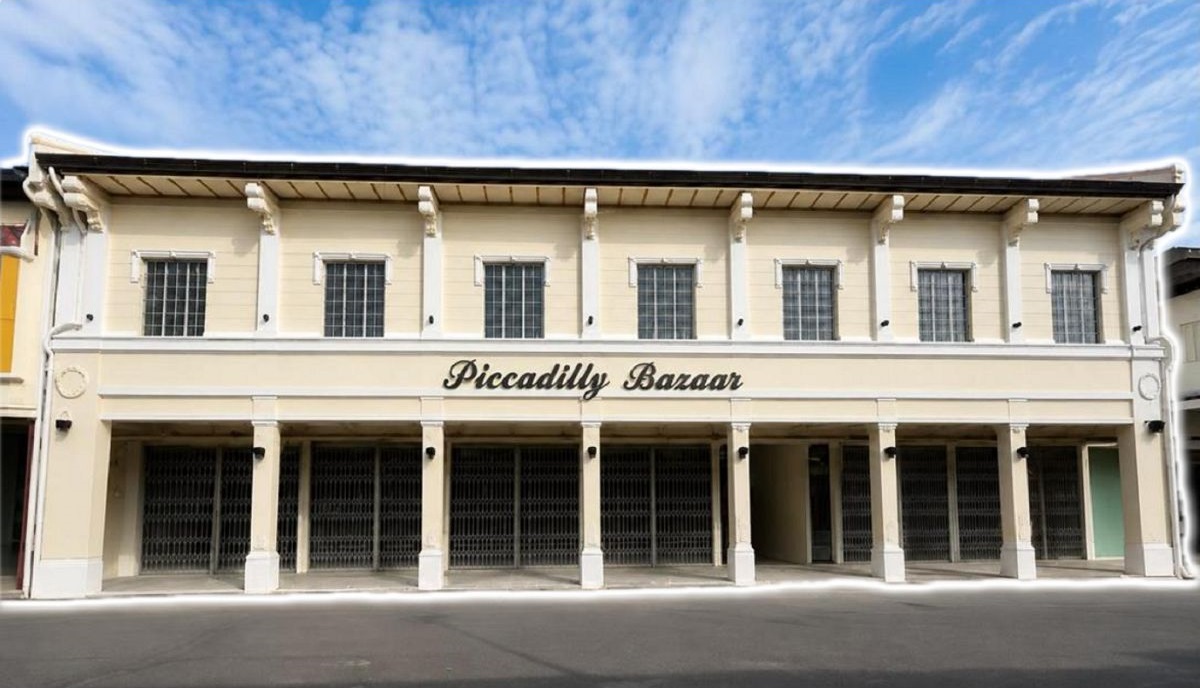
Piccadilly Bazaar, owned by Singapore-listed Goodland Group Ltd, won the Pertubuhan Akitek Malaysia (PAM) Awards 2026 for Excellence in Architecture recently.
On transaction volumes, Lim said: "We estimate at least 150 to 250 pre-war properties were sold in 2025, with total value between RM250 million and RM300 million."
Lim attributes sustained demand to finite supply. "The number of pre-war units is limited and only decreasing — like an antique.
“There are only some 3,853 units in George Town's heritage core and buffer areas. Paucity of stock, together with tourism growth and infrastructure investment, continues to support price appreciation," he added.
China tourist boom
Andy Ooi, director of boutique accommodation operator Aayu Homes, said pre-war house rental rates in core areas range from RM4,000 to RM6,000 per month, with occupancy rates running at 60% to 80%
"The increase in direct flights from China has boosted tourist arrivals significantly.
"Aayu Homes now operates over 20 renovated pre-war boutique homes across the core and buffer zones, providing lodging for tourists at room rates ranging from RM200 to RM700 per night," Ooi said
Rental examples from the market illustrate the diversity.
On Kimberley Street in the core zone, a two-storey commercial shophouse of 1,200 sq ft rents for RM8,000 per month — about RM6.66 psf — benefitting from high local traffic.
In the core zone, Lebuh Campbell's grander late Straits Eclectic-style structures with larger ground floors command RM25,000 to RM30,000 per month for 6,000 sq ft, translating to RM4–5 psf. Monthly rents across the heritage zone range from RM4,500 to RM40,000, depending on size, location and condition, with the typical range between RM4,500 and RM9,500.
While renovation costs remain a significant factor for investors, the boutique accommodation model "has proven sustainable" with steady occupancy and competitive rates, providing viable return for restoration investments, he added.
Renovation costs range from RM200,000 to RM500,000 per pre-war house depending on the conditions, scope and heritage compliance requirements.
In 2018, the heritage market bore little resemblance to today's.
Rental yields were struggling at 2.5% to 3.8%, according to data compiled by The Edge, and monthly rents rarely exceeded RM8,000 even for prime locations. High asking prices, unattractive yields and limited buyer interest from overseas characterised the market.
Restoration and conversion costs — including RM100 per sq m for residential-to-commercial change of use and a RM25,000-per-car-park-bay contribution — further deterred investors.
Transaction volumes were concentrated between RM1,000 and RM1,800 psf, with only occasional outliers above RM2,000 psf.
Today, the landscape has shifted. The current rental boom, the relaxation of planning approvals and rising tourist arrivals have revitalised interest. Yields of 4%-5% are now achievable, making heritage properties a more compelling investment.
Policy boost
A significant policy shift took effect on May 1, 2026, when the Penang Island City Council (MBPP) approved new guidelines removing the requirement for planning permission for selected change-of-use applications within the heritage zone.
According to MBPP mayor Rajendran P Anthony, the revision aims to facilitate property owners while reducing procedural delays and compliance costs. Under the new rules, terrace houses may be converted into shophouses, with commercial use restricted to the ground floor and upper levels retained for residential purposes.
Owners are now only required to submit building plans, which will cut the approval process by six to nine months.
Parking requirements remain in place, though developers can opt to contribute in lieu of RM25,000 per car bay and RM2,500 per motorcycle bay. A conversion charge of RM100 per square metre applies for residential-to-commercial use.
The state government is also improving infrastructure around the heritage zone, with Beach Street being converted to a one-way street to allow for more landscaping and a greener urban ecosystem.
Upcoming projects include an LRT station in Penang, as well as international cruising at the Penang Port, further boosting connectivity and tourism prospects.
According to One Asia Property's Lim, compared to Singapore's heritage shophouse market, Penang remains highly affordable — roughly 10 to 15 times cheaper.
A 2,000 sq ft, two-storey shophouse in Penang might fetch RM3 million, while a similar property on Singapore's Circular Road — 2,800 sq ft and over three storeys — can command up to RM50 million. South Bridge Road properties of 3,300 sq ft have been known to exceed RM65 million. This price differential continues to attract regional investor interest, particularly from Singapore and Hong Kong.
“George Town's pre-war shophouses, with their distinctive blend of Chinese, Malay and European architecture, remain one of Southeast Asia's most unique property investments,” Lim said.
..........
EdgeProp monthly brings you data, insights and solutions for an evolving market. Subscribe now for your free copy!
Follow Us
Follow our channels to receive property news updates 24/7 round the clock.


Telegram


Latest publications
View AllFollow Us
Follow our channels to receive property news updates 24/7 round the clock.
Malaysia's Most
Loved Property App
The only property app you need. More than 200,000 sale/rent listings and daily property news.