Spotting locations for expansion: MyNews combines market survey with data analytics
This article appeared in the Aug 13, 2026 issue of the monthly print edition. Subscribe now.
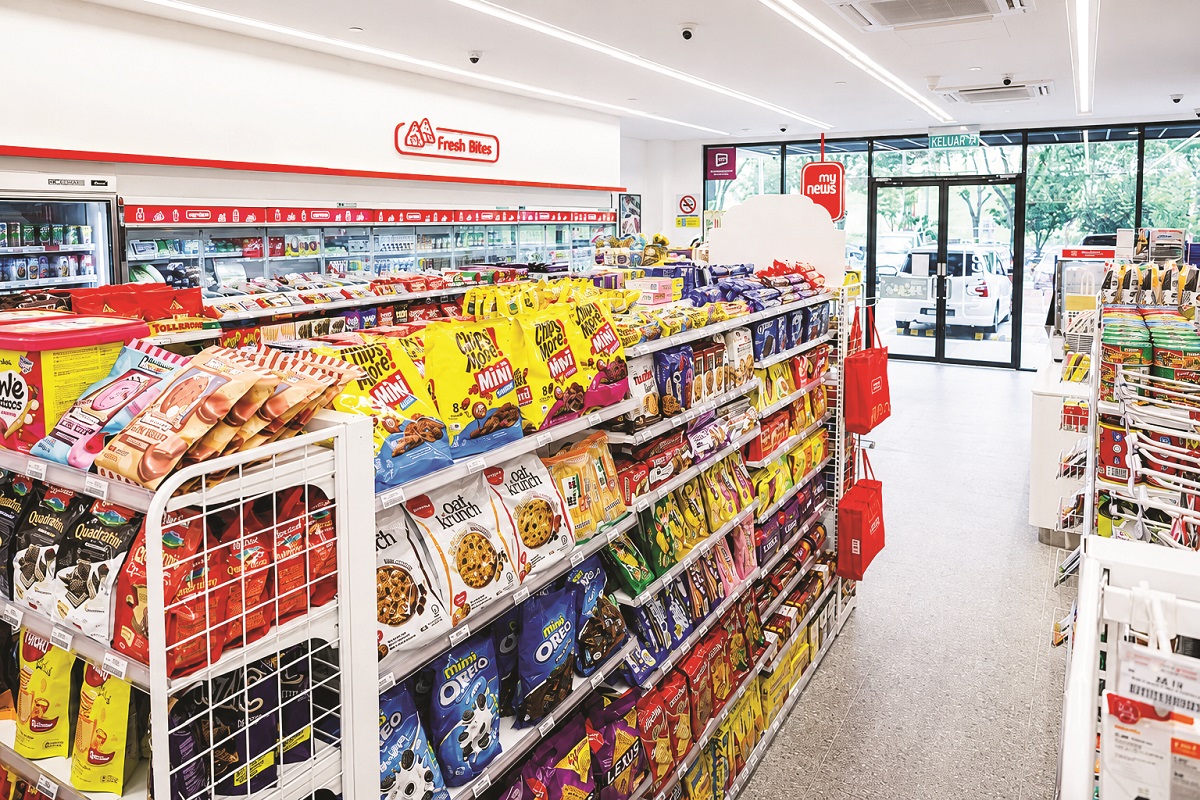
There is a reason why it is called a convenience store. Its ubiquitous presence with the big red and white signboard around condos, offices, transportation hubs, hospitals, commercial streets and retail centres makes it so — well, convenient — to just grab a sandwich, chocolate bar, coffee, aspirin, a reload pin, or anything else you may need quick and fast.
Like peppercorns in a pot of malatang, MyNews seems to be in every urban corner. As at the time of writing, the count is up to 501.
The convenience retail chain also operates 157 CU stores, 20 WHSmith outlets, and seven Maru Coffee locations.
From a single 200 sq ft newsstand, how has the business, within 20 years, grown to become the largest homegrown retail convenience store chain in Malaysia? What tools does it use to make decisions on where and when to set up shop?
EdgeProp speaks to MyNews Holdings Bhd chief business development officer Ong Li Syin, who reveals that the company does not rely on a single metric when evaluating potential sites.
Instead, it assesses multiple variables to identify locations that are likely to support sustainable business performance.
The company’s evaluation process considers the characteristics of the surrounding population, pedestrian activity, nearby demand generators such as educational institutions, offices and transport hubs, as well as the level of competition within the immediate catchment area.
“It comes down to a mix of hard numbers and experience. We look at who’s actually living and working around a spot, how busy foot traffic is, whether it’s near a school, office or train station, and how many other stores are already competing for the same customers there,” says Ong.
And while on-the-ground assessments are still important, technology advancement has helped fill the gap for a more thorough market analysis that may be limited through a physical walkabout.
Leveraging data-driven intelligence
According to Ong, site visits alone may not always provide a complete picture of a location’s commercial potential. In some instances, locations that appear relatively quiet during physical inspections are supported by data indicating consistent daytime activity generated by nearby educational institutions, industrial areas or large residential townships.
Conversely, locations that initially appear busier are not always the strongest long-term opportunities when analysed against broader datasets.
Ong notes that such situations have occurred on more than one occasion, illustrating how data can complement traditional observational assessments and reduce reliance on first impressions.
“Format matters too. Some spots work better as a small standalone shop, others as tucked inside a station or a building. None of these alone makes the decision,” she adds.
Once potential sites have been identified through data analysis, operational teams conduct field visits to better understand conditions that may not be reflected in datasets alone.
“Data gets us to a shortlist, but it doesn’t close the deal on its own. After that it’s boots on the ground, visiting the site, talking to agents or landlords and getting a feel for the neighbourhood,” Ong shares.
Such considerations may include local community characteristics, development timelines and other location-specific circumstances that are not immediately apparent through quantitative analysis.
“Some things just don’t show up in a spreadsheet, like a development that’s been delayed for two years or a habit that is specific to a community. So, really, it’s both, working hand in hand, rather than one overruling the other,” she says.
Technology a critical tool even after opening
Ong says technology continues to play an important role after new stores begin operations.
Following the opening of an outlet, the company monitors sales performance and purchasing behaviour to optimise store operations. Performance data is used to guide decisions relating to inventory management and staffing requirements, allowing operational adjustments to be made as customer demand evolves.
Where stores underperform, analytical tools enable the company to identify issues early enough for corrective measures to be implemented. Similarly, strong-performing outlets are analysed to determine whether successful operational practices can be replicated elsewhere within the network.

Rather than treating expansion as a one-time decision, MyNews views store optimisation as an ongoing process that continues throughout a store’s operating lifecycle.
The increasing availability of operational data has changed how the company approaches expansion planning compared with several years ago.
“Five years ago, we’d have leaned more on gut feel on how busy a place looked, and whether it sat in an established shopping area.
“These days we lean more on structured data, and we’re also factoring in things like online shopping and eating, and hybrid work, [and how this is] changing when and where people actually are during the day,” says Ong.
Consumer purchasing patterns have also influenced the retailer’s expansion strategy in recent years. Shoppers are increasingly making smaller, more frequent purchases instead of conducting larger weekly shopping trips, reinforcing demand for conveniently-located neighbourhood retail outlets.
“In the bigger picture, it tells you Malaysians want convenience close to home now, not just in the usual shopping belt, and daily life just isn’t as centered around one place, like the way it used to be,” she says.
Diversifying beyond traditional nodes
The rise of more flexible work arrangements has also altered daily pedestrian movement. As foot traffic becomes less concentrated around conventional office hours, the retailer has diversified the types of locations it targets for expansion.
Rather than concentrating solely on established commercial districts, the company has increasingly expanded into residential neighbourhoods and transit hubs, reflecting broader shifts in where consumers live, work and travel. Transit-oriented developments and integrated residential-commercial projects also remain areas of interest as they sprout across the country.
The company also evaluates future development potential rather than focusing solely on current levels of activity when selecting new locations. Longer-term indicators, such as planned residential developments, future transport infrastructure, road connectivity and projected population growth over the next five to 10 years, are all noted as useful markers.
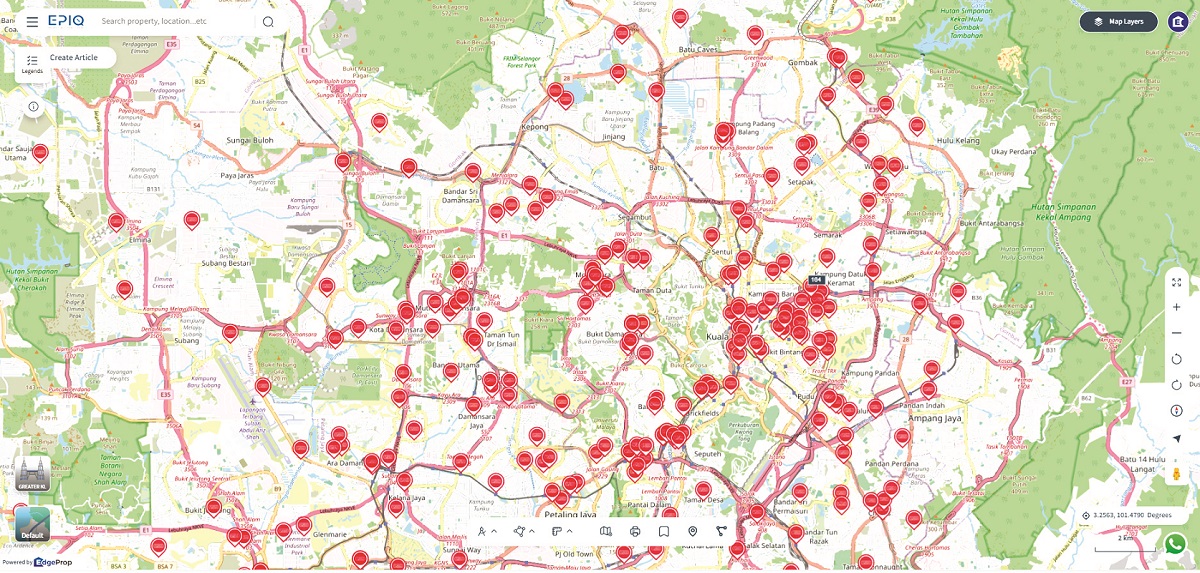
This forward-looking approach enables the retailer to identify locations where future demand may strengthen over time, even if current activity appears relatively modest. By assessing both present-day performance indicators and anticipated urban development, the company aims to support more sustainable expansion decisions, rather than responding exclusively to short-term market conditions.
At the same time, demographic changes have broadened the company’s geographical focus beyond traditional urban retail centres. Population growth in newer townships outside the Klang Valley and in secondary cities has created opportunities in locations that had previously received less attention.
As consumer behaviour continues to evolve and urban development patterns shift, the company expects this integrated approach to remain central to its expansion strategy.
By combining predictive analytics with operational experience and local market observations, MyNews aims to identify locations that align with both current consumer demand and longer-term growth potential while continually refining store performance after each outlet begins operations.
On Nov 13, 2025, MyNews subscribed to EdgeProp EPIQ, a comprehensive property intelligence platform that enables users to access property data and actual transacted prices across Malaysia. The platform helps users make more informed property decisions by allowing them to compare sales data across different suburbs. In addition, EPIQ provides solutions to support real estate businesses, including generating high-intent leads and offering data-driven consultancy services.
..........
EdgeProp monthly brings you data, insights and solutions for an evolving market. Subscribe now for your free copy!
Follow Us
Follow our channels to receive property news updates 24/7 round the clock.


Telegram


Latest publications
View AllFollow Us
Follow our channels to receive property news updates 24/7 round the clock.
Malaysia's Most
Loved Property App
The only property app you need. More than 200,000 sale/rent listings and daily property news.