Should you buy or lease your headquarters?

This article appeared in the Aug 13, 2026 issue of the monthly print edition. Subscribe now.
“We’ve been paying rent for almost 10 years.”
The CEO leaned back in his chair before asking the question that would dominate the rest of the meeting.
“Shouldn’t we have bought our own headquarters by now?”
Around the boardroom table, the agreement came quickly.
“Owning builds equity.”
“Property prices keep increasing, so we’ll enjoy capital appreciation.”
“It’s a waste to keep paying rent.” “Buying sends the right message to our clients.” These responses all sounded rational.
Then I asked a different question, “Where do you want this business to be in 10 years?” The room fell silent. Suddenly, we were no longer discussing a building. We were discussing the future of the business.
It’s more than just a property decision.
Over the past 18 years, I’ve had the opportunity to advise business owners, corporate occupiers and multinational companies on office relocations, headquarters acquisitions and commercial real estate strategy. Regardless of the industry or the size of the organisation, one question almost always finds its way into the boardroom: “Should we buy, or should we continue leasing?”
It is a logical question. I believe it is also the wrong first question.
Buying and leasing are not business objectives. They are simply two different ways of supporting a business strategy.
When leadership teams begin by comparing buildings, rental rates or financing packages, they often overlook the more important discussion: What is the business trying to become?
Over the years, I’ve realised that choosing the right building isn’t usually the hardest part. The bigger challenge is making sure the property decision supports where the business wants to go.
That’s why I believe every major commercial real estate decision should begin with the business, before anyone starts looking at buildings.
The moment businesses start thinking differently
One of the most interesting observations throughout my career in the real estate industry is that companies rarely ask about buying a headquarters during difficult times. They ask this when business is doing well.
Revenue is more predictable. Cash flow is stronger. The workforce has expanded. Leadership teams are planning five or 10 years ahead instead of focusing only on the next quarter.
In many ways, the question is not really about property. It is a reflection of confidence.
However, financial capability and strategic readiness are not always the same thing. Being able to buy does not automatically mean buying is the right decision.
The biggest misconception about ownership
Many business owners see owning their headquarters as an important milestone. It’s easy to understand why.
Ownership can provide long-term stability, build equity over time, strengthen the balance sheet and reinforce a company’s identity.
The misconception is not that ownership creates value. It is believing that ownership, by itself, creates business value.
A headquarters is a strategic asset, but it delivers its greatest value only when it supports the business’ long-term direction.
That’s why I believe headquarters should never be the goal in itself. It should be the natural outcome of a business that is ready for the next stage of growth.
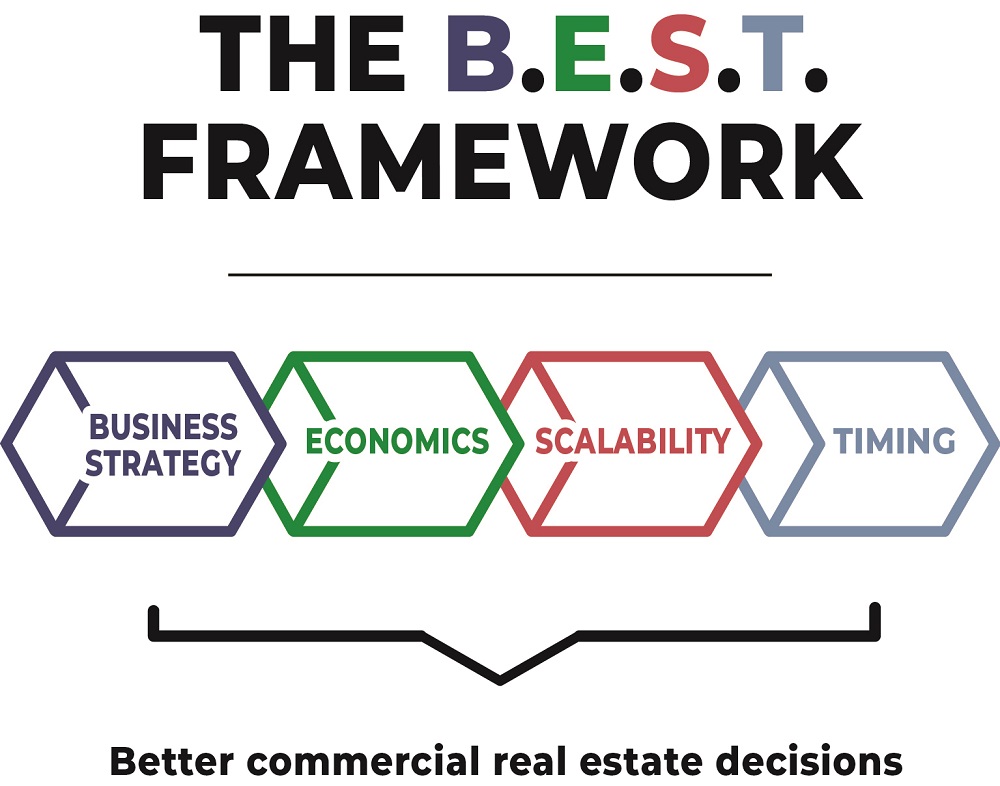
The B.E.S.T. Framework
After advising multiple companies ranging from growing SMEs to multinational corporations, I have noticed that although every client is different, I find myself asking the same four questions in almost every boardroom discussion.
Eventually, those questions evolved into what I now call the B.E.S.T. Framework.
It is not a framework for choosing buildings.
It is a framework for making better business decisions through commercial real estate.
B — Business strategy
Before discussing the property, understand the direction of the business. Where is the company heading over the next five to 10 years? Will growth come from expansion, acquisitions or a larger workforce? The answers often shape the property decision long before we begin evaluating buildings.
A property decision should support the business strategy, not define it.
E — Economics
Economics is about far more than comparing monthly rental against loan repayments. It is about understanding how capital can create the greatest value for the business. Buying a headquarters may strengthen the balance sheet over time, but it also commits capital that could otherwise be invested in expansion, technology, talent or new opportunities. Every ringgit invested in property is a ringgit that cannot be invested elsewhere.
That doesn’t make ownership the wrong decision. It simply means property should compete with every other investment for capital. Rather than asking: “Can we afford to buy?”, I encourage leadership teams to ask: “Is buying the best use of our capital at this stage of the business?”.
Every property decision is ultimately a capital allocation decision.
S — Scalability
One of the most common challenges I’ve seen is companies outgrowing their premises sooner than expected, not because they made a poor property decision, but because the business grew faster than anticipated.
Before making a long-term commitment, ask yourself: Will this headquarters still support the business in five to 10 years? Can it accommodate future growth and changing ways of working?
The best headquarters isn’t the one that fits your business today. It’s the one that supports the business you’re becoming.
T — Timing
Timing is often the most underestimated part of a property decision. A successful property decision is not just about finding the right building.
It’s about making the decision at the right stage of the business. Financial capability is important. Business readiness is even more important.
The right property at the wrong time is still the wrong decision.
A boardroom I still remember
Several years ago, I worked with a company that was financially capable of purchasing its headquarters. However, instead of discussing the building, we spent most of our meeting reviewing its five-year business plan.
It became obvious that the building it intended to purchase would become too small before their strategic expansion would be complete. The company decided to continue leasing.
Several years later, after completing its expansion, it acquired a headquarters that was far better aligned with its future.
That experience reminded me that timing is often more important than ownership itself.

The headquarters has changed
When companies looked for an office 10 or 15 years ago, the conversation was mostly about location, rental costs and space requirements.
Today, the discussion is much broader. Leadership teams also think about attracting talent, supporting hybrid work, embracing sustainability and creating a workplace that reflects the company’s culture.
From my boardroom
People often ask whether I encourage businesses to own their headquarters. My answer is yes.
Not because owning is always better than leasing, but because the right headquarters, acquired at the right stage of the business, can become a valuable long-term asset.
I’ve also seen companies buy too early. I’ve seen others wait too long. Both decisions come with consequences.
That’s why I don’t begin by asking whether a company should buy or lease. I begin by understanding where the business is today, and where it wants to go.
Because after nearly two decades of working with business leaders, one belief has remained constant: Property should never define the business. The business should define the property.
Disclaimer: The views expressed are the writer’s and do not necessarily reflect EdgeProp’s.While every effort has been made to ensure that the information provided in this article is accurate, reliable, and complete as of the time of writing, it is for general information only, and should not be relied upon to make any financial, investment, real estate or legal decisions. The information should not substitute advice from trained professionals, and EdgeProp accepts no liability from decisions made using the information.
..........
EdgeProp monthly brings you data, insights and solutions for an evolving market. Subscribe now for your free copy!
Follow Us
Follow our channels to receive property news updates 24/7 round the clock.


Telegram


Latest publications
View AllFollow Us
Follow our channels to receive property news updates 24/7 round the clock.
Malaysia's Most
Loved Property App
The only property app you need. More than 200,000 sale/rent listings and daily property news.