Penang’s healthcare economy runs wider than its medical tourism numbers
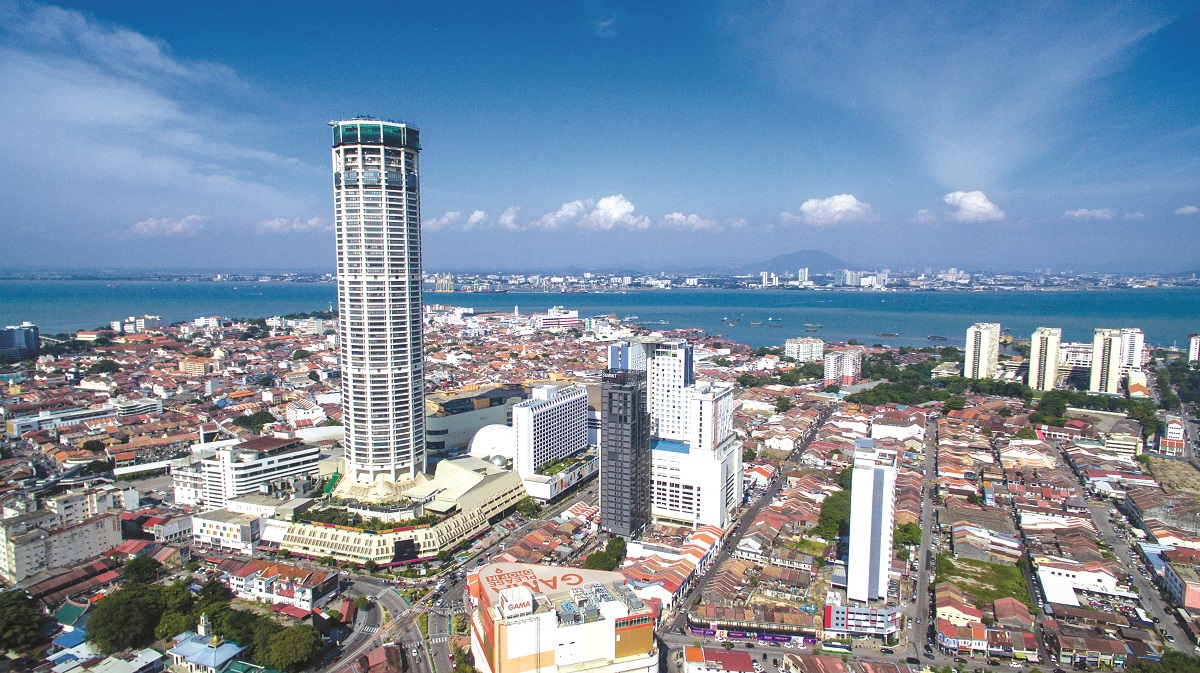
This article appeared in the Aug 13, 2026 issue of the monthly print edition. Subscribe now.
Malaysia’s medical tourism industry had a strong 2025. Revenue rose 23.2% year-on-year to RM3.35 billion, up from RM2.72 billion in 2024, while international patient arrivals climbed 15.6% to 1.85 million, from 1.6 million the year before.
Penang, once again, outpaced the rest of the country. The state’s 16 participating private hospitals treated 527,176 foreign patients in 2025, a 25.9% increase on the 418,608 treated in 2024, while medical tourism revenue generated within the state climbed 26.6% to RM1.14 billion from RM898.07 million a year earlier.
Penang General Hospital, located in George Town, opened in 1854, carries more than 1,000 beds and is designated the tertiary referral centre for northern Malaysia, taking complex cardiology, oncology and trauma cases from Kedah, Perlis and northern Perak. Private operators have built around the same catchment rather than around foreign arrivals.
On the mainland, Sunway Medical Centre Penang markets itself as a “northern medical hub”, while KPJ Penang Specialist Hospital in Bukit Mertajam, which serves the same region, completed a south wing expansion in 2025 that took its capacity to 319 beds.
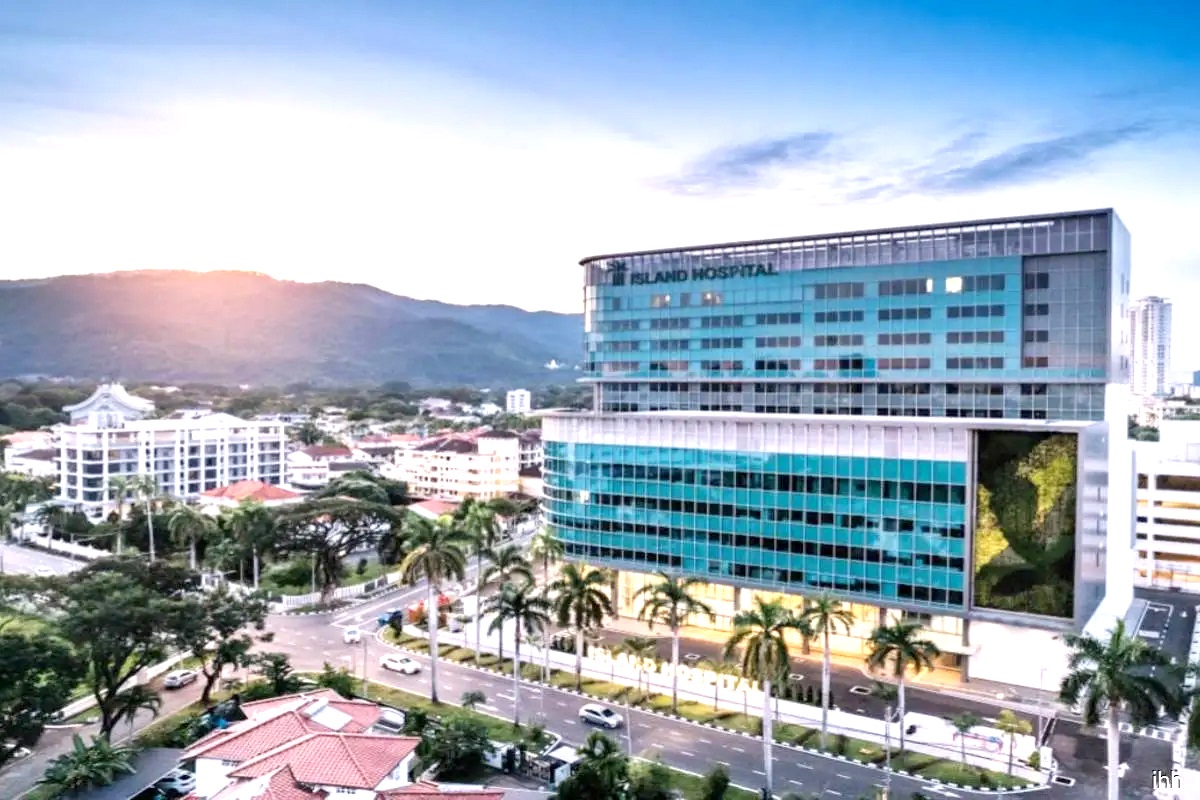
Within the island, Gleneagles Hospital Penang has operated in George Town since 1973, and Island Hospital was already an established tertiary facility in its own right before IHH Healthcare’s Pantai Holdings Bhd acquired it for RM3.92 billion in 2024, a valuation built on decades of regional standing.
And in June this year, Eastern & Oriental Bhd (E&O) filed a Bursa Malaysia announcement that had little to do with condominiums.
Its subsidiary KCB Holdings Sdn Bhd had signed a joint venture with Cengild Medical Bhd and Skyspring Sdn Bhd to build a 240-bed private hospital on Andaman Island, E&O’s 760-acre reclaimed waterfront township off Penang’s coast. The RM350 million multidisciplinary facility, slated for completion in the fourth quarter of 2029, will sit in the township’s Gurney Green district in what E&O managing director Kok Tuck Cheong called a component intended to “strengthen the township’s long-term appeal” and meet future residential demand.
By projection, Andaman Island is targeted to accommodate 250,000 residents when the 30-year master plan fully matures.
A small state, an outsized share
Penang’s dominance of the national medical tourism revenue tally has been held for years.
The state’s private hospitals accounted for about 45% of Malaysia’s total medical tourism revenue in 2025, as announced by Penang tourism and creative economy committee chairman Wong Hon Wai in July this year.
To put that into perspective, the state had roughly 1.8 million residents as at 2024 (based on the latest available data from the Department of Statistics Malaysia), a fraction of the Klang Valley’s population base. So, how did a relatively small state drive decades of tertiary healthcare capacity into nearly half of the country’s healthcare export earnings?
Malaysia Healthcare Travel Council (MHTC), established under the purview of the Ministry of Health Malaysia (MOH), tells EdgeProp that both Penang and Kuala Lumpur are key medical tourism hubs, each with distinct strengths.
MHTC vice president of data & analytics Aida Idris says that Penang has built a long-standing reputation for specialist care and strong patient loyalty. She also frames healthcare visitorship as a high-value economic sector that generates significant spillover benefits across multiple industries.
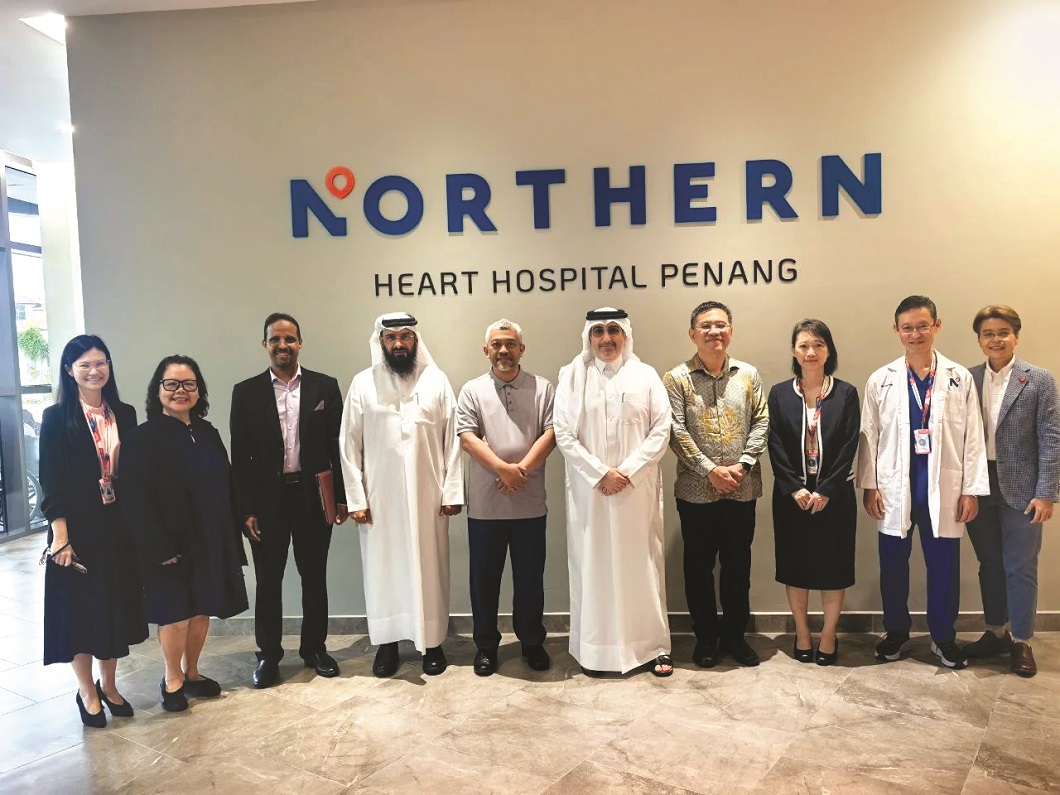
“International patients frequently travel with family members or caregivers. Their stay often extends beyond the treatment period to accommodate consultations, recovery and follow-up care. This creates sustained demand for accommodation, transportation, F&B, retail and leisure services, benefitting businesses well beyond the healthcare sector.”
As a result, medical tourism contributes meaningfully to the local economy by supporting a broad ecosystem of industries, Aida adds.
From bed count to land bank
IHH’s acquisition of Island Hospital was perhaps Penang’s largest private hospital deal, which gave the group three Penang hospitals with a combined 1,000-plus operational beds.
To property observers, Island Hospital holds a vacant land bank valued at RM223.4 million, with approvals already secured for future development.
The state government’s long-mooted Island Medical City plan for the same site envisions not just expansion of beds but travellers’ accommodation as well. At the time of groundbreaking in 2018, it was primed to attract practitioners to set up their long-term practice in Penang, and provide Penangites with more work opportunities. Pantai Hospital Penang, in Bayan Baru, has separately committed RM200 million to expand to 307 beds, 10 operating theatres and 440 parking bays.
“As hospitals expand their capabilities and attract more international patients, they naturally become economic anchors that stimulate growth beyond the healthcare sector by generating demand across a wide range of supporting industries such as hotels and serviced residences for patients and accompanying family members, rehabilitation and wellness centres, pharmacies, retail outlets and other lifestyle amenities,” Aida notes.
And these complementary services, often developed around established hospitals, contribute to the emergence of integrated medical precincts, she adds.
For developers and investors, these precincts present long-term opportunities because they are supported by sustained demand from patients, caregivers, healthcare professionals and the surrounding community.
Over on the mainland, a multibillion-ringgit Penang Medi-City is expected to feature a mixed development of multiple hospitals, wellness facilities, technology parks, commercial centres, schools and residential units spread over more than 200 acres in Batu Kawan. According to filings with Bursa Malaysia, Fajarbaru Builder Group signed the master purchase and development agreement with Penang Development Corporation in January 2025 for the first phase of the project, measuring 51.2 acres.
One for the landlords?
For Penang’s property market, the more immediate opportunity is simply eyeing more beds for caregivers, not just patients. Aida says that accommodation demand from medical travellers is diversifying beyond hotels.
“There is growing demand for serviced apartments and longer-stay accommodation, particularly among patients undergoing multiple treatment cycles, rehabilitation or extended recovery periods,” she says, adding that this often creates an opening for developers to build in “accessibility, proximity to hospitals, family-friendly facilities and extended-stay amenities”.
That demand further fuels a market that is already tilting towards the island’s high-rise stock.
Under Malaysia’s 1Q2026 property statistics, Penang island’s high-rise price index stood at 233.2 versus Seberang Perai’s 176.1 — the inverse of the landed-housing pattern, where the mainland’s terrace index (267.1) has been outpacing the island’s (155.5) as buyers priced out of George Town chase affordability across the channel.
Penang’s overall residential price growth in 1Q2026 ran at more than double the national average, according to the National Property Information Centre, even as completed unsold stock topped 32,000 units nationally.
For Singaporean and regional investors watching from across the strait, the more interesting comparison is how competitive it will stack up against Bangkok, Singapore itself, and an increasingly aggressive Johor, particularly when observing medical tourism alongside other growth engines — chief among them the industrial and manufacturing expansion that has defined Penang’s economy for decades.
Aida is candid that clinical reputation alone no longer wins.
“Patients are looking for a seamless and personalised healthcare journey, from pre-arrival planning and airport facilitation to treatment, recovery and post-treatment follow-up,” she says, pointing to MHTC’s Malaysia Healthcare Concierge & Lounge at KL International Airport as an example of ecosystem-building beyond the hospital gate.
“Malaysia’s competitive advantage lies not in any single hospital, but in the strength of the ecosystem that supports every patient’s journey.” That ecosystem argument is also where

MHTC is diversifying beyond Malaysia’s traditional Asean base, particularly Indonesia. The council is pushing into Greater China and the Middle East as new growth markets where patients and their accompanying families tend to stay longer and spend more on accommodation per visit.
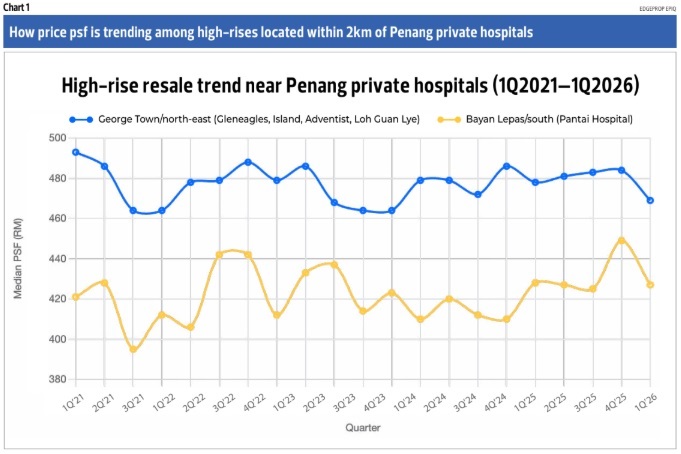
Chart 1 tracks the typical resale price psf of existing high-rise units in Penang’s two main private-hospital catchments over the past five years, where the George Town/north-east cluster has held firmly in the RM465–RM490 range while the Bayan Lepas/south cluster has traded lower around RM395–RM450.
However, medical tourism demand is typically short stays, so neither sale transaction nor rental yield will capture the sector’s economic spillover to property.
Demographic shift
Penang island’s land supply is constrained, and foreign buyers face a state-imposed ownership floor of minimum RM1 million for stratified property and RM3 million for landed homes, plus a 3% state levy on foreign purchases.
There is also the more pressing demographic question, which sees an ageing Asia that will shift from acute treatment to long-term chronic care, rehabilitation and healthy-ageing programmes. Aida says this trend may also impact types of extended mid-term stay and contribute to long-term urban development investments on the island.
“As medical tourism continues to grow, we expect greater collaboration between healthcare providers, developers, hospitality operators and government agencies to create integrated medical ecosystems that support patients throughout their healthcare journey,” Aida says, which includes reliable transportation, nutritious dining options and digital health services.
MHTC’s stated goal is for Penang’s hospitals to anchor “vibrant, liveable and economically-resilient urban ecosystems” which goes beyond hospital operators to keep growing revenue per patient without losing the volumes that justify new beds. In Bayan Baru, that invitation has already been taken up. Pantai Hospital’s 190-bed campus sits at the centre of a cluster of serviced residences that market hospital proximity as a core selling point.
For example, The Promenade, a 336-unit serviced residence completed in 2016 by the Lion Group and TJ Group, lists its position near Pantai Hospital alongside its retail podium and transport links.
PIX 1 Residences, the first phase of Ideal Property Group’s 16-acre Penang International Exchange master plan, advertises itself as within walking distance of the hospital, with a planned link bridge to a future LRT station.
Tropicana Bay Residences and Sunway Dora make the same pitch to buyers in the same corridor. None of these projects were built as medical tourism plays, but the hospital is already doing marketing work for them.
What MHTC expects next
Aida comments that where demand is heading matters in how property may fit into this picture going forward. Patients today are “more informed and actively involved in making healthcare decisions”, she notes, placing growing weight on convenience, personalised service and overall experience alongside clinical outcomes.
That is broadening the patient base rather than shifting it younger. While older patients still account for a substantial share of specialised treatment, she adds, “younger professionals are increasingly travelling for preventive healthcare, executive health screening, fertility services and wellness programmes” as they take a more active role in managing long-term health.
She explains that preventive care and curative treatment is also increasingly complementing one another: “Cardiology, oncology, orthopaedics and fertility treatment remain core drivers even as wellness and screening demand grows alongside them”.
Penang’s hospital capacity was built for, and remains anchored by, a regional population with nowhere closer to go for tertiary care. But MHTC’s optimism does point to where the property implications of medical tourism are likely to keep diversifying, particularly in mid-term family-oriented accommodation for accompanying relatives, longer-stay formats geared to recovery rather than a single procedure, and a wellness segment that looks less like a hospital admission and more like an extended visit.
..........
EdgeProp monthly brings you data, insights and solutions for an evolving market. Subscribe now for your free copy!
Follow Us
Follow our channels to receive property news updates 24/7 round the clock.


Telegram


Latest publications
View AllFollow Us
Follow our channels to receive property news updates 24/7 round the clock.
Malaysia's Most
Loved Property App
The only property app you need. More than 200,000 sale/rent listings and daily property news.