Pricing properties too high may hamper financing approval for developers

KELANA JAYA (Sept 9): Setting a high selling price may lower a developer’s chance in getting financing approvals for its projects.
This was highlighted during the Real Estate and Housing Developers’ Association (Rehda) Institute conference on Tuesday. The conference was held at Wisma Rehda, Kelana Jaya here on Sept 8 and 9, with EdgeProp as media partner. It focused on the Housing Development Act (HDA) and Strata Management Act under the theme: “How these Laws Impact Bank Lending and Financing Risk”.
Speaking at the conference, OCBC Bank Malaysia managing director (real estate corporate banking) Mohammad Fadzli Ahmad cited several challenges banks face in approving property development financing in 2026. Among them is increasingly high selling prices, particularly where prices per square foot exceed comparable projects.
Other considerations weighed by the lender are the costs associated with development features, financing and sales. Developers launching multiple projects concurrently may also be viewed as stretching resources and leaving less buffer for slower sales or cost increases.
Fadzil pointed to the impact of higher construction costs from April onwards and its potential pressure on buyers’ disposable income, which could contribute to slower sales and lower developer margins.
Another concern is the high breakeven sales level, which he said is above 85% for most projects, despite developers often indicating that buffers have been incorporated.
He noted that financing could reach 99%, while redemption is capped at 35%.
For background risk assessment, Fadzil said one of the minimum requirements is that the developer must have completed at least two projects within the past five years, with at least two years of profitability within the same period.
“For established developers, we would look at their track record and financial performance. If a company has generated revenue of RM20 million or RM30 million, for example, we need to see that it has the ability to make a profit. The key is for the bank to have confidence that the developer has the financial capacity to deliver the project,” he said.
Other considerations include spillover from other projects and the subordination of advances.
Nevertheless, Fadzil highlighted the key financing facilities available for property development, such as term loans for land purchases, bridging loans for construction costs, overdrafts or revolving credit for project-related working capital, and bank guarantees for project obligations.
Regulatory compliance key to managing property financing risks
Developers were also reminded to ensure that project documentation is accurate from the outset. Otherwise, even discrepancies between the property description stated in an advertising permit and the project name used by a developer could potentially result in delays to bank disbursements.
This was pointed out by Chur Associates founder Chris Tan, whose presentation examined the property development lifecycle from land acquisition and commercial feasibility through to construction, vacant possession, defect management and strata-related obligations, highlighting the various points at which legal, regulatory and financial risks can arise.
At the financing stage, developers may rely on a combination of their own funding, joint ventures, bank and financial institution financing, pre-sales and construction financing. The structure of funding needs to correspond with the different stages of development, from land and project financing to bridging facilities and, subsequently, purchaser end-financing.
Tan highlighted that a project’s financing risk is not confined to its ability to secure funding at the outset. Factors including development approvals, construction progress, sales performance, purchaser payments and compliance with statutory requirements can influence whether financing continues to flow as anticipated.
“The financing structure should reflect when money is needed and when money will come in (cash-flow),” said Tan, stressing the close relationship between regulatory compliance, project milestones and financing risk.
For financiers, key risks include completion delays or abandonment, cost overruns, cash-flow constraints, legal and compliance issues, as well as changes in property values that could affect the security supporting the financing.
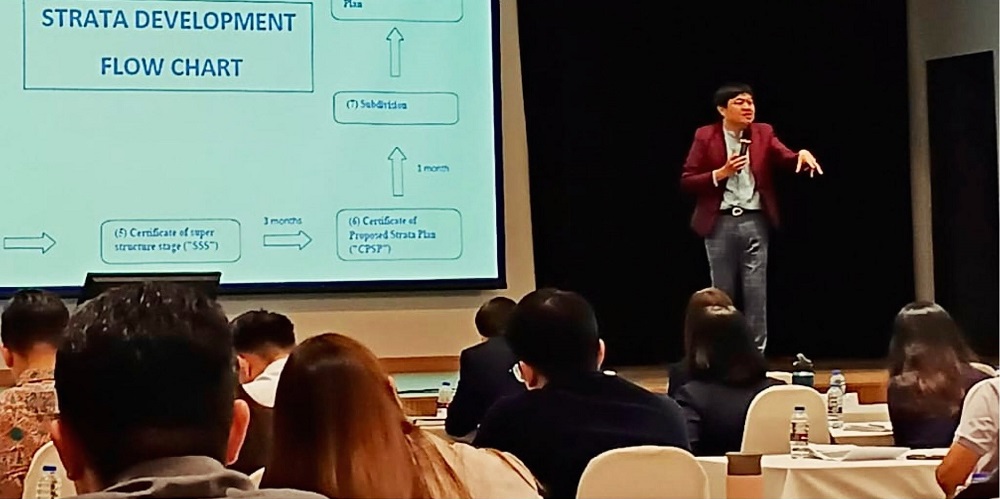
Regulatory approvals form an important part of this equation, which include planning permission, development orders, building plan approvals and the advertising permit and developer’s licence (APDL). Under the HDA framework, prescribed sale and purchase agreements (SPAs), progressive billing, certification and vacant possession requirements can also affect project financing and disbursement.
Tan noted that non-compliance or delays in obtaining the necessary approvals may delay drawdowns. In turn, delayed disbursements can create funding gaps for construction, consultants, contractors and other project expenses, while potentially increasing construction, interest and holding costs.
Progressive billing is another area with implications for cash flow. Incomplete certification or non-compliance may affect a developer’s ability to bill purchasers and receive proceeds from end-financing. Issues involving the APDL, prescribed SPA or other statutory requirements may similarly delay sales, collections and financing.
For lenders, completion risk remains a key concern.
“A delayed or abandoned project could leave the lender with security in the form of an incomplete development with reduced realisable value. Cost overruns may also result in an insufficient original financing facility, potentially requiring additional funding, while slower sales and delayed purchaser collections can weaken project cash flow and the ability to service financing," said Tan.
Developers face a broader range of risks, including land acquisition and approval delays, construction cost escalation, contractor default, slower sales, purchaser cancellations, purchaser loan rejections, higher financing costs, cash-flow mismatches, regulatory compliance issues, defects and rectification costs, delays in obtaining the certificate of completion and compliance (CCC) or vacant possession, as well as reputation and litigation risks.
“Purchasers, meanwhile, may face financial exposure despite having comparatively limited control over the development process. Delays in completion could result in continued rental or financing costs, while project failure, construction defects, financing difficulties and title or strata issues could create additional complications,” he added.
The presentation also addressed the importance of aligning bridging financing with end-financing. Developers were encouraged to prepare realistic cash-flow projections, assess expected purchaser sales and collections, estimate the timing of end-financing and account for potential construction delays and cost overruns before drawing bridging facilities.
“During the development process, monitoring actual sales against projections, purchaser loan approvals and progressive collections can provide indicators of emerging risks. Developers are also encouraged to identify units at risk of cancellation and engage financiers early if completion or sales are delayed,” Tan said.
For financiers, stress-testing the project’s exit strategy was highlighted as part of risk management. This includes considering scenarios such as sales being 20% lower than projected, completion being delayed by six months, construction costs increasing by 10% or purchaser loan approvals being delayed.
..........
EdgeProp monthly brings you data, insights and solutions for an evolving market. Subscribe now for your free copy!
Follow Us
Follow our channels to receive property news updates 24/7 round the clock.


Telegram


Latest publications
View AllFollow Us
Follow our channels to receive property news updates 24/7 round the clock.
Malaysia's Most
Loved Property App
The only property app you need. More than 200,000 sale/rent listings and daily property news.