RIYI 2026: Your side hustle is not entrepreneurship — yet
The most misleading number in a side hustle may not be zero. It may be about profit.
Money enters the account, demand appears to exist, and the conclusion seems natural: the idea works. But does it?
The customer may have paid for the product or service. The founder, however, may quietly be paying for everything else: late nights, personal equipment, free revisions, interrupted studies, emotional pressure and professional risk.
These costs sit on the hidden balance sheet of a side hustle: resources absorbed personally by the founder but never recognised as business expenses.
So, is the side hustle genuinely profitable, or is the founder subsidising the appearance of profit?
The first sale answers the easiest question: Will somebody pay? Entrepreneurship begins with harder ones. Will the customer pay enough? Can the value be delivered repeatedly? Can quality survive rising demand? Can the activity continue when the founder is unavailable — or no longer willing to solve every problem personally?
Income is not yet enterprise
Before participating in the Real Estate and Housing Developers’ Association (Rehda) Institute Youth Initiative (RIYI), the young attendees generally viewed side hustles mainly as ways to earn additional income and gain experience beyond the classroom.
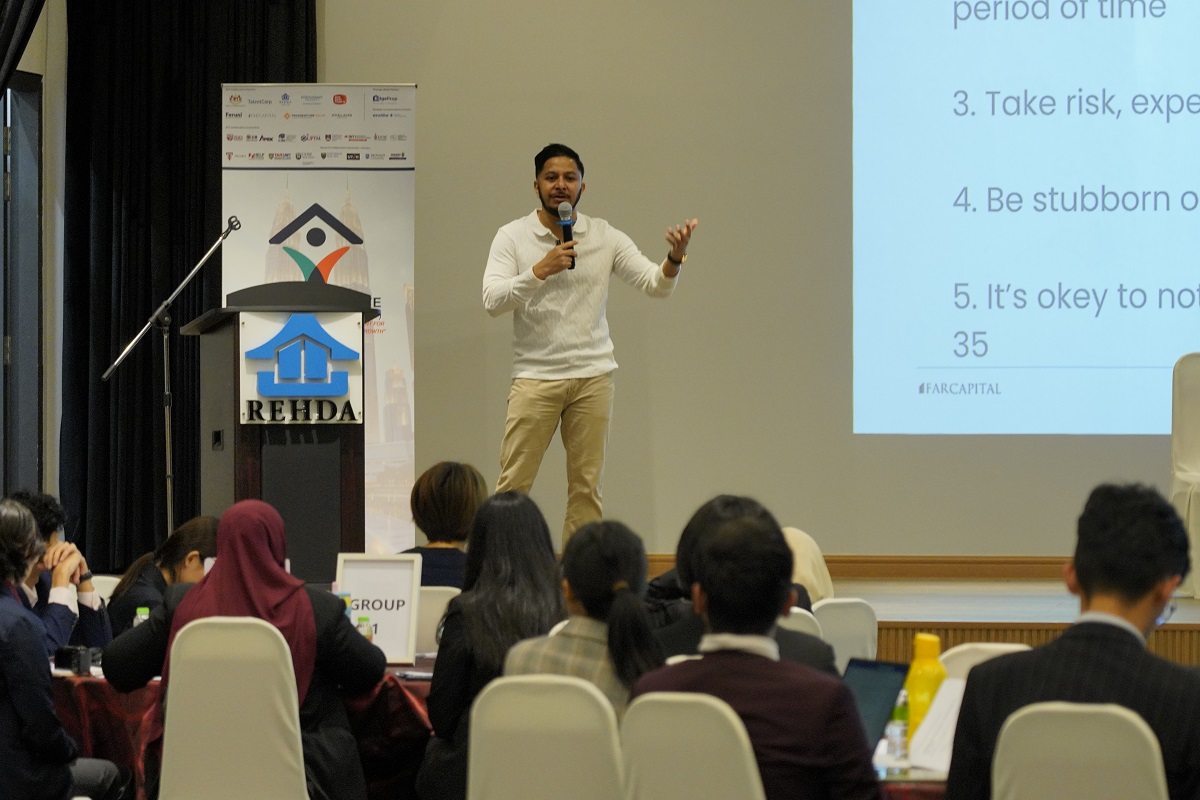
Launched by Rehda Institute as part of its CEO Series 2026 on Jan 15, RIYI is a year-long corporate mentorship programme for final-year university students and recent graduates, seeks to expose participants to industry practitioners, career guidance and workplace expectations before or as they enter employment. RIYI was launched at the. EdgeProp is the media partner.
In the recent session, the participants’ conversations with mentors, business leaders and fellow mentees revealed a more demanding interpretation.
A side hustle can create income without creating an enterprise. Sometimes, it is simply another job with an unusually demanding boss: yourself.
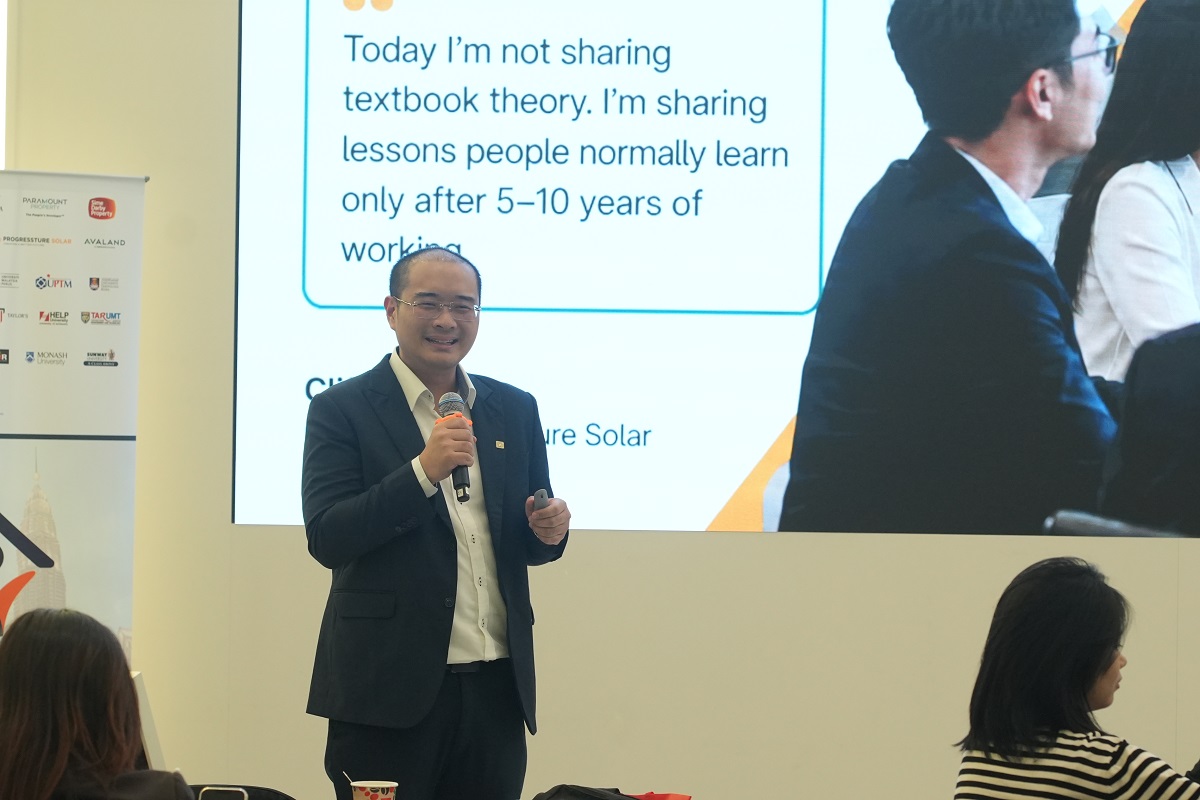
Progressture Solar co-founder and CEO Cliff Siaw described a strong business model as “repeatable, scalable and sustainable”. It must deliver consistent value, serve more customers without requiring an equal increase in the founder’s hours, and grow without exhausting its people or compromising quality.
In practice, demand is often easier to create than capacity.
Erica Nagie Xue Mei, a Strategic Communication student at Universiti Sains Malaysia, experienced this through Multi Uncle Delivery. She said she launched the venture after identifying demand for vegetarian meals and healthier dinner options on campus.
Customers responded, and the business operated for about a year. Yet, limited manpower, peak-hour pressure and academic commitments eventually made it difficult to continue.
The market had validated the problem. The venture, however, had not developed the capacity to solve it sustainably.
Erica’s experience illustrates a lesson many founders discover too late: demand can arrive before the organisation is ready to carry it.
Her field also shaped another insight. Communication is not merely promotion. It is the discipline of listening, managing expectations and protecting trust under pressure.
A polished brand may attract the first customer. Reliable delivery determines whether that trust survives.
When the founder becomes the system
The paradox becomes clearer when a side hustle appears to succeed.
More customers arrive. More money enters the account. Behind the numbers, however, the founder may be answering messages during meals, correcting mistakes late at night and carrying every important relationship alone.
Revenue grows, but freedom disappears.
Lee Hui Ann, a Universiti Malaysia Perlis student, encountered this while developing SCrown Academy.
What began as a part-time teaching venture revealed a wider need among students who lacked effective learning methods and a clear understanding of assessment criteria. She developed structured techniques and progress summaries to help parents understand students’ results and the areas requiring improvement.
As enrollment increased, her personal involvement initially appeared to be the academy’s greatest strength. She planned lessons, promoted programmes, taught classes and communicated with parents. Eventually, that commitment became a bottleneck.
If every decision waits for the founder, every problem requires the founder and every customer relationship depends on the founder, the individual is no longer leading the system. The individual has become the system.
The same weakness can arise in larger organisations. When knowledge and authority remain concentrated in a few people, what appears to be institutional strength can sometimes rest heavily on personal effort.
A side hustle can reward founders for becoming indispensable, but entrepreneurship requires them to make that indispensability unnecessary.
Knowledge must move from memory into process, and quality must depend on standards rather than rescue efforts. The question must change from “How much more can I do?” to “How can this value continue without everything depending on me?”
False demand and the cost of attention
Tunku Abdul Rahman University of Management and Technology real estate student Tan Li De began by selling boots online and later took on part-time work with a property agency.
He said he wanted to earn his own pocket money rather than continually rely on his parents, and enjoyed the sense of achievement that came with each sale.
His agency experience, however, exposed a cost businesses rarely measure: false demand. Tan said he received enquiries from people claiming to be looking for factories to rent. He contacted owners and co-broking agents to identify suitable options.
The enquiries later led to whether he knew anyone who could exchange USDT, a US dollar-linked cryptocurrency, into renminbi or ringgit.
Whether or not those enquiries would have led to a transaction, they had already imposed a cost. Time had been spent, attention diverted and professional relationships activated. Every hour spent on a false prospect is unavailability to a genuine customer. A pipeline can appear full while much of it is only noise.
This is not merely a lesson for a student. It is a boardroom issue. How much organisational energy is being consumed by proposals, partnerships and leads that were never properly qualified?
Time is capital. Attention is capital. Trust is capital. Customer screening, therefore, is not an administrative detail. It is capital allocation.
The courage to stop
Tan eventually stopped selling boots and focused more on agency work, which he considered more profitable.
His decision introduces a perspective rarely celebrated in entrepreneurship: knowing when to stop.
Peter Tiong Zhi Mao, a Construction Project Management student at Universiti Sains Malaysia, reached a similar conclusion through a venture into which he said he invested his savings, weekends and confidence.
Despite repeated promotion and attempts to improve the offer, demand never became strong enough to sustain the business. He eventually decided to discontinue the venture.
Tiong’s academic background offers an appropriate lens. In construction, enthusiasm alone does not justify a project. Feasibility, cost, risk and expected returns must be assessed before resources are committed.
The same discipline should apply to a side hustle. An opportunity should not be pursued simply because it exists. It should be pursued because evidence supports it and the founder can deliver responsibly.
FAR Capital founder and CEO Faizul Ridzuan said: “Rejection and failure are not signs to stop; they are data points”.
Data may tell us to adapt. But it may also tell us to stop. Persistence responds to evidence. Attachment ignores evidence because letting go feels like defeat.
Resilience does not always mean holding on. Sometimes, it means stepping away before a weak idea consumes more time, money and confidence.
What young founders and CEOs should ask
Faizul also encourages young people to “learn first, earn later”.
A side hustle can develop negotiation, customer service and strategic thinking that remain valuable long after the venture ends. But learning cannot permanently substitute for a viable model. Eventually, the activity must create sufficient value, generate adequate revenue, control its costs and carry its responsibilities.
That last requirement is especially important in property and construction. An inaccurate estimate, poorly-coordinated renovation or mishandled rental enquiry can create financial, contractual, safety and reputational consequences.
What may begin as an informal, small-scale assignment can still influence a customer’s significant financial or practical decision. That makes clarity about competence, scope and accountability essential.
Commercial initiative does not automatically create professional authority. Not every ambitious student needs a side hustle either. Sometimes, the more strategic choice is to learn before selling, observe before leading and build competence before building a brand.
Not all progress appears in a bank account. Some appear as judgement, credibility and the ability to recognise a bad opportunity before accepting it.
A student selling boots, delivering meals or offering tuition may appear commercially insignificant to a CEO.
The transactions are small, but the decisions are not.
Side hustles are miniature laboratories of the forces that shape larger organisations: uncertain demand, limited resources, founder dependency, reputational risk, opportunity cost and imperfect information.
The questions belong in boardrooms too.
Which activities appear profitable because their costs are hidden elsewhere? How much capacity is being consumed by false opportunities? Which capability remains trapped inside one person? When does persistence become attachment? What would break if demand doubled tomorrow?
The first sale should still be celebrated. It proves initiative and the willingness to face the market.
But “yet” is the most important word in the title.
It recognises that a side hustle may become an enterprise — but only when personal effort becomes organisational capability, growth no longer depends on exhaustion, and responsibility expands together with revenue.
The first sale tells us somebody is willing to pay. The hidden balance sheet tells us who is really paying. Perhaps entrepreneurship begins only when those two answers are no longer the same.
..........
EdgeProp monthly brings you data, insights and solutions for an evolving market. Subscribe now for your free copy!
Follow Us
Follow our channels to receive property news updates 24/7 round the clock.


Telegram

Latest publications
View AllFollow Us
Follow our channels to receive property news updates 24/7 round the clock.
Malaysia's Most
Loved Property App
The only property app you need. More than 200,000 sale/rent listings and daily property news.