Experts call for greater local gains from data centre growth
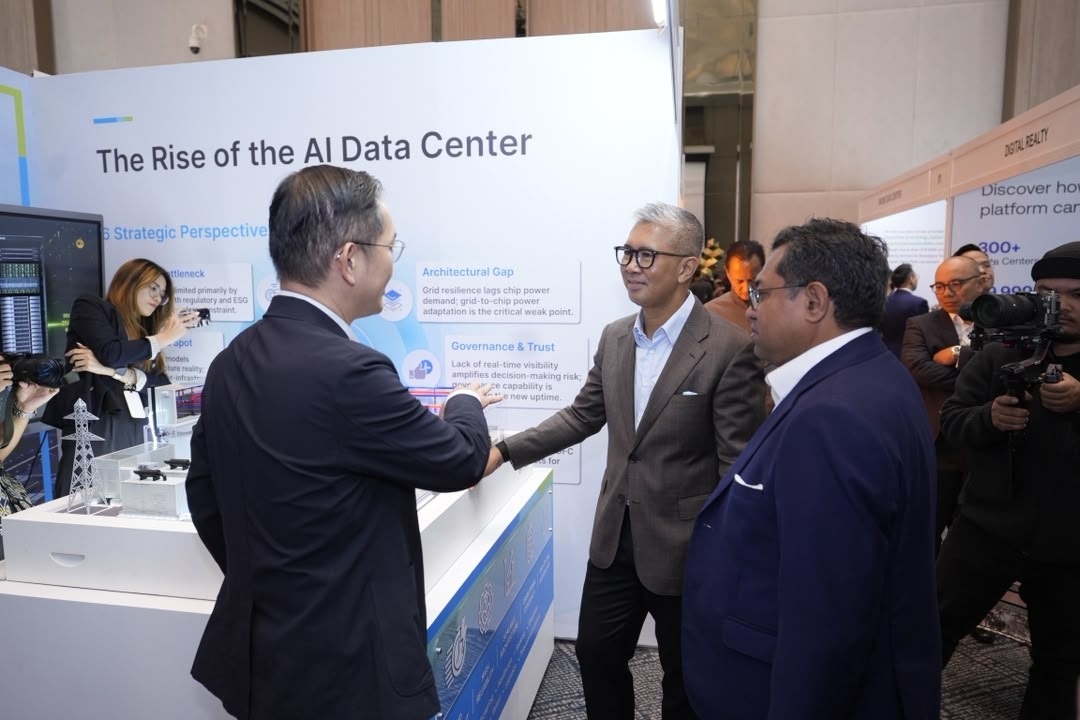
KUALA LUMPUR (Sept 14): Malaysia’s data centre expansion should be judged not only by the capacity it adds, but also by the local capabilities, businesses and supply chains built alongside the investment, industry participants said at Data Centre Nexus (DCN) 2026 on Monday (Sept 14).
The conference, organised by the Malaysian Investment Development Authority (Mida) at Hilton Kuala Lumpur, was themed “Advancing AI-Driven Digital Infrastructure and Sustainable Ecosystems”.
The event focused on the economic opportunities and resource demands arising from the country’s expanding data centre sector, including renewable energy, grid and industrial infrastructure, cooling technologies and local participation in the supply chain.
Mida chairman Tengku Datuk Seri Zafrul Tengku Abdul Aziz said the priority was to ensure data centre investment produced durable gains for the wider Malaysian economy.
“Beyond the headline numbers, Mida keeps asking one question: how do we turn this investment into lasting, tangible value for the wider Malaysian economy?” he said in his luncheon remarks.
“In the end, success will not be measured by the size of the investment we attract, but by the value we build around it: stronger Malaysian businesses, deeper local capabilities, and real opportunities for our people.”
Malaysia recorded RM385.7 billion in data-centre-related investments from 2021 to the first half of 2026, according to Mida. The agency said global operators and investors including AWS, Microsoft, Google, Bridge Data Centres, DayOne, AirTrunk and Vantage Data Centres have established or expanded their presence in Malaysia, particularly in Greater Kuala Lumpur and Johor.
Zafrul said attracting capital was only the first step. The next task, he said, was to build a sustainable industry that creates high-value employment and commercial opportunities for Malaysian small and medium-sized enterprises (SMEs).
He said data centres should create spillovers for Malaysian companies in construction, engineering, technology operations, facilities management, systems integration and the cloud supply chain.
He also cited examples in Finland and Denmark of data centres reusing existing infrastructure and supplying surplus heat to nearby communities, saying Malaysia should aim to ensure resource efficiency develops alongside capacity.
“These are not charity projects. They are proof that circularity and capacity can grow together,” he said.
Greater local participation
At a panel discussion on green solutions for sustainable data centre operations, Gading Kencana Sdn Bhd managing director Datuk Dr Guntor Tobeng said Malaysia should seek greater participation by domestic companies across the renewable energy and infrastructure value chain.
Rather than limiting its role to supplying land, electricity and water, Malaysia should build capabilities in the technology, engineering and higher-value services associated with the sector, he said.
Guntor identified opportunities for Malaysian companies in renewable energy development, engineering, procurement and construction (EPC), battery-energy storage, energy-management systems, engineering consultancy, and operations and maintenance.
He said hyperscalers could help build local capabilities by engaging Malaysian companies earlier in project development, sharing technical requirements and developing standards with local industry.
Local companies should be given opportunities to develop their capabilities progressively rather than being expected to meet the highest technical requirements immediately, he added.
Zafrul said capacity-building could also include talent development, pointing to Amazon Web Services’ re/Start programme as an example of a model that has trained people for data centre and cloud careers in countries including Ireland and Singapore.
“Malaysia has the talent. We now need the pipeline to match it,” he said.
Mida said DCN 2026’s business-matching programme involved 14 data centre companies and 51 local vendors, compared with eight data centre companies and 17 supply-chain companies at the inaugural event in 2025.
Energy security remains key
The panel also examined the implications of data centres’ electricity needs for the national power system.
Princeton Digital Group head of energy and environment Michael Martin said operators should ensure that the cost of developing supporting infrastructure does not fall on ordinary consumers.
He said solar alone would be difficult to rely on as a full power solution for large-scale data centres, given the land area and battery storage needed to provide continuous supply.
Instead, infrastructure developed to support data centres should also contribute to the wider electricity system, rather than serving individual facilities alone, he said. Martin also pointed to advanced geothermal power as a potential component of Malaysia’s future energy mix.
Guntor said solar could form the foundation of renewable supply for data centres, supported by battery storage, other generation sources and the national grid.
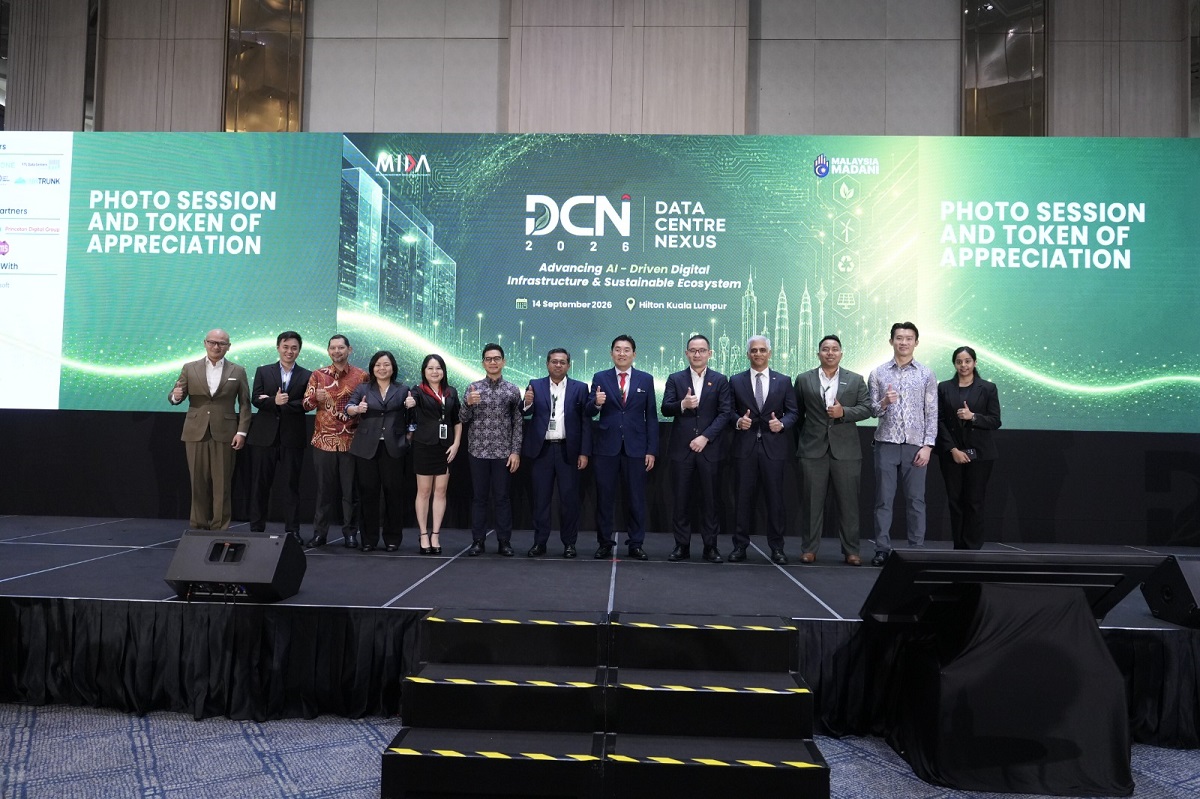
Northern Solar Holdings Bhd operations director Wong Sang Sing said hyperscale facilities require continuous power and that the focus should be on an integrated energy portfolio spanning renewable generation, storage and grid infrastructure.
The issue is likely to grow in importance as Malaysia’s data centre electricity demand is projected to exceed 5,000MW by 2035, according to Mida.
The agency said the government has strengthened sustainability requirements through power and water usage effectiveness metrics, alongside renewable energy initiatives.
AI raises cooling demands
Artificial intelligence workloads are also changing data centres’ technical requirements.
Digital Realty Asia-Pacific head of solutions engineering and design Wayne Heywood said rack power density had risen from about 5kW to 10kW previously to as high as 70kW to 107kW.
Rack power density refers to the electricity consumed by IT equipment within a server cabinet.
The increase is raising power, heat and water requirements and accelerating changes in cooling technology, Heywood said. He expects direct-to-chip liquid cooling to become the main cooling method within five to seven years.
Malaysia’s tropical climate adds challenges including humidity and condensation, requiring cooling systems to be adapted for local conditions, he said.
Heywood said there was no one-size-fits-all cooling solution, as customer requirements vary according to power density. He called for collaboration among operators, technology providers and government agencies to develop appropriate standards and improve efficiency.
Wong said sustainable data centres should be designed as integrated energy systems from the outset, incorporating efficiency, renewable sourcing, storage, grid infrastructure and lifecycle performance.
Battery storage should not be treated solely as an environmental, social and governance (ESG) feature, he said, but designed as part of the wider system involving substations, switchgear, uninterruptible power supplies, standby generators, protection systems, fire safety and operating procedures.
During a panel titled “Strengthening Malaysia’s Connectivity and Network Ecosystem”, AirTrunk vice-president and Malaysia country head Pei Jet Lim said responsibility for developing a sustainable data centre industry extended beyond operators.
“Every stakeholder, not just operators, has a responsibility to the ecosystem. I hope that by 2030, we will see a truly sustainable environment supported by water resources, the power grid and all other stakeholders,” she said.
..........
EdgeProp monthly brings you data, insights and solutions for an evolving market. Subscribe now for your free copy!
Follow Us
Follow our channels to receive property news updates 24/7 round the clock.


Telegram


Latest publications
View AllFollow Us
Follow our channels to receive property news updates 24/7 round the clock.
Malaysia's Most
Loved Property App
The only property app you need. More than 200,000 sale/rent listings and daily property news.