Students, employers divided over graduate workplace readiness — Rehda Institute survey
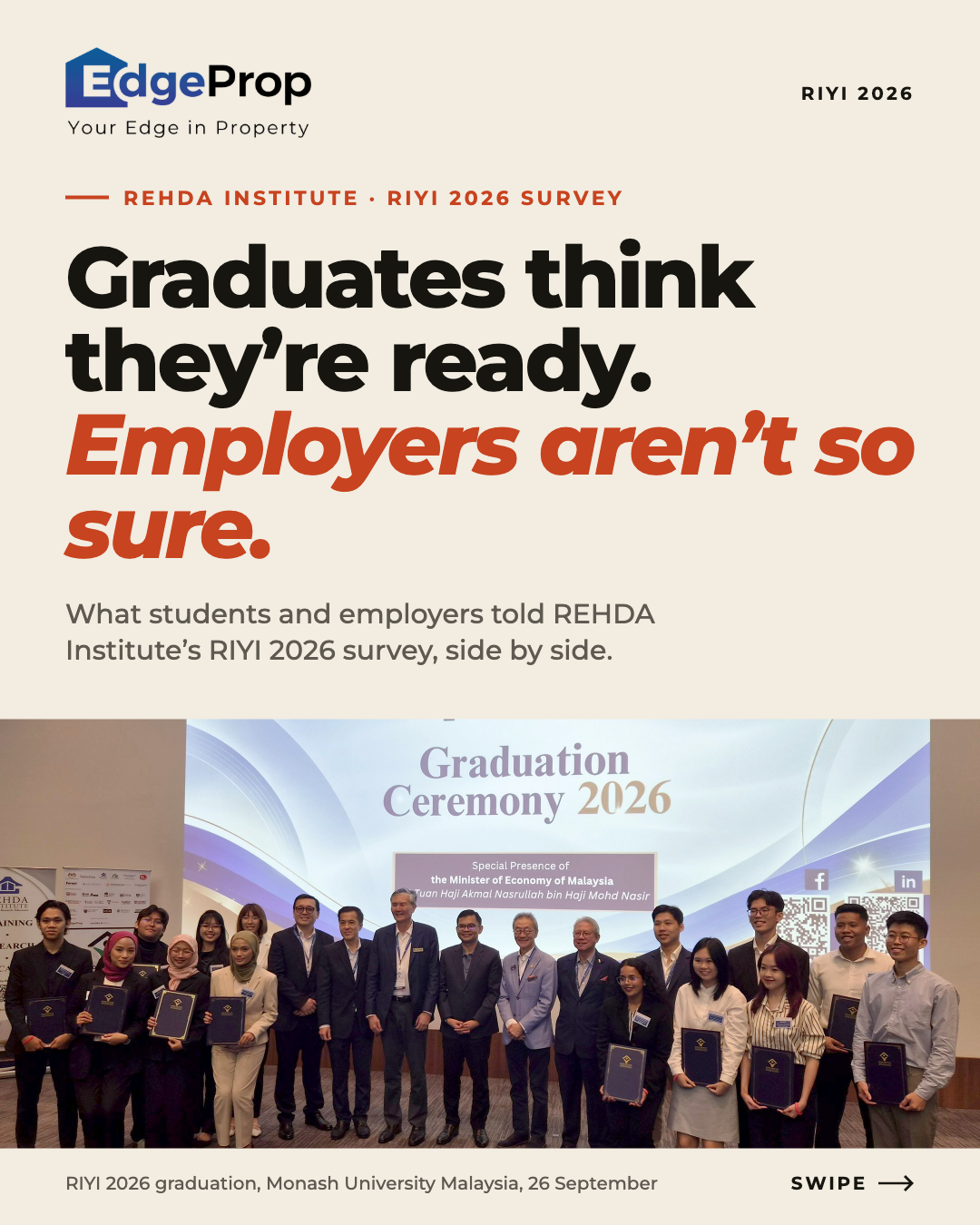
PETALING JAYA (Sept 26): A gap has emerged between how quickly students think fresh graduates can contribute at work and employers' expectations, according to a Rehda Institute survey that also found half of employers surveyed expect artificial intelligence (AI) to reduce the number of entry-level roles they hire for over the next three years.
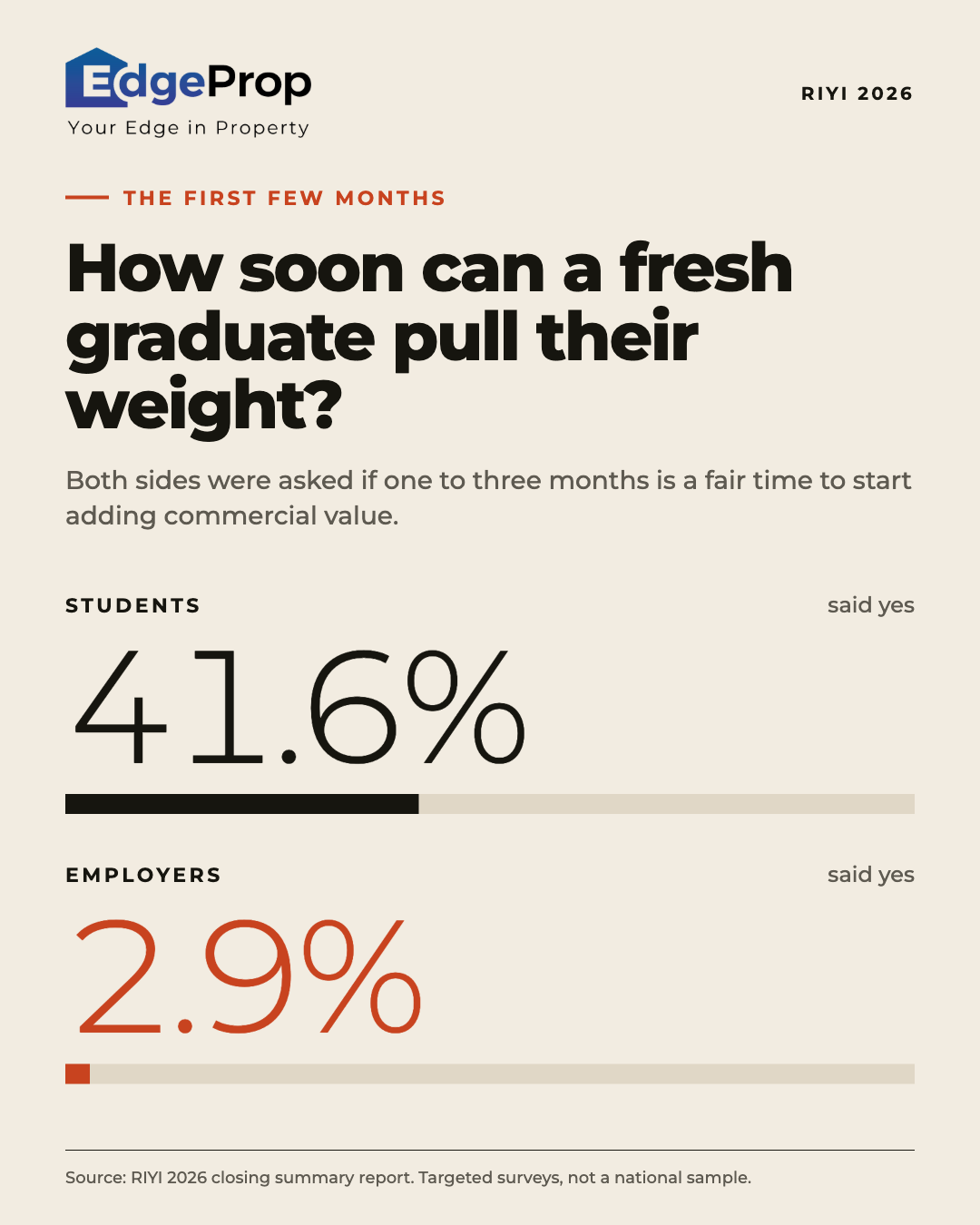
The Rehda Institute Youth Initiative (RIYI) 2026 survey found that 41.6% of student respondents considered one to three months a realistic timeframe for fresh graduates to begin adding commercial value at work, compared with just 2.9% of employer respondents.
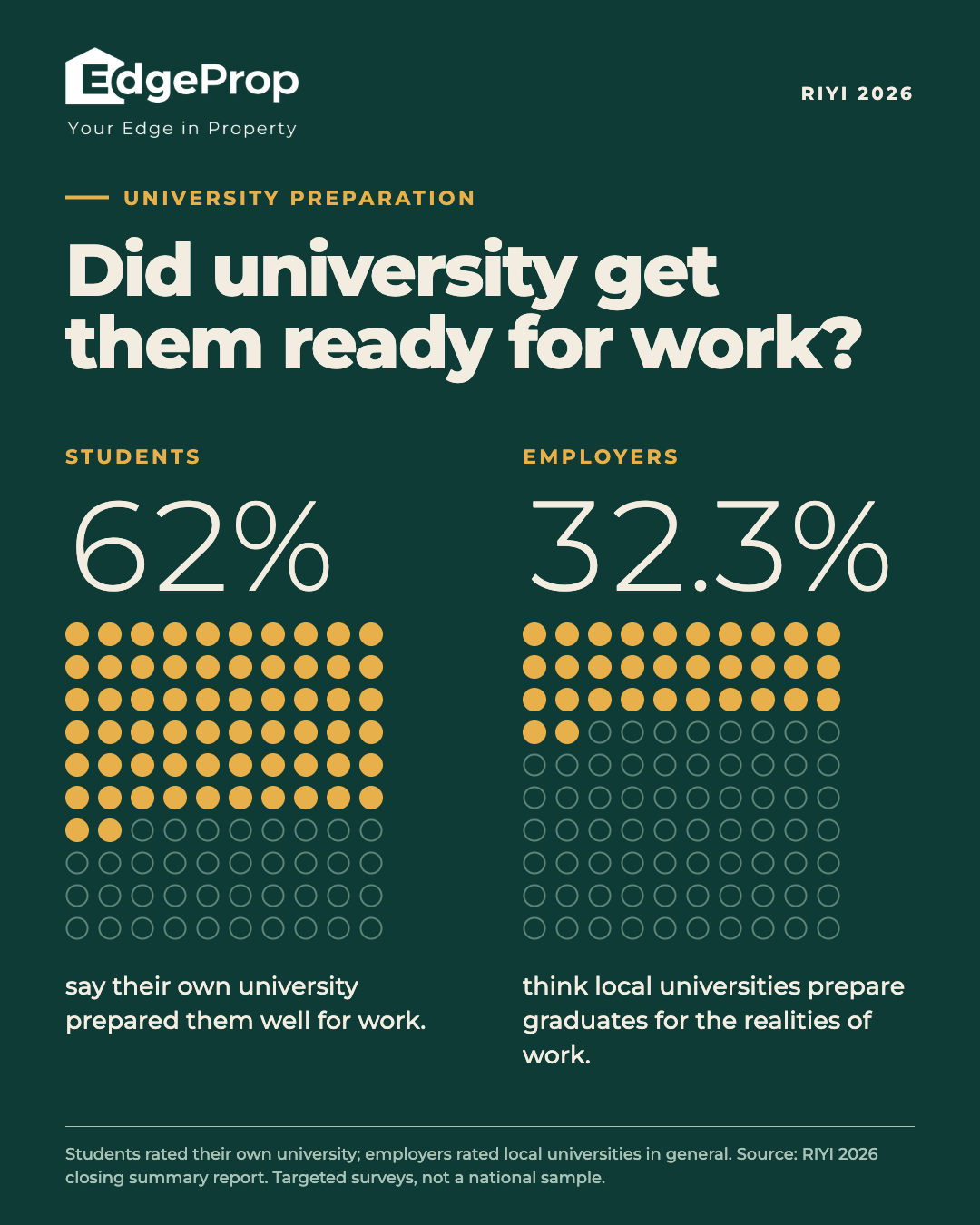
Meanwhile, 62% of students felt their universities had prepared them well for the workplace, while only 32.3% of employers agreed that local universities adequately prepare graduates for workplace realities.
The findings are contained in RIYI 2026's closing summary report, based on targeted surveys of students and recent graduates from Malaysian universities and employers.
Rehda Institute said the surveys provide insights into graduate expectations and employer perspectives but are not nationally representative.
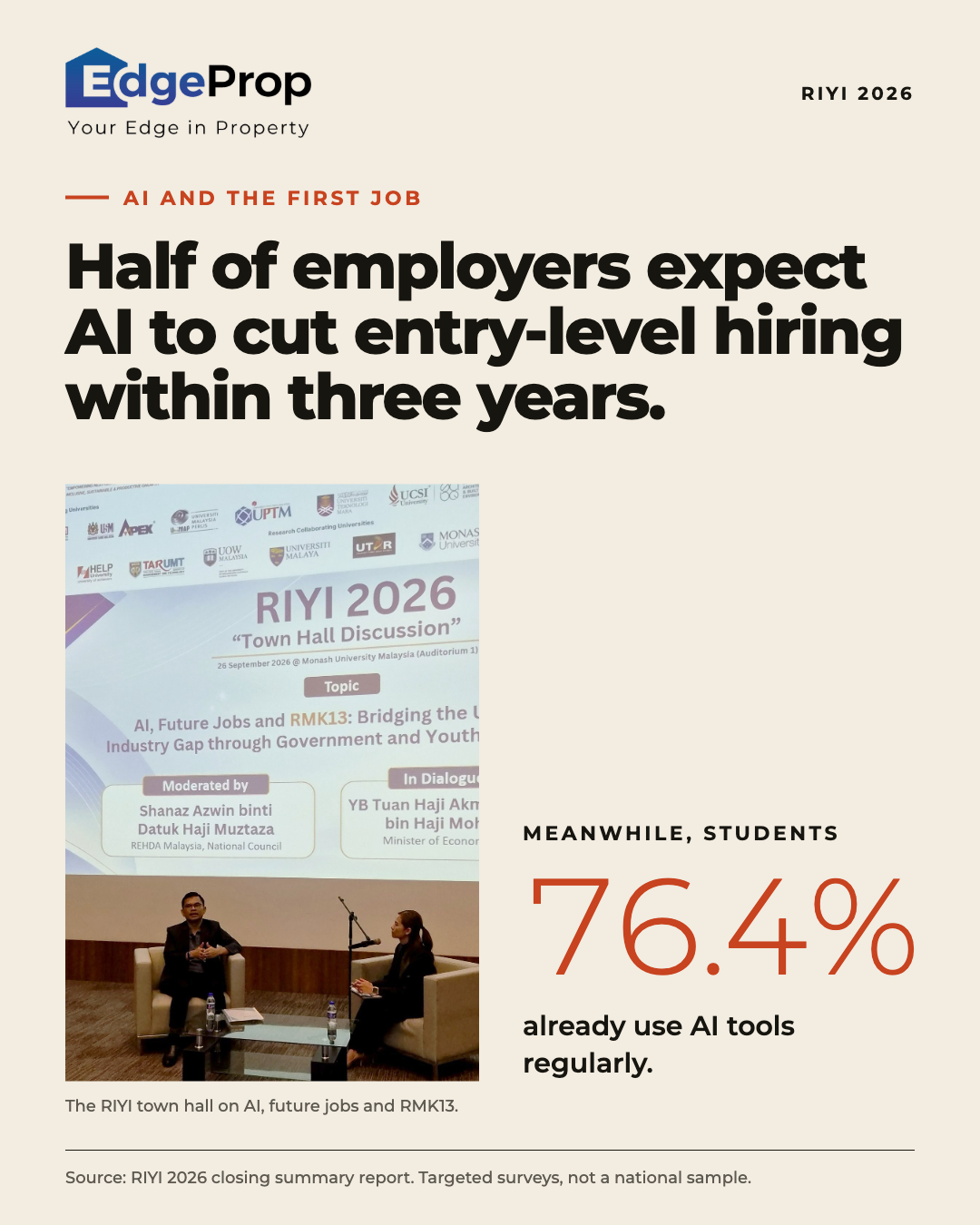
The report also highlighted the potential impact of AI on entry-level employment. While 76.4% of student respondents said they regularly use AI tools, 50% of employers surveyed expected AI to reduce the number of entry-level roles they hire for over the next three years.
The findings come as the 13th Malaysia Plan, 2026–2030 (13MP) calls for higher education programmes to be more closely aligned with industry needs, with greater industry involvement in talent development.
The plan also proposes a mandatory paid internship scheme and greater collaboration between public universities and the private sector as part of efforts to develop a more demand-driven learning model.
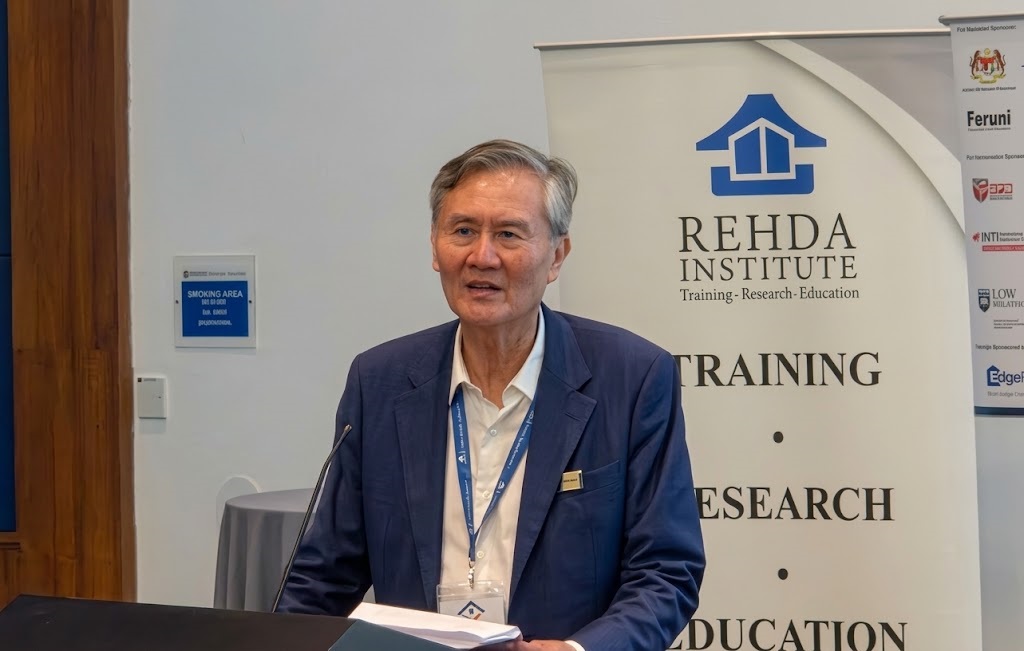
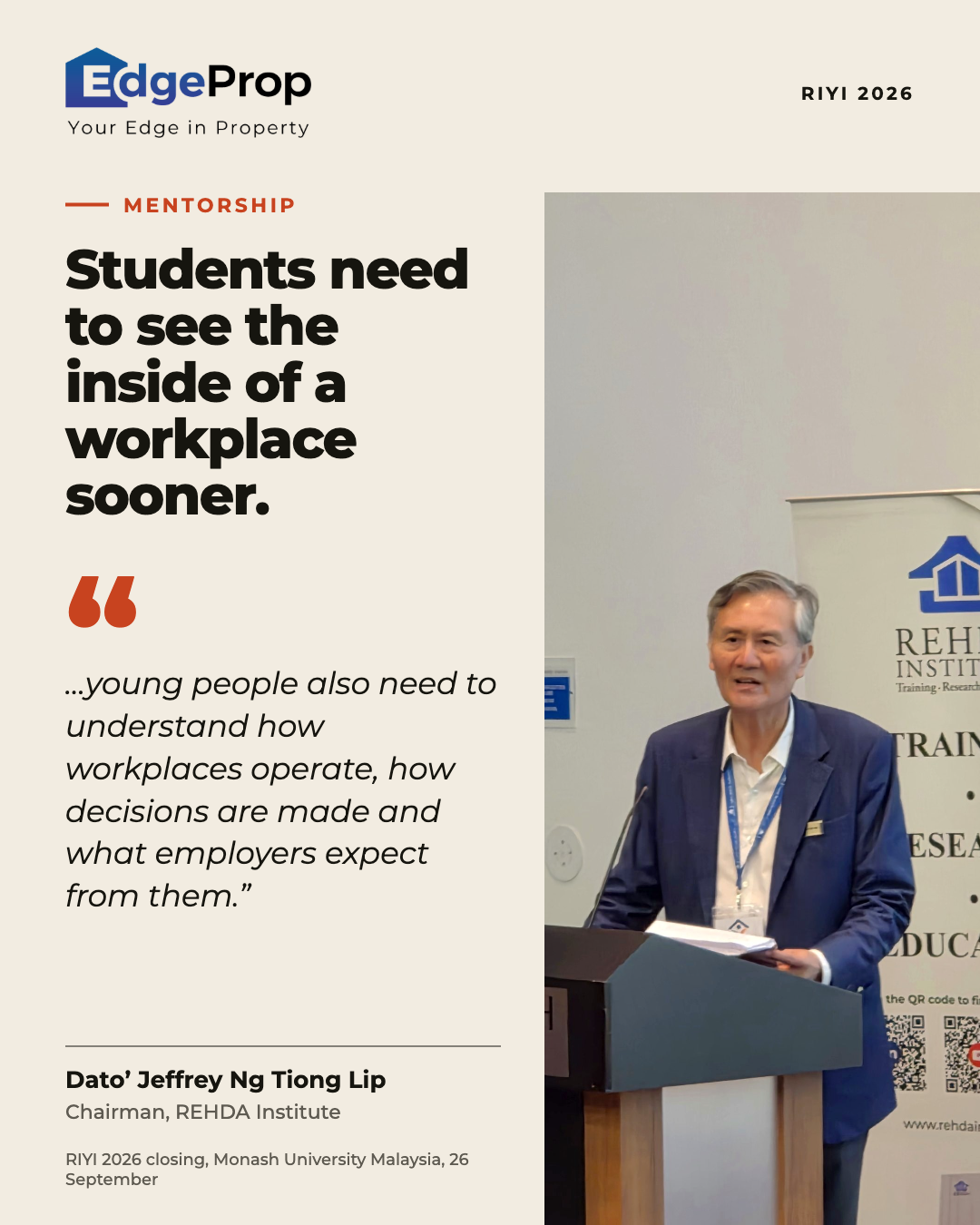
Rehda Institute chairman Datuk Jeffrey Ng Tiong Lip said closer collaboration between universities and industry was needed to give students earlier exposure to workplace realities.
“A university qualification provides an important foundation, but young people also need to understand how workplaces operate, how decisions are made and what employers expect from them.
“This is where RIYI plays an important role in bringing students closer to industry through direct engagement and mentorship, while helping them develop the judgement, resilience, communication and adaptability needed to build sustainable careers,” he said.
EdgeProp Malaysia managing director Alvin Ong, who participated as a mentor in the RIYI session, said judgement and curiosity would become increasingly important as AI becomes more capable. EdgeProp Malaysia is a media partner for RIYI 2026.
“It was a great session. My main message was simple: as AI gets better at giving us answers, our real edge will be knowing the right questions to ask. That judgement and curiosity are what I hope they take with them,” he said.
The role of AI and the infrastructure required to support it also featured during a question-and-answer session with Economy Minister Akmal Nasrullah Mohd Nasir, when he was asked about Malaysia's approach to data-centre development.
Akmal said the rapid growth of data centres required the government to manage their demands on electricity and water infrastructure rather than simply accommodate rising demand.
He said future planning should consider locating data centres alongside suitable power-generation infrastructure, while reducing their dependence on treated water by using reclaimed water or alternative cooling methods.
Malaysia also needed to consider the capacity of its electricity grid and the impact of data-centre developments on surrounding communities, he said.
“In terms of the controlling mechanism, I don't think it's enough just to control from in terms of utilities. I think the quality of what kind of data centres coming in also needs to be addressed,” Akmal said.
He also linked the expansion of data-centre infrastructure to questions of data sovereignty and opportunities for Malaysian technology companies, saying the country should ultimately seek to capture more value from the growth of the digital economy.
For young Malaysians, Akmal said the implications extended beyond securing their first job, urging them to consider how their skills could contribute to the country's longer-term technological capabilities and economic development.
The survey also found some common ground between students and employers over career development.
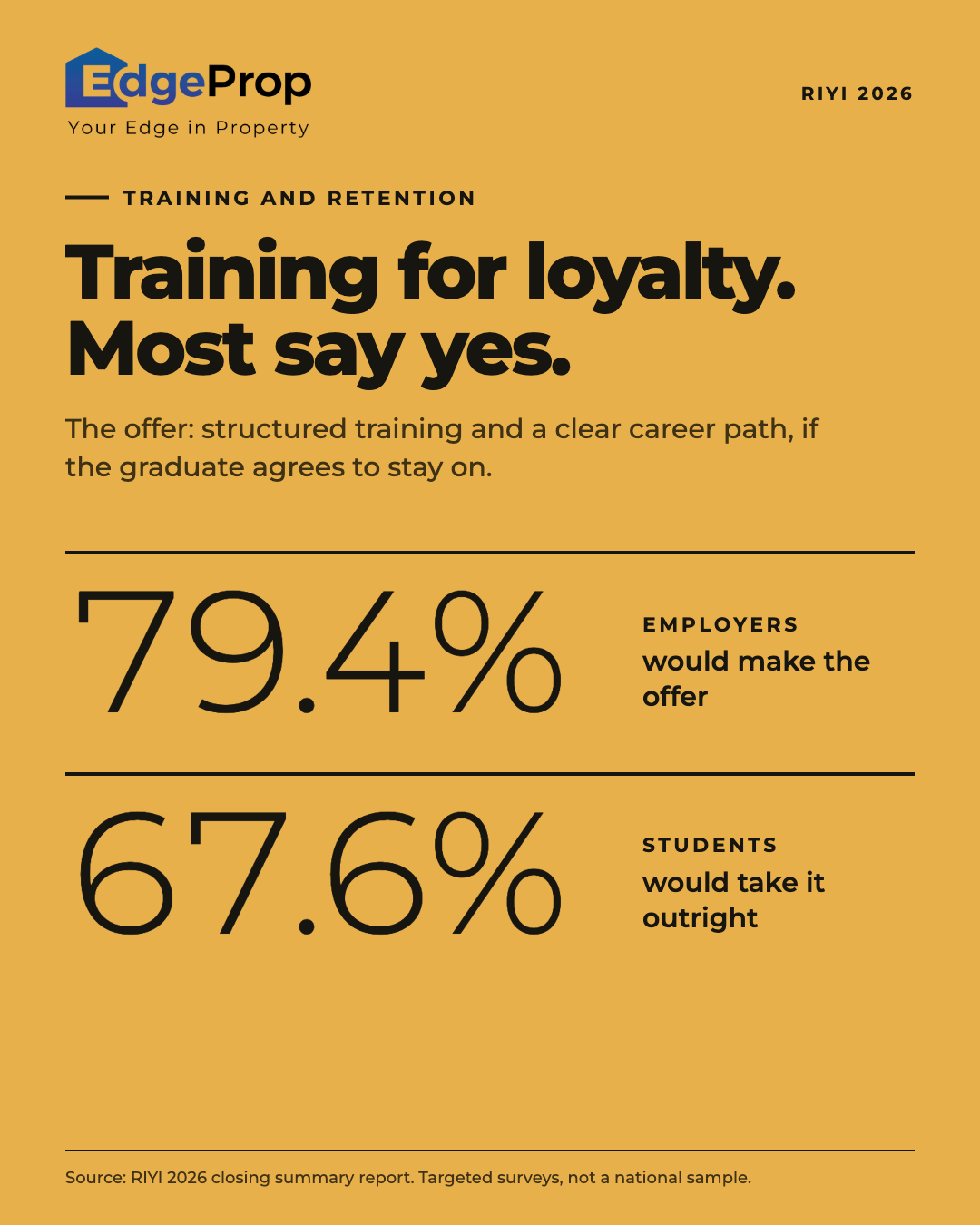
Some 79.4% of employers surveyed said they were willing to provide structured training and a clear career path in exchange for a retention commitment, while 67.6% of students said they would accept such an arrangement outright.
On pay transparency, 82.4% of students and 58.3% of employers supported compulsory disclosure of salary ranges in job advertisements.
Talent retention also emerged as a concern, with 57.1% of student respondents saying they were likely or very likely to work outside Malaysia within five years.
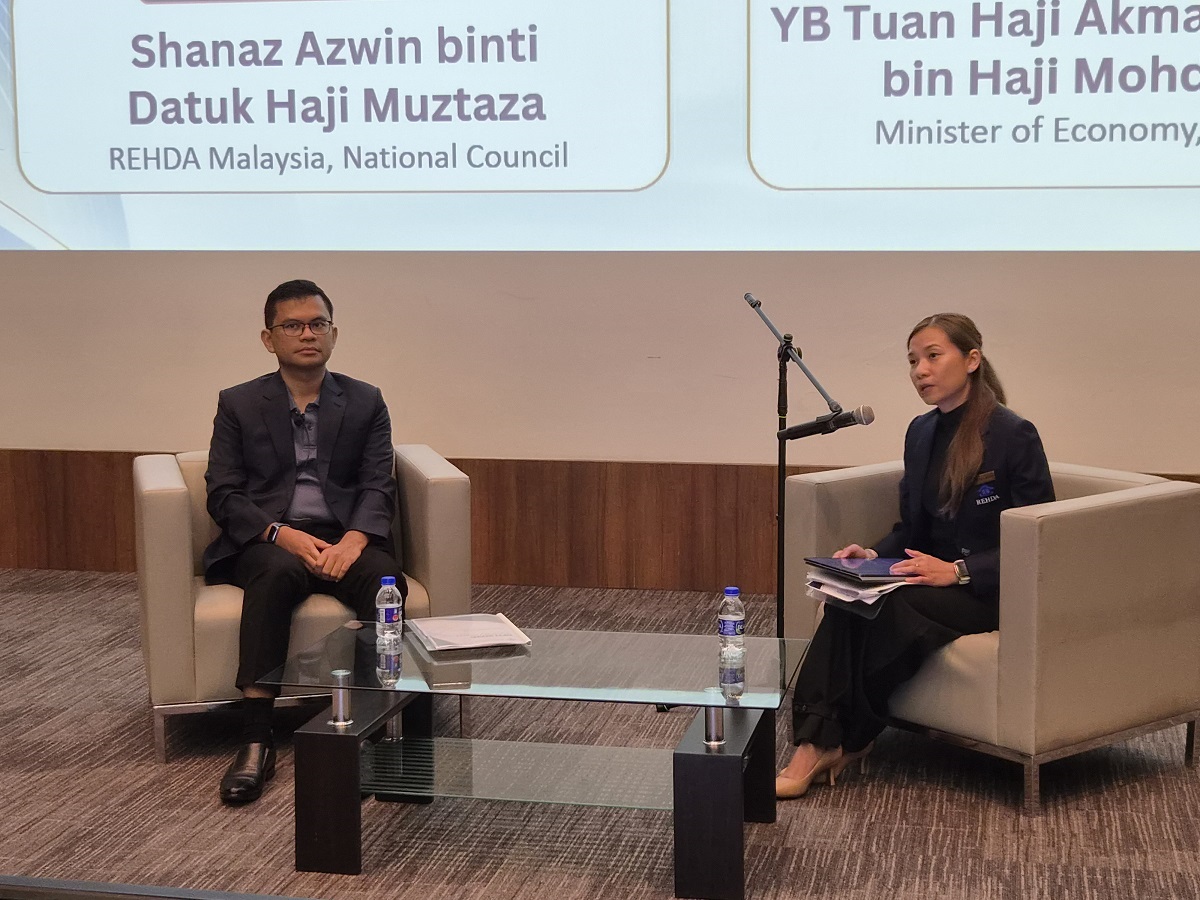
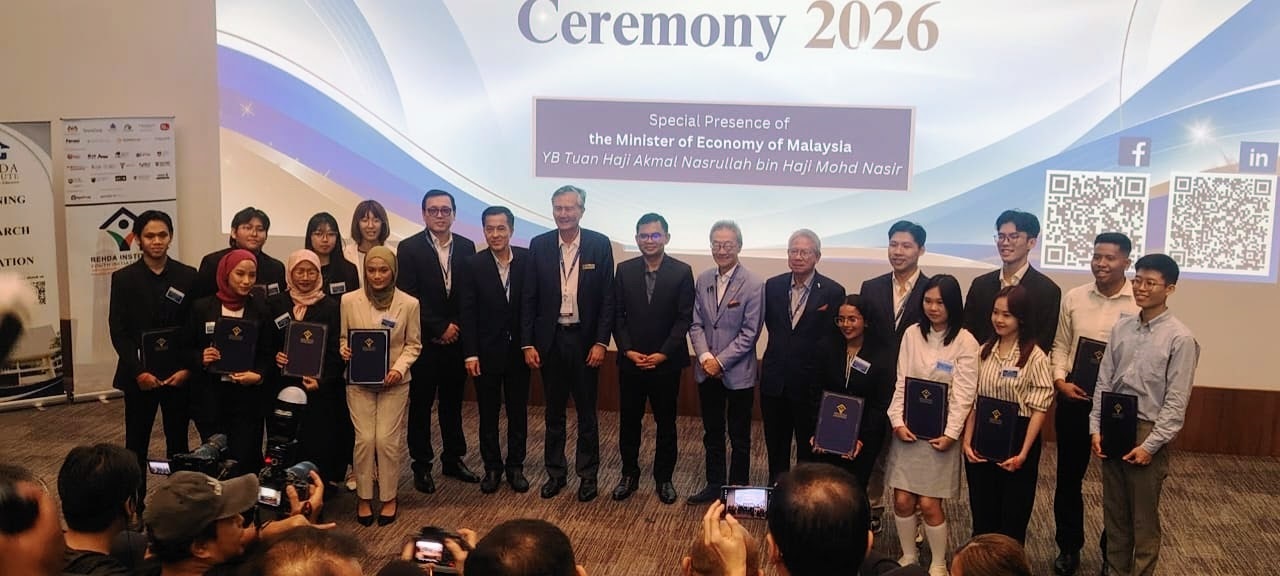
The RIYI 2026 closing event was held at Monash University Malaysia on Saturday (Sept 26), where the survey findings were presented to Akmal.
The event included a town hall titled “Advancing Malaysia's ESG-Ready Built Environment: Connecting Government, Youth, Universities and Industry under RMK13”.
The RIYI programme brought together 50 students from 15 collaborating universities, alongside students from six other universities and industry leaders, for exposure to workplace expectations, career development and skills needed in a technology-driven economy. Students came from more than 20 universities across Malaysia in total.
RIYI's focus comes amid continued challenges facing young Malaysians entering the workforce. Department of Statistics Malaysia data showed that the unemployment rate among those aged 15 to 24 stood at 10.2% in June 2026, compared with the national unemployment rate of 3%.
For the property and construction sectors, the 13MP also places greater emphasis on technologies including the Industrialised Building System (IBS) and Building Information Modelling (BIM), increasing the need for workers equipped with digital and sustainability-related skills.
Rehda Institute said it aims to develop RIYI into a longer-term platform connecting universities, employers and young talent, while contributing industry perspectives to discussions on graduate employability and workforce development.
THE NUMBERS AT A GLANCE

..........
EdgeProp monthly brings you data, insights and solutions for an evolving market. Subscribe now for your free copy!
Follow Us
Follow our channels to receive property news updates 24/7 round the clock.


Telegram


Latest publications
View AllFollow Us
Follow our channels to receive property news updates 24/7 round the clock.
Malaysia's Most
Loved Property App
The only property app you need. More than 200,000 sale/rent listings and daily property news.