RTS Link poised to reshape JB’s property outlook as connectivity gains traction

This article appeared in the Sept 10, 2026 issue of the monthly print edition. Subscribe now.
The upcoming Rapid Transit System (RTS) Link is increasingly influencing how property buyers, investors and developers assess Johor Bahru (JB), with improved cross-border connectivity expected to reshape demand across residential, hospitality, retail and commercial segments.
The connection between Bukit Chagar in JB and Woodlands North in Singapore is expected to make cross-border travel more predictable and practical, strengthening the appeal of properties that offer convenient access to the RTS station and supporting transport infrastructure.
The RTS Link will span 4km, comprising 2.7km in Malaysia and 1.3km in Singapore. The four-car trains will operate at a maximum speed of 80km/h, with a capacity of 10,000 passengers per hour per direction and an estimated daily ridership of 40,000 passengers upon opening.
The journey between stations is expected to take just six minutes, with peak-hour services running at 3.6-minute intervals, while a maintenance depot will be located at Wadi Hana, JB.
In an interview with EdgeProp, Tech Real Estate Sdn Bhd associate director (Johor) Lesley Siang says that for property practitioners, the impact of this upcoming service is already becoming evident in the nature of buyer enquiries.
She adds that interest has increased as the RTS has progressed from a prospective infrastructure project towards a more tangible component of JB’s transport network.
“We’ve noticed more interest since the RTS started becoming more real,” she says.
According to her, enquiries have been coming from Malaysians working in Singapore, Singaporeans and investors. Rather than asking only about property prices or project specifications, prospective buyers are increasingly seeking information about the practical implications of the RTS, including the distance between projects and the station, accessibility and the potential for rental demand.
This indicates a shift in how the infrastructure is being considered by the market. The RTS is increasingly being assessed not simply as a future transport project, but according to how effectively it can be incorporated into residents’ daily journeys and the wider investment proposition of a property.
Real estate agency ERA Malaysia (JB) CEO Tai Eefan similarly views accessibility as a central factor in determining which locations are likely to benefit the most. He said the RTS would improve JB’s accessibility rather than merely reduce travelling time between the two cities.
Tai believes the strongest initial demand will be concentrated around Bukit Chagar, JB Sentral and locations that have dependable first- and last-mile connections to the station. Residential properties aimed at cross-border commuters, serviced apartments, rental accommodation, offices and convenience-oriented retail could see increased interest.
However, Tai cautions against treating proximity to the RTS as an automatic indicator of future property performance.
“Pricing will ultimately depend on completed infrastructure, ease of access, product quality and actual occupancy — not distance alone,” he tells EdgeProp.
“Residential property is likely to experience the broadest and earliest uplift because the RTS directly addresses a major concern for cross-border commuters: journey-time uncertainty,” he adds.
Beyond the immediate station precinct
The potential benefits of the RTS are expected to extend well beyond properties located directly beside the station, although the degree of impact is likely to vary according to accessibility.

The immediate area around Bukit Chagar, JB Sentral and the Customs, Immigration and Quarantine (CIQ) facilities is expected to receive the most direct benefit, particularly for properties within walking distance of the station. However, properties further away could also attract interest if they are connected through reliable roads or feeder services.
Siang says the market should not assume that the RTS premium will stop at the immediate station precinct. Projects located a short drive away may continue to attract buyers, especially when access is convenient.
At the same time, she stresses that the transport connection alone will not determine investment performance. Property pricing, location, accessibility and underlying rental demand will continue to influence whether a project represents a viable investment.
“One can’t just say ‘RTS’ and expect the property to perform — the price, location, accessibility and rental demand will still have to make [investment] sense,” she explains.
This distinction is important as the market adjusts to the infrastructure. A property may carry an RTS-related narrative without necessarily offering the practical accessibility required by residents or tenants.
Tai similarly expects properties within walking distance or those supported by genuine and dependable 10- to 15-minute feeder journeys to perform more strongly than locations that rely primarily on the RTS as a marketing proposition.
From a development perspective, this could lead to greater emphasis on effective travel time rather than geographical proximity. Developers may increasingly evaluate sites according to walkability, feeder-bus availability, road capacity and integration with JB Sentral and other transport nodes.
Such considerations could support land consolidation, the redevelopment of ageing properties and the introduction of higher-density mixed-use developments in parts of the city centre. Product design may also evolve towards smaller and more efficient units, professionally-managed rental accommodation, flexible offices, mobility hubs and developments that reduce dependency on private vehicles.
Residential demand likely to lead
Residential property is expected to be among the earliest segments to respond to stronger cross-border connectivity.
The RTS could expand the practical residential catchment for people who earn their income or conduct business in Singapore. This includes Malaysian professionals, Singapore-based workers, couples working on different sides of the border and regional business personnel who may consider JB as a residential base.
Market players forecast that demand is likely to favour homes that are secure, well maintained and appropriately furnished, particularly those which can provide predictable, hassle-free access to the station.
The assessment of rental potential is also expected to become increasingly linked to the complete commuting experience. Rather than measuring accessibility solely by the distance between a property and the RTS station, prospective tenants are likely to consider the entire door-to-door journey.
This creates a distinction between nominal proximity and functional connectivity. A property located several kilometres from Bukit Chagar could remain competitive if its connection to the station is reliable and convenient, while properties located geographically closer to the station may be less attractive if the journey is unpredictable and inconvenient.
Tai expects rental demand to strengthen where properties demonstrate genuine tenant appeal, but he also sees capital appreciation as likely to be selective rather than uniform.

Investors will therefore need to assess achievable rental rates, competing supply, maintenance standards, tenant profiles and the quality of property management. The RTS can strengthen market fundamentals, but it cannot compensate for poor design, excessive supply or weak management. Due diligence is still required prior to a purchase.
The same principle applies to developments marketed at cross-border tenants. The infrastructure may provide a catalyst, but sustained demand would depend on whether the underlying residential product meets the requirements of its intended market.
Hospitality, retail and commercial opportunities
While residential property is poised to experience the broadest initial impact, other segments may respond differently to the increase in cross-border mobility.
Hospitality could potentially react quickly as easier access encourages Singapore residents to make more frequent visits to JB for dining, healthcare, leisure, events and family-related purposes. Hotels and short-stay accommodation could therefore benefit from a wider visitor catchment.
Retail opportunities are expected to be strongest, where offerings correspond to genuine commuter and visitor requirements. F&B, daily necessities, healthcare, personal services and lifestyle offerings will inevitably benefit from increased traffic through the area, while undifferentiated retail space may face a different set of market considerations.
Commercial offices may take longer to mature, but could gain from the broader economic relationship between Johor and Singapore.
Businesses operating within the Johor–Singapore Special Economic Zone (JS-SEZ) may increasingly consider JB as a more affordable operating base while retaining convenient access to Singapore.
This could support the growth of business districts that combine offices with accommodation, retail, healthcare and other supporting services.
The immediate outcome, however, is more likely to be an expansion of the existing Johor Bahru city-centre cluster than the creation of an entirely separate central business district.
Bukit Chagar and JB Sentral could develop further as a cross-border gateway incorporating transport, offices, hospitality, retail, healthcare and urban living. Secondary commercial clusters could also emerge along feeder routes and around complementary transport nodes where larger sites can accommodate a broader mix of uses.
Areas including Danga Bay, Tebrau and Permas Jaya could potentially benefit if connections to Bukit Chagar prove efficient and dependable.
Further west, Iskandar Puteri and Medini remain longer-term growth areas, given their existing land availability and mix of education, healthcare, business and leisure assets. Pasir Gudang could experience a more indirect impact through industrial and employment growth associated with the JS-SEZ.
The emergence of these corridors, however, will depend on more than their location. Reliable travel times, employment creation, infrastructure readiness, appropriate levels of property supply and effective place-making will determine whether potential translates into sustained market activity.
Johoreans remain broadly positive
The anticipated changes to connectivity have also shaped local sentiment.
Siang describes sentiment among Johoreans as generally positive, with excitement surrounding improved connectivity with Singapore and the potential economic benefits for Johor.
There are, nevertheless, concerns about congestion and on whether the surrounding infrastructure will be able to accommodate increased activity. These considerations point to the importance of coordinating transport improvements with broader urban infrastructure.
For property professionals, managing expectations will also remain important. The RTS may represent a major catalyst for JB’s property market, but it is not an independent measure of investment quality.
This is particularly relevant as investors evaluate projects at varying distances from the station. Properties with strong fundamentals and practical accessibility are likely to be assessed differently from those whose appeal depends predominantly on anticipated infrastructure-driven appreciation.
Measuring the impact
In the long run, the extent of the RTS effect will ultimately be measured through market performance, rather than sentiment or asking prices alone.
“One suggestion is that the industry establish a baseline before the RTS begins operations and monitor property performance according to travel-time zones. These could include properties within walking distance, within a 10-minute feeder journey and within a 20-minute journey of Bukit Chagar,” Tai proposes.
Residential indicators could include transaction volumes, median prices, price per square foot, rental rates, rental yields, vacancy levels, tenant renewal rates and average marketing periods. It would also be important to distinguish between owner-occupier purchases and investor-led transactions.
For commercial, retail and hospitality assets, relevant indicators could include occupancy, effective rents, footfall, hotel occupancy, average room rates, retail sales and new business registrations.
Development activity could be assessed through land transactions, planning approvals, project launches, take-up rates, construction starts and incoming supply. These indicators could then be considered alongside RTS ridership, border-clearance times, feeder-service frequency and overall door-to-door commuting times.
“Such measures would provide a more comprehensive assessment of the infrastructure’s influence than short-term movements in asking prices before operations begin,” Tai says.
Planning for growth
The RTS also raises broader questions about how JB manages the growth associated with improved connectivity.
First- and last-mile access will be particularly important around Bukit Chagar. Feeder buses, pedestrian links, sheltered walkways, safe crossings, drop-off facilities and traffic management will all influence how effectively commuters can access the station.
Planning for higher-density, mixed-use and transit-oriented development will similarly need to be matched by adequate roads, utilities, drainage, schools, healthcare facilities and public spaces.
The provision of affordable and workforce housing is another consideration within the emerging new urban mix, particularly as increased economic activity generates demand for workers across a wide variety of sectors.
Developers and authorities will also need to coordinate development timing to avoid excessive or repetitive supply that is primarily driven by expectations surrounding the RTS.
Ultimately, connectivity is only one component of sustainable urban growth. Employment opportunities, liveability and infrastructure capacity will need to develop alongside transport access if the benefits of the RTS are to extend beyond individual projects.
Ascott adds hospitality component to RTS-linked development
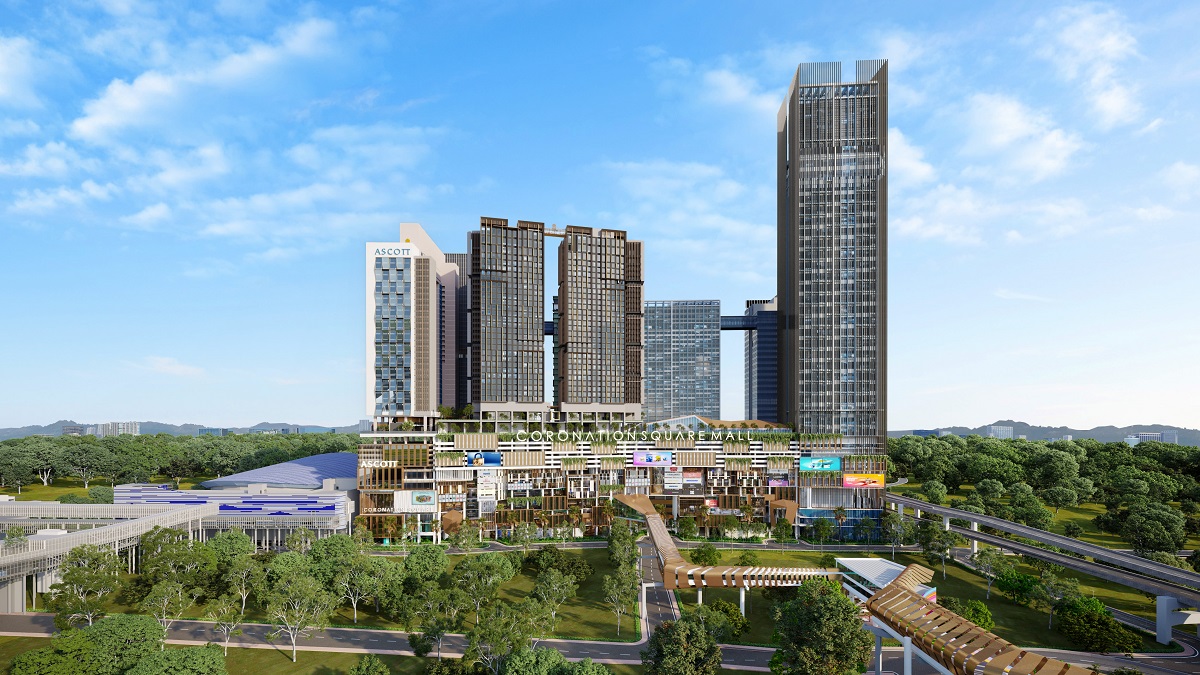
The ongoing transformation around Bukit Chagar is further underscored by the planned hospitality component of Coronation Square, an integrated development by Coronade Properties Sdn Bhd within the Ibrahim International Business District (IIBD) of the JS-SEZ.
On Aug 8, 2025, The Ascott Ltd (Ascott), the hospitality business unit wholly owned by CapitaLand Investment Ltd, was appointed by Coronade Properties to manage the hotel component of Coronation Square.
The development is directly connected to the upcoming RTS station at Bukit Chagar and the CIQ facilities through a 210m elevated walkway.
Operating under the Ascott brand, Ascott Coronation Square JB is planned as a five-star hotel with 207 rooms in Tower 1. Scheduled to open in the second half of 2029, it is intended to serve leisure, business and long-stay travellers.
The hotel is planned to include an all-day dining restaurant, swimming pool, fitness centre, residents’ lounge and meeting rooms.
The agreement represents the first major hospitality partnership following the January 2025 JS-SEZ agreement between Malaysia and Singapore. It also marks the debut of the Ascott brand in JB and the sixth Ascott-branded property in Malaysia.
Ascott currently has more than 40 properties in Malaysia under its management umbrella, both operating and in the pipeline. This spans across brands such as Ascott, Citadines, lyf, Oakwood, Somerset, The Crest Collection, The Unlimited Collection, Fox and Harris.
Coronation Square itself is a RM5 billion integrated development and the first project to initiate the 250-acre IIBD. The 9.6-acre project comprises hotel, medical, office and residential components, together with the 1.2 million sq ft Coronation Square Mall.
Construction of the mall is scheduled to begin this year, with completion targeted for 2030.
The development will also include about 4,500 basement parking bays, including around 700 reserved for RTS users.
The planned hotel adds another dimension to the changing property landscape around the station, illustrating how improved connectivity can influence not only residential demand but also hospitality and mixed-use property concepts.
A network rather than a single growth zone
The RTS is therefore likely to have a differentiated impact across JB rather than create a uniform uplift throughout the city.
The strongest opportunities are expected around Bukit Chagar, JB Sentral and locations with efficient first- and last-mile connectivity.
Beyond these areas, the potential will depend on how effectively individual projects connect residents, workers and visitors to the transport network.
For developers, this places greater emphasis on site selection, accessibility and product relevance. For investors, rental performance, occupancy and management quality remain key considerations alongside the infrastructure itself. For authorities, the challenge in ensuring roads, utilities, public spaces and supporting services develop in step with increasing mobility.
The property implications of the RTS ultimately rest on its ability to convert improved connectivity into lasting economic and real estate market activity.
Rather than creating one continuous zone of value appreciation,the infrastructure is likely to spark a mosaic of growth nodes, with their strength determined by accessibility, job creation, amenities, infrastructure maturity, and the calibre of development.
As JB prepares for greater cross-border mobility, the distinction between being near the RTS and being effectively connected to it is likely to remain a central theme that determines how the property market responds, and how it will continue to evolve.
..........
EdgeProp monthly brings you data, insights and solutions for an evolving market. Subscribe now for your free copy!
Follow Us
Follow our channels to receive property news updates 24/7 round the clock.


Telegram


Latest publications
View AllFollow Us
Follow our channels to receive property news updates 24/7 round the clock.
Malaysia's Most
Loved Property App
The only property app you need. More than 200,000 sale/rent listings and daily property news.