Malaysia, China seal RM55 bil ECRL deal
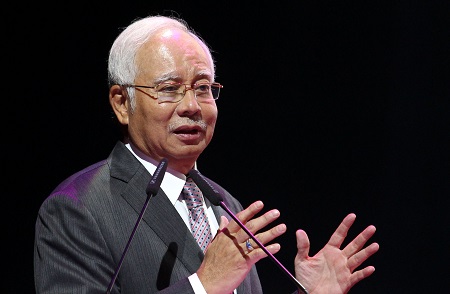 KUALA LUMPUR (Nov 2): Malaysia has secured Chinese construction expertise and financing for the proposed East Coast Rail Link (ECRL), estimated to cost RM55 million, during Prime Minister Datuk Seri Najib Razak’s week-long official visit to the republic which began yesterday.
It inked a deal to build the ECRL with China Communication Construction Co Ltd (CCCC) yesterday, with financing via soft loans from the Export-Import (Exim) Bank of China, according to New Straits Times.
The engineering, procurement, construction and commissioning agreement was signed between Malaysia Rail Link Sdn Bhd, CCCC and China Communications Construction Co (M) Sdn Bhd, as Najib and his counterpart Li Keqiang bore witness at the Great Hall of the People in Beijing, following a bilateral meeting between both countries’ delegations.
“We have discussed the broad principles [of the financing for the ECRL], but the details will come later. The Chinese have agreed to fund it through their Exim Bank, and this is [a] very good source of soft loans to Malaysia,” Najib was cited as having told Malaysian reporters after the ceremony.
The 620km ECRL is one of the high-impact projects under the 11th Malaysia Plan. The government hopes to finalise the ECRL by year-end so that construction on the project can start in early 2017, the paper wrote.
Malaysia has also agreed to buy four Chinese naval vessels and pledged with Beijing to handle South China Sea disputes bilaterally, a Chinese official said yesterday, according to Reuters. Two vessels will be built in China and two in Malaysia.
Najib has also secured China’s help — specifically the Guangxi Zhuang Automous Region of China — to boost investments into Malaysia’s East Coast Economic Region (ECER). A government-to-government memorandum of understanding (MoU)between the ECER and Guangxi government was inked yesterday when Najib was in Beijing, according to a statement from the ECER Development Council yesterday.
Under the MoU, a bilateral working group will be established to oversee the implementation of initiatives to facilitate investments, particularly in fast-growing and key industries such as advanced manufacturing, alternative and renewable energy, bio-economy, food and beverage, halal industries, tourism, shipping, information and communications technology.
“Underpinned by China’s ‘One Belt, One Road’ policy, the MoU will attract more investors from China to invest in the ECER and leverage on its strategic location, multitalented and multilingual workforce as well as its connectivity to various markets in the Asia-Pacific, Middle East and beyond. Conversely, this will also lead to more business opportunities for our local investors and entrepreneurs wishing to tap into China’s vast marketplace,” said ECER chief executive Datuk Seri Jebasingam Issace John.
This article first appeared in The Edge Financial Daily, on Nov 2, 2016. Subscribe to The Edge Financial Daily here.
Follow Us
Follow our channels to receive property news updates 24/7 round the clock.


Telegram


Latest publications
View AllFollow Us
Follow our channels to receive property news updates 24/7 round the clock.
Malaysia's Most
Loved Property App
The only property app you need. More than 200,000 sale/rent listings and daily property news.