Best Property Types for Rental Income
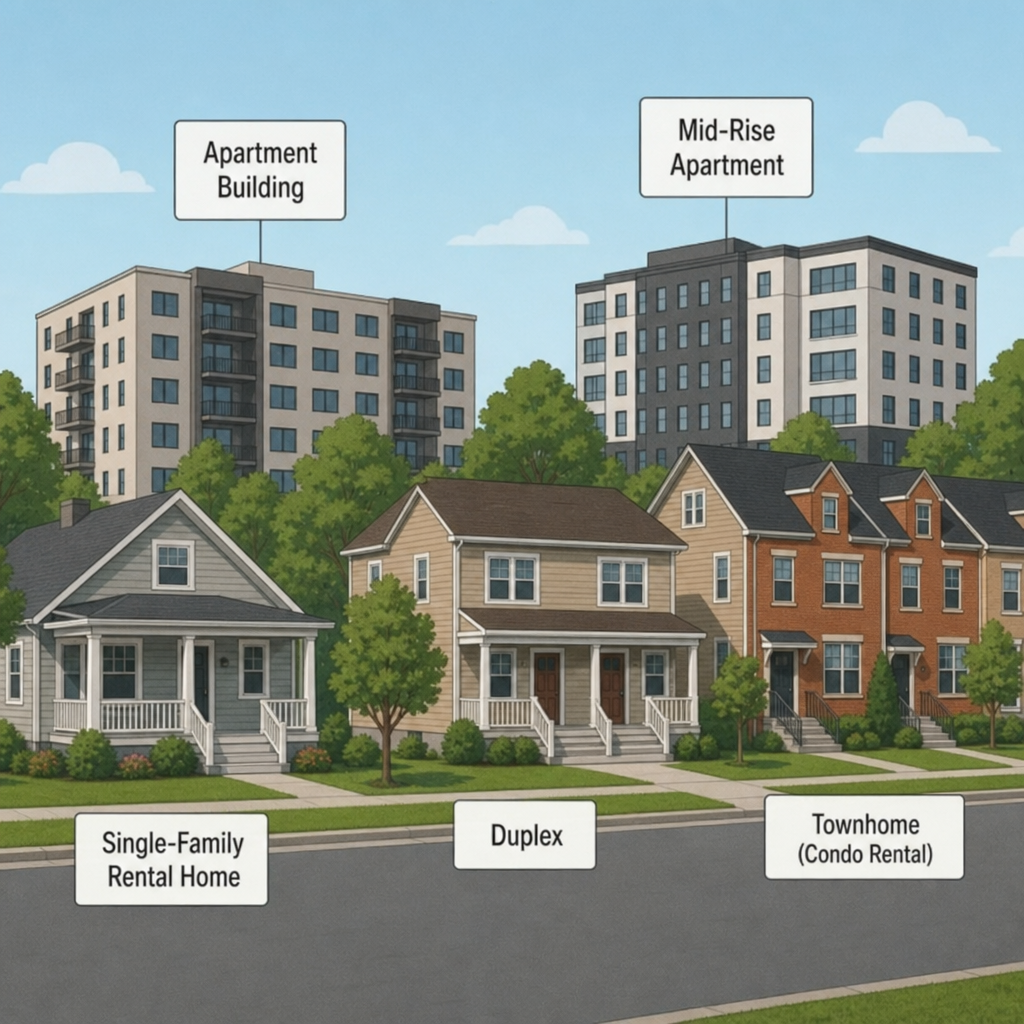
Rental income can be a practical way to build long-term wealth. But the property you buy matters just as much as the market you buy in. Some homes are easier to manage. Some bring better monthly cash flow. Others may grow in value faster.
This rental property guide covers common income-producing options and what to weigh before you buy.
What makes a property good for rental income?
A good rental property should attract steady tenants, cover its costs, and leave room for profit after expenses. It should fit local demand, be easy enough to manage, and make sense on paper before you buy. The best investment properties are not always the biggest or flashiest homes. They are the ones where rent, costs, financing, upkeep, and risk work together.
Many new investors focus on the purchase price or the expected rent. Those numbers matter, but they are only part of the picture. A property that looks cheap can turn costly if it needs constant repairs, sits empty often, or is in an area with weak demand. A modest home in a steady rental area can quietly produce real estate income for years.
Before you compare property types, look at these core points:
-
Tenant demand: Are people actively looking for this type of home in this area?
-
Cash flow potential: Can the rent really cover the mortgage, taxes, insurance, maintenance, vacancy, and management?
-
Maintenance needs: Is the property simple to care for, or does it come with frequent repair risk?
-
Financing fit: Does the property type work with your budget, loan choices, and down payment plan? In Malaysia, Bank Negara caps the margin of finance at a maximum 70% for an individual's third and subsequent simultaneous housing loan, compared with up to 90% on the first or second - factor in a larger down payment as you add properties.
-
Exit strategy: If you need to sell, will there likely be buyers for the same property, and what will Real Property Gains Tax (RPGT) take from the profit? For individual citizens/PRs, RPGT runs 30% in years 1-3, 20% in year 4, 15% in year 5, and drops to 0% from year 6; companies pay a flat 10% from year 6 (never zero); non-citizens pay a flat 30% through year 5, then 10%.
-
Management style: Do you want a hands-on rental, or do you prefer something simpler and more steady?
The right answer depends on your goals. Some investors want monthly cash flow. Others want long-term growth. Some want a low-maintenance first buy, while others are fine managing several units. Knowing those trade-offs makes it easier to choose among the best rental investments for your situation.
Single-family homes offer simplicity and broad appeal
Single-family homes are often the first rental property people consider. They are familiar, easy to understand, and attractive to many renters, including families, couples, remote workers, and people who want more privacy than an apartment can offer. For many first-time landlords, a single-family home feels like a simple step into income-generating real estate.
One big advantage is tenant stability. Renters who choose single-family homes may stay longer because moving a whole household takes effort. They may also treat the home more like their own if it has a yard, garage, storage, or access to good schools and commuter routes.
Single-family rentals can also be easier to finance and sell than more special-use properties. If you decide to exit, your buyer pool may include investors and owner-occupants. That extra flexibility can help.
Still, there are trade-offs. With only one tenant, vacancy means the property earns no rent until a new renter moves in. Repairs can also be bigger because you are responsible for the full structure, including the roof, exterior, systems, landscaping, and appliances. The numbers need to allow for those slower, more expensive months.
Single-family homes may be a strong fit if you want:
-
A straightforward first rental property
-
A property type most lenders and buyers understand
-
Longer-term tenant potential
-
A rental that may appeal to families or professionals
-
A simpler management experience than multi-unit housing
The key is not to buy with emotion. A beautiful home is not automatically a strong rental. Run the numbers as an investor, not as a future resident.
Owning multiple strata units creates built-in flexibility
In Malaysia, the closest equivalent to a US duplex or triplex isn't a property type - it's a different ownership pattern. EdgeProp's own glossary defines a Malaysian "duplex" as a double-storey unit inside a single high-rise residence, not a small multi-unit building split between tenants, and Malaysian landed homes are single-title, single-family by default. Any multi-unit residential building is legally subdivided into individual strata titles once completed, so you can't buy "a triplex" the way a US investor would, and living in one unit while renting out others under one title isn't a standard local strategy.
The realistic Malaysian equivalent is owning several separate strata units - condominium or apartment units bought individually, often across different developments to spread tenant-demand risk - rather than one multi-unit building. If one unit sits empty, your other units may still bring in income, the same underlying benefit a US duplex owner gets, just achieved a different way.
Owning multiple strata units usually needs more active management than a single landed home. More units mean more leases, more tenant questions, and more turnover to track. You will also want to budget for each building's Management Corporation (MC) or Joint Management Body (JMB) fees and rules, since these vary unit to unit and development to development.
The financing path also changes as you scale: Bank Negara Malaysia caps the margin of finance at a maximum 70% for an individual borrower's third and subsequent simultaneous outstanding housing loans, compared with up to 90% on the first or second, so budget for a larger down payment on each additional property.
A small multiunit property may be worth considering when:
-
You want more than one income stream from one purchase
-
You are comfortable with more tenant communication
-
The local area has strong demand for smaller rental units
-
You want to owner-occupy one unit and rent the others
-
You are ready to budget for shared upkeep and turnover
For many investors, small multiunit housing sits in a useful middle ground: more income potential than a single-family home, but less work than a large apartment building.
Are condos good rental investments?
Condos can be good rental investments when the location is strong, the Management Corporation (MC) or Joint Management Body (JMB) is well run, and the rental rules support your plan. They often appeal to renters who want convenience, security, amenities, and close access to work, shopping, transit, or entertainment. However, condo fees, rules, and special assessments can change the numbers fast.
The biggest benefit of a condo is convenience. Exterior upkeep, landscaping, shared amenities, and some building repairs are often handled by the Management Corporation or Joint Management Body. That can make ownership feel simpler, especially for investors who do not want to manage a yard, roof, or outside repairs themselves.
Condos can work well in urban neighborhoods, resort areas, college towns, and walkable districts where renters care more about location than square footage. A well-located condo may rent quickly if it offers useful features such as parking, in-unit laundry, security, or easy access to public transit.
The challenge is control. You may be limited by rental caps, minimum lease terms, pet rules, move-in fees, or approval steps. MC/JMB maintenance fees and sinking fund contributions can rise, and special assessments can show up with little warning. Those costs must be part of your analysis from day one.
Before buying a condo as a rental, review:
-
The MC/JMB's rental policy - including any short-term-letting restrictions, since a Malaysian MC/JMB can validly ban Airbnb-style letting outright through its own house rules, as the Federal Court confirmed in Innab Salil & Ors v Verve Suites Mont' Kiara Management Corporation [2020] 10 CLJ 285
-
Monthly fees and what they include, and whether the unit's title is residential (cheaper financing, up to 90%) or commercial (more conservative, typically 80-85%)
-
Reserve funds and signs of delayed upkeep
-
Rules around short-term rentals, pets, and parking
-
Recent or planned special assessments
-
The share of owner-occupied versus rented units
A condo can be a smart low-maintenance rental, but only when the rules and numbers support it. Never assume you can rent it freely just because you own it.
Townhomes balance space, price, and renter appeal
Townhomes often sit between condos and single-family homes. They usually offer more space and privacy than a condo, but may cost less than a detached house in the same area. For renters, that can be a strong mix: a home-like layout without the full cost of a standalone property.
From an investor's view, townhomes can offer solid rental demand in suburban and city-edge markets. They may attract young families, professionals, roommates, and renters who want bedrooms, parking, and outdoor space but do not need a big yard. If the community is near schools, job centers, parks, or transit, the tenant pool may be broad.
Maintenance duties vary. In some developments, the MC/JMB handles outside work and landscaping. In others, owners carry more of the load. That is why it is important to read the rules and know exactly what your fees cover.
Townhomes can be especially attractive when single-family homes in the area are too expensive to cash flow. They may offer a more reachable purchase price while still bringing higher rent than a small condo or apartment-style unit. That said, MC/JMB fees and rules still matter, and shared walls can lead to noise complaints if the home is not well built or well managed.
A townhome may be a good match if you want a property that feels residential and practical without taking on every duty of a detached home.
Apartment buildings can scale income faster
Larger apartment buildings are often linked with experienced investors, but they are worth understanding even if you are starting small. Apartment buildings can produce several streams of rent from one property, making them powerful income-generating real estate when managed well.
The appeal is scale, but in Malaysia this works differently than owning a whole building outright. Once a development is completed, it is legally subdivided into individual strata titles, so a retail investor's realistic path to scale is owning several separate strata units - possibly more than one within the same development - rather than buying an entire building.
Buying a whole apartment building before strata subdivision, or an older un-stratified walk-up, is realistically developer or institutional territory in Malaysia: it needs the kind of commercial financing, deep due diligence, and capital scale that few individual investors have access to. Tenant turnover, repair requests, and capital upgrades can become part of normal work.
Apartment buildings are not just bigger rentals. They are small businesses. Their value is often tied to income, expenses, occupancy, and operating results. Good management can raise returns, but poor management can hurt them fast.
Consider this property type if you:
-
Want to scale beyond one or two rental units
-
Have enough capital for reserves and repairs
-
Are comfortable reading operating statements
-
Can hire or manage reliable contractors and property managers
-
Understand local rental rules and tenant expectations
For the right investor, apartments can be among the best property types for rental income. For someone not ready, they can become overwhelming. Start with honest expectations.
Short-term rentals can earn more but require more work
Short-term rentals can generate strong income in the right market, especially in vacation spots, business areas, event-heavy cities, and places with limited hotel supply. They also offer flexibility because owners may use the property themselves at certain times. But higher income potential usually comes with more effort, stricter rules, and less steady occupancy.
Unlike long-term rentals, short-term rentals run more like hotels. Guests expect clean spaces, fast replies, comfortable furnishings, reliable Wi-Fi, easy check-in, and accurate listing photos. Turnover happens often, so cleaning, restocking, repairs, and guest support must be well organized.
Rules are a major factor in Malaysia too. Short-term/homestay-style letting is licensed under the Tourism Industry Act 1992 plus each local council's own bylaws (DBKL, MBPJ, MBSA, and others each set their own requirements), and a foreign guest also triggers the Tourism Tax (RM10 per room per night, collected and remitted by registered platforms such as Airbnb). A condo's Management Corporation or Joint Management Body can also ban short-term letting outright through its own house rules, as the Federal Court confirmed in Innab Salil & Ors v Verve Suites Mont' Kiara Management Corporation [2020] 10 CLJ 285. Because rules can change and vary by council and by building, investors should confirm local requirements before buying.
Short-term rentals may be a fit when:
-
The location has steady visitor demand
-
Local laws clearly allow the rental model
-
You can furnish and maintain the property well
-
You are ready for active guest communication
-
Your budget can handle slow seasons
The best short-term rental is not just a nice property. It is a property that works well for guests and stays profitable after cleaning, platform fees, supplies, utilities, upkeep, insurance, taxes, and vacancy.
How should you compare rental property options?
Compare rental property options by looking at the full financial picture, local tenant demand, and the amount of work each property will need. Do not choose based only on rent estimates or on what other investors say is popular. The best rental investments are the ones that match your budget, risk tolerance, management capacity, and long-term plan.
A practical comparison starts with the same basic process for every property type. That keeps you from getting pulled in by curb appeal, overdone rent projections, or pressure to move fast.
Use this checklist before making an offer:
-
Estimate realistic rent. Look at comparable rentals, not just listings. Pay attention to what actually leases.
-
List every recurring expense. Include mortgage payments, assessment tax and quit rent, insurance, MC/JMB fees, utilities you cover, management, upkeep, landscaping, and pest control.
-
Budget for vacancy. Even strong rentals can sit empty between tenants or during repairs.
-
Inspect the major systems. Roof, plumbing, electrical, heating, cooling, foundation, and drainage can change your return fast.
-
Understand local rules. Rental licenses, inspections, zoning, and lease rules can affect both cost and operations.
-
Evaluate tenant fit. Ask who is likely to rent the property and why they would pick it over other choices.
-
Plan your management approach. Decide whether you will self-manage or hire help, then include that cost either way.
-
Think about resale. A rental should make sense today, but it should also have a clear exit path.
These income property tips may sound basic, but they help prevent expensive mistakes. A property with exciting rent potential can still be a poor choice if the repairs, rules, or management burden are too heavy.
A simple way to match property type to your goals
Different investors need different strategies. Someone with limited time may prefer a newer single-family home or condo with fewer upkeep demands. Someone focused on growth may prefer small multiunit housing. Someone with hotel experience may feel comfortable with short-term rentals.
Here is a simple way to think about fit:
-
For simplicity: Single-family homes and some townhomes are often easier to understand and manage.
-
For more than one income stream: Owning several separate strata units, rather than one multi-unit building, can reduce the hit from one vacancy.
-
For lower outside upkeep: Condos and some townhouses may shift some duties to an MC/JMB.
-
For higher hands-on work: Short-term rentals may offer upside but need active operations.
-
For long-term portfolio growth: Small multiunit properties can help investors learn systems before scaling further.
It is also worth thinking about your personality. If late-night repair calls, tenant screening, and lease enforcement sound stressful, build a plan around professional management or lower-complexity properties. If you enjoy operations and problem-solving, a more active rental model may suit you.
Common mistakes to avoid
Many rental property problems begin before the purchase. Investors often fall for a property, trust numbers that are too good to be true, or miss repairs. A calm, numbers-first approach can help you avoid those traps.
Watch out for these common mistakes:
-
Ignoring hidden costs. Upkeep, vacancy, turnover, legal compliance, and management can all cut returns.
-
Assuming rent will always rise. Rent growth is never guaranteed, so the deal should work from the start.
-
Buying too far from where you can manage. Distance can make repairs, inspections, and tenant issues harder.
-
Skipping rule reviews. Condo, townhouse, and local council rules can affect whether your rental plan is allowed.
-
Missing repair costs. Older properties can be profitable, but only if you budget with care.
-
Choosing the wrong tenant profile. A property should match the needs of renters in that area.
This is where patience helps. A deal that does not work on paper rarely gets better after closing. If the numbers are thin, the property needs major work, or the rules are unclear, it may be better to keep looking.

The strongest rental strategy is realistic and repeatable
The best property types for rental income are the ones that fit both the market and the investor. Single-family homes offer simplicity. Small multiunit homes offer flexibility. Condos and townhomes can reduce some upkeep. Apartment buildings can scale income. Short-term rentals can work when the location and rules support them.
There is no single winner. A strong rental property is built on realistic rent, controlled costs, manageable upkeep, and steady demand. If you compare each option carefully and stay honest about your time, budget, and risk tolerance, you will be in a much better spot to choose rental income properties that support your goals.
Start with the numbers, then look at the lifestyle needed to own the property. When both make sense, you are much closer to finding an investment that can perform not just on closing day, but year after year.
Frequently Asked Questions
Question: What is the best rental property type for a first-time investor?
Short answer: A landed home, townhouse, or a small portfolio of strata units may be a practical starting point, depending on your goals and local market. Landed homes are often easier to understand, finance, manage, and resell. Owning a few separate strata units can provide more than one rent stream and reduce the impact of one vacancy. The best choice is the one whose rent, costs, upkeep, rules, and management needs fit your budget and skill level.
Question: Why can a property with high rent still be a poor investment?
Short answer: High rent does not always mean strong profit. A property can still deliver weak returns if it has costly repairs, high assessment tax or quit rent, rising insurance, MC/JMB fees, frequent vacancies, strict rental rules, or heavy management needs. The article stresses the full financial picture, including mortgage payments, upkeep, vacancy, management, utilities, rules, and resale value before you make an offer.
Question: Are short-term rentals better than long-term rentals for income?
Short answer: Short-term rentals can earn more in strong visitor markets, but they usually need more work and carry more uncertainty. They run more like hotels, with frequent cleaning, furnishings, guest communication, supplies, platform fees, and changing occupancy. They also depend heavily on local council rules and MC/JMB bylaws. A short-term rental may be a good fit when rules allow it, visitor demand is steady, and the owner is ready for active work.
Question: How do condos and townhomes reduce maintenance responsibilities?
Short answer: Condos and some townhouses may shift certain outside upkeep, landscaping, shared amenities, and building repairs to a Management Corporation or Joint Management Body. That can make ownership feel simpler than managing a detached home. But investors still need to review MC/JMB fees, rental limits (including short-term-letting bans), reserve funds, special assessments, pet rules, parking rules, and lease terms because those items can affect both cash flow and rental freedom.
Question: What should investors check before buying any rental property?
Short answer: Investors should estimate realistic rent, list all recurring costs, budget for vacancy, inspect major systems, review local rental rules, check tenant demand, decide how the property will be managed, and think about resale. A numbers-first approach helps avoid common mistakes like overrating rent, missing repairs, ignoring hidden costs, or buying a property that does not fit local renters.
Continue your property journey with our FREE monthly newspaper, featuring the latest market insights and expert analysis. Subscribe to claim your copy!
Disclaimer: This article is provided for general information purposes only. The Edge Property Sdn Bhd makes no representations or warranties as to the accuracy, reliability, or completeness of the information, including its fitness for any particular purpose, to the fullest extent permitted by law. While every effort has been made to ensure the information is accurate and up to date as of the time of writing, it should not be relied on as the sole basis for any financial, investment, real estate, or legal decision, nor should it replace advice from a qualified professional who can consider your personal circumstances. The Edge Property Sdn Bhd accepts no liability for decisions made based on this article.
Recommendations

Prime Location! Bukit Sekilau Shophouse For Sale | Near Stadium Kuantan City Centre
Kuantan, Pahang
RM 1,050,000
Taman Bukit Kelana
Seremban, Negeri Sembilan
RM 450,000

Nusari Aman 1, Bandar Sri Sendayan
Siliau, Negeri Sembilan
RM 290,000
TAMAN PJ PERDANA
Seremban, Negeri Sembilan
RM 5,600,000
Taman Senawang Perdana
Seremban, Negeri Sembilan
RM 680,000
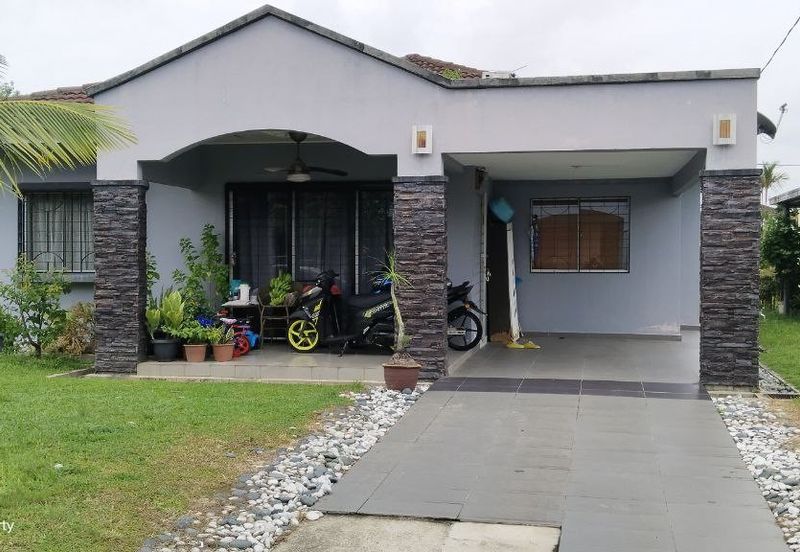
Green Street Homes Seremban 2
Seremban, Negeri Sembilan
RM 550,000
Follow Us
Follow our channels to receive property news updates 24/7 round the clock.


Telegram


Latest publications
View AllFollow Us
Follow our channels to receive property news updates 24/7 round the clock.
Malaysia's Most
Loved Property App
The only property app you need. More than 200,000 sale/rent listings and daily property news.