Share
Share

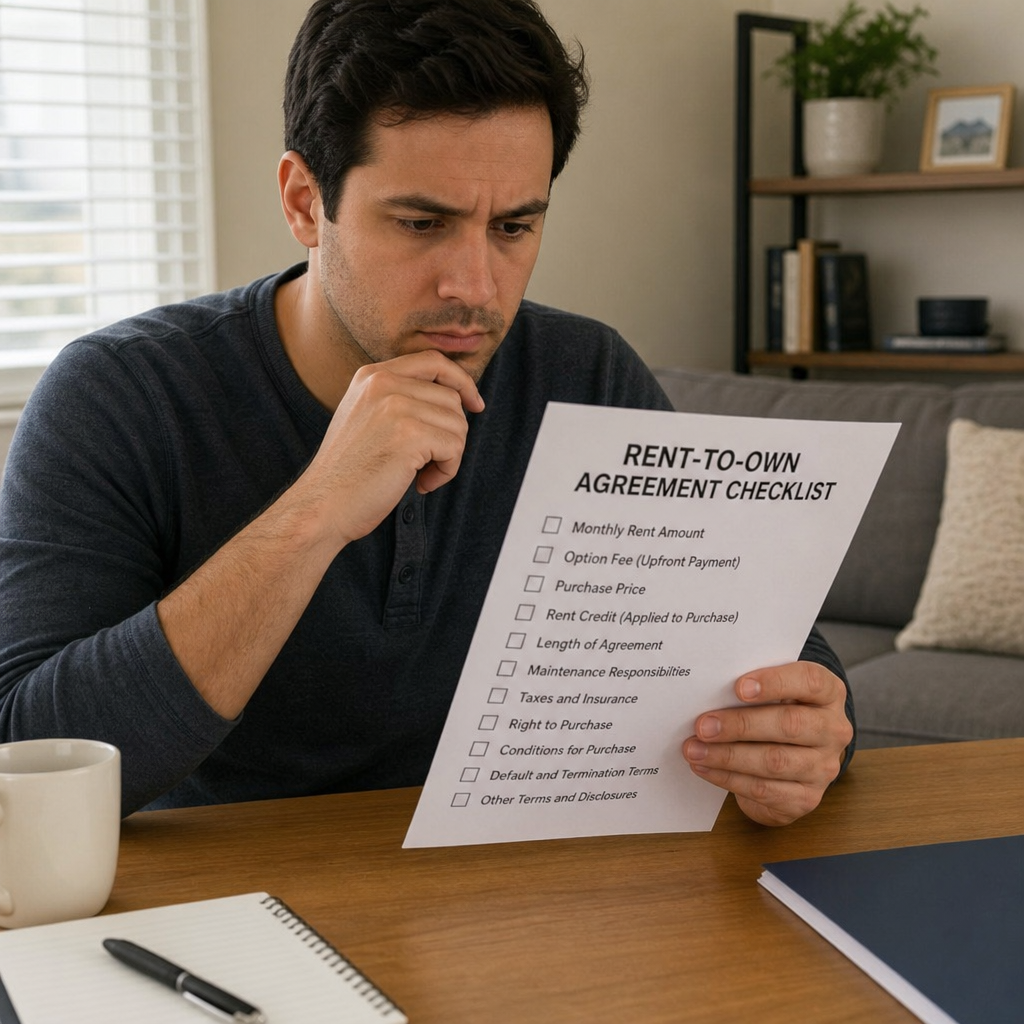
Before you sign a rent-to-own agreement, slow down and read it like a future owner, not just a renter. A good deal should spell out the price, timeline, fees, rent credits, repairs, taxes, insurance, default rules, and how ownership transfers.
A risky deal often leans on vague promises, missing papers, or pressure to sign before you understand the terms.
This rent-to-own guide focuses on homes used as residences. In Malaysia, 'rent-to-own' most often means a structured scheme run by a bank or a government housing agency, not a private deal with an individual seller. Maybank Islamic's HouzKEY, for example, uses an Islamic lease-to-own structure (Ijarah Muntahiyah Bi Tamlik) where you typically hold the property on trust for the bank from early on, with full ownership passing to you only once you have paid in full - the opposite of a deal where the seller keeps title until you finish paying. The government runs its own versions too, including KPKT's Skim Sewa Untuk Beli and a newer ijarah-based model announced under the 13th Malaysia Plan. A private, one-off rent-to-own arrangement with an individual seller is legally possible under ordinary contract law, but it is not a standard, regulated product in Malaysia - treat it as higher-risk than a bank or government scheme, and read the rest of this checklist with extra care if that is what you are being offered.
Use this rent-to-own contract checklist to spot clauses worth a close review and red flags that should make you pause, talk again, or get pro advice. This is general info, not legal advice. Rent-to-own rules vary by location, and Malaysian law firms note there is currently no standalone Malaysian legislation dedicated to rent-to-own arrangements, so buyers and sellers should think about working with an experienced Malaysian conveyancing lawyer.
1. The Exact Type of Rent-to-Own Deal
Start by naming the deal you are signing. A rent-to-own agreement may be a lease with an option to buy, a lease-purchase deal that requires you to buy later, a bank or government-run lease-to-own scheme, seller financing, or a regular lease with a separate buy option.
Clauses to check:
-
The full legal names of the buyer, seller, tenant, landlord, and any company involved
-
The property address and legal description
-
Whether buying is optional or required
-
Whether the seller keeps title until closing or until all payments are made
-
Whether the deal is one document or several linked documents
Red flags:
-
The contract mixes up a lease-option, a lease-purchase, and an outright sale agreement as if they all give you the same rights
-
The seller says, 'Don't worry about the legal wording'
-
You are told you are 'basically the owner' even though the deed has not moved yet
-
The agreement does not say what happens if you do not buy
One of the best rent-to-own tips is to define the deal before talking about monthly payments. If the structure is unclear, the rest gets harder to understand.
2. Purchase Price and Price Changes
The contract should say how the final purchase price is set. Some deals lock in a fixed price at signing. Others use an appraisal, market value, or a formula at the end of the lease.
Clauses to check:
-
The exact purchase price, if fixed
-
Any formula used to set the future price
-
Whether the price can rise because of improvements, taxes, insurance, or fees
-
Whether an appraisal is required before closing
-
What happens if the appraisal is lower than the agreed price
Red flags:
-
'Price to be determined later'
-
The seller can change the price on its own
-
You pay extra each month toward ownership, but the purchase price is not locked in
-
The contract says rent credits apply but does not say if they reduce the price, closing costs, or down payment
A rent-to-own deal can look cheap month to month and still get costly at closing. Make sure the price language is specific enough that both sides can separately calculate the same number.
3. Option Fee, Down Payment, or Upfront Consideration
Many rent-to-own contracts ask for an upfront payment. It may be called an option fee, option consideration, no-refund deposit, down payment, purchase credit, or something similar. The name matters because it can change whether you get credit for it later.
Clauses to check:
-
The amount due at signing
-
Whether the payment is refundable or no-refund
-
Whether it applies to the purchase price
-
Whether it applies only if you close on time
-
Whether it is held in escrow or paid straight to the seller
Red flags:
-
A large upfront payment with no written explanation of what it buys
-
Verbal promises that the fee 'counts toward the house' but no contract language saying so
-
The fee is lost if you are late on one rent payment
-
The seller asks for cash without a receipt
If the upfront payment is no-refund, treat it like money you may never see again unless the agreement clearly protects you.
4. Monthly Rent and Rent Credits
Rent credits are one of the biggest selling points in a rent-to-own agreement, but they are also one of the easiest things to misunderstand. A rent credit is usually the part of your monthly payment that may be credited toward the future purchase.
Clauses to check:
-
Base rent amount
-
Extra monthly amount, if any, set aside for purchase credit
-
Whether credits apply every month or only after full on-time payment
-
Whether late payment cancels that month's credit
-
Whether all built-up credits are lost if you do not purchase
Red flags:
-
The contract says 'a portion of rent goes toward ownership' without a dollar amount or percentage
-
Rent credits disappear for small technical defaults
-
Credits only apply if you use the seller's preferred lender
-
The rent is far above market, but the purchase credit is small or easy to lose
Ask for a written example showing how much credit you would have after 6 months, 12 months, and at the end of the term. If the math is confusing before you sign, it will be worse in a dispute.
5. Length of the Rental Term and Purchase Deadline
A rent-to-own deal usually gives the tenant-buyer time to improve credit, save for closing costs, or qualify for financing. The timeline should be realistic.
Clauses to check:
-
Start date and end date of the lease
-
Deadline to use the purchase option
-
How notice must be given
-
Whether the deadline can be extended
-
What happens if closing is delayed by lender, title, appraisal, or inspection issues
Red flags:
-
The purchase deadline arrives before you are really able to qualify for a mortgage
-
The contract requires written notice but does not say where or how to send it
-
Missing the deadline by one day causes you to lose all credits and fees
-
Extension terms are left to the seller's choice
One useful rent-to-own tip is to speak with a lender before signing. Ask what you need to qualify and whether the timeline gives you enough time to get there.
6. Financing Contingency
Most tenant-buyers will need a mortgage or other financing to finish the purchase. Your contract should explain what happens if you cannot qualify by the deadline.
Clauses to check:
-
Whether the deal depends on financing approval
-
Whether you must use a specific lender
-
What documents you must provide to show financing efforts
-
Whether the seller must cooperate with appraisal and lender requests
-
Whether you can cancel if financing is denied
Red flags:
-
No financing contingency at all
-
You lose every fee and credit even if the home cannot qualify for financing
-
The seller refuses appraisals, inspections, or loan repairs
-
You are required to use an unfamiliar lender without a clear reason
A rent-to-own agreement should not assume financing will appear later. Build the financing path into the deal from the start.
7. Title, Liens, and Existing Mortgage Problems
Before you commit money, confirm the seller can actually sell the property. Title problems, unpaid taxes, unpaid HOA dues, judgment liens, or an existing mortgage can block your future purchase.
Clauses to check:
-
Seller's promise to deliver clear or marketable title
-
Disclosure of existing mortgages, liens, tax debts, or HOA balances
-
Requirement for a title search before or soon after signing
-
Whether the agreement can be recorded where appropriate
-
What happens if the seller cannot deliver clear title
Red flags:
-
Seller refuses a title search
-
The property is in foreclosure, tax sale status, probate conflict, or bankruptcy without clear disclosure
-
Seller says title problems will be fixed later
-
You are paying for taxes or insurance but cannot verify that they are being paid
Start with an official land search (carian rasmi) at the Land Office to confirm who is actually the registered proprietor and whether the property already carries a charge (mortgage) or caveat. Also get legal advice on whether a private caveat can protect your interest at your current stage of the deal: Malaysia's Federal Court has held that an option to purchase that has not yet been exercised is generally not a caveatable interest, so you may have less protection than you think until you formally exercise the option and sign a proper sale and purchase agreement. Buyers have also lost money when a seller collected money for taxes or insurance but did not pay the bills, leaving the buyer facing penalties later.
8. Property Taxes and Insurance
The agreement should say who pays property taxes, homeowner's insurance, renter's insurance, HOA dues, assessments, and special charges. Do not assume these costs are in the rent. Note that quit rent (cukai tanah) and local council assessment (cukai taksiran) are statutory debts tied to the registered proprietor under Malaysian law - even if your agreement says you pay them, the authorities can still pursue the title-holder directly if they go unpaid, so ask for proof that they are actually being paid, not just a promise that you are covering the cost.
Clauses to check:
-
Who pays property taxes during the lease term
-
Who keeps homeowner's insurance in force
-
Whether you must carry renter's insurance or liability coverage
-
Whether tax or insurance increases can raise your monthly payment
-
How you can verify that taxes and insurance are current
Red flags:
-
You are responsible for taxes but receive no tax bills or proof of payment
-
The seller's insurance does not cover your things
-
The contract makes you responsible for casualty losses without explaining insurance coverage
-
The home is uninsured, underinsured, or in a high-risk area without clear cost disclosure
For extra protection, ask for copies of tax records, insurance papers, and HOA statements before signing.
9. Repairs, Maintenance, and Livability
Repairs are a major source of rent-to-own disputes. Regular renters often expect landlords to handle major repairs. Future buyers may be asked to take on more duty. The contract should clearly split those jobs.
Clauses to check:
-
Who handles routine maintenance
-
Who pays for major systems like roof, HVAC, plumbing, electrical, foundation, and appliances
-
Whether the seller must make promised repairs before move-in
-
Whether you need written approval for changes
-
Whether improvement costs are credited toward purchase
Red flags:
-
You must pay for major repairs before you own the home
-
The seller promises repairs by word of mouth but leaves them out of the contract
-
You improve the property but lose the value if the deal does not close
-
The agreement shifts all duty to you while the seller keeps title
Look closely at details such as unpaid property taxes and promised fixes that are never made after signing, and always check who pays for repairs if something breaks before you rely on a verbal promise.
10. Inspection Rights and Property Condition
Never rely only on a walk-through. A professional inspection can uncover safety issues, repair costs, and problems that may affect financing.
Clauses to check:
-
Right to inspect before signing or within a set review period
-
Right to cancel based on inspection findings
-
Seller disclosure duties
-
Who pays for inspections
-
What repairs must be finished before closing
Red flags:
-
Seller discourages inspections
-
You are told the property is sold as is but still must pay for major repairs during the rental period
-
The agreement requires you to buy regardless of inspection results
-
The home has unpermitted additions, code issues, or clear structural concerns
A home can be fine as a rental but still fail your lender's standards later. Make inspection part of your decision, not an afterthought.
11. Default Rules and Cure Periods
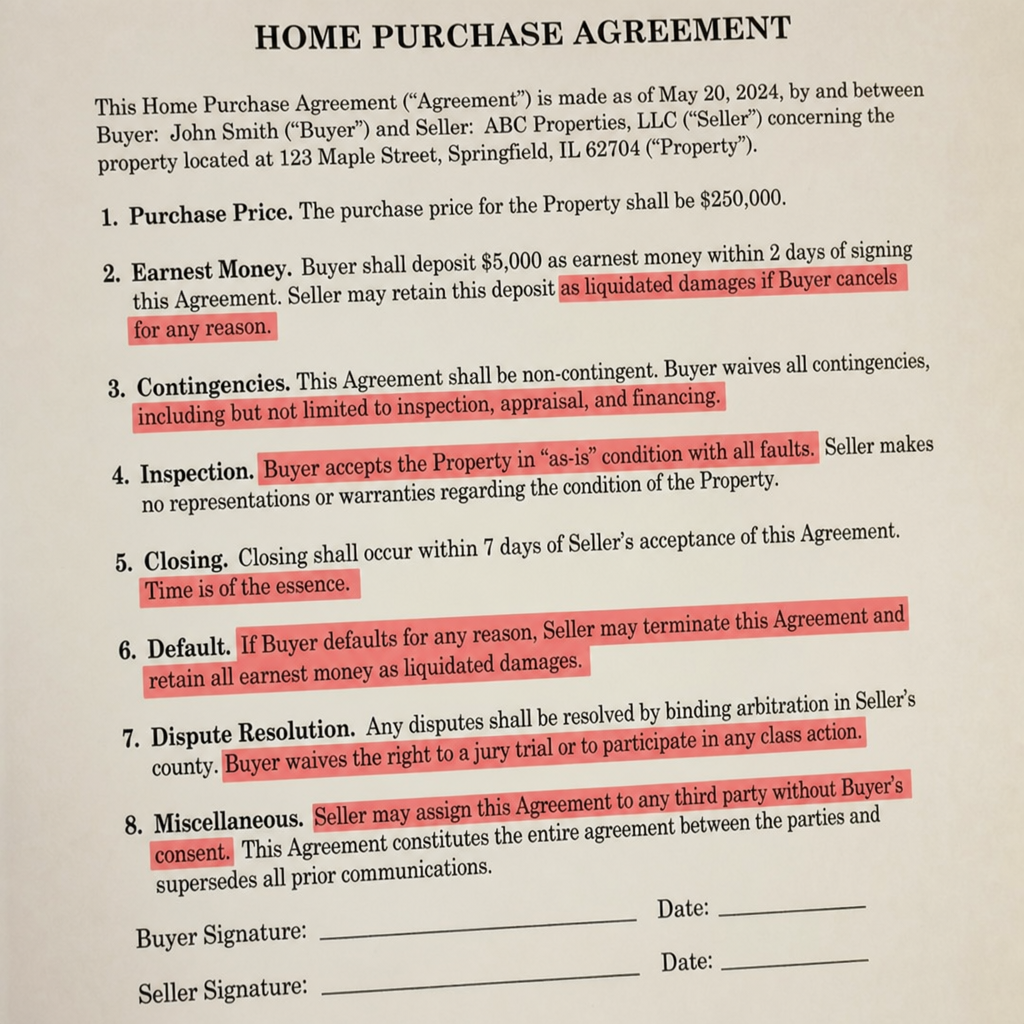
The default section explains what happens if someone breaks the deal. Read it closely because harsh rent-to-own terms often hide here.
Clauses to check:
-
What counts as tenant-buyer default
-
What counts as seller default
-
Whether you receive written notice before penalties apply
-
How long you have to fix a missed payment or other issue
-
Whether one default wipes out all purchase rights
Red flags:
-
One late payment cancels your option to buy
-
The seller keeps all upfront fees, rent credits, and improvements after a small default
-
The seller has broad default rights while your remedies are narrow
-
The contract allows immediate lockout or self-help eviction
Balanced default terms should give both sides clear notice, enough time to fix the problem, and fair results. Under Malaysia's Contracts Act 1950, a clause that lets the seller keep everything you have paid after a small default is not automatically enforceable as written - the courts can limit forfeiture to what is reasonable compensation for the actual loss, so a harsh all-or-nothing clause is worth challenging with a lawyer rather than simply accepted.
12. Eviction, Foreclosure, and Loss of Equity
Under Malaysian law, taking back occupied residential property always requires a court order, no matter how the deal is labelled - a landlord or seller cannot lawfully change the locks, cut the utilities, or remove your belongings without going to court first (this is sometimes called 'self-help eviction,' and it is illegal in Malaysia). What is genuinely unsettled is how a rent-to-own deal gets characterised if it turns into a dispute: whether you are treated as a tenant facing an ordinary possession claim, or as a purchaser under a terminated sale facing rescission and forfeiture rules. No Malaysian court has ruled on this specifically for rent-to-own deals, so it is worth asking a lawyer how your particular contract is likely to be characterised before you sign, not after a dispute starts.
Clauses to check:
-
What legal process applies if you default
-
Whether you can recover any credits or equity
-
Whether the seller can end the purchase option apart from the lease
-
Whether disputes must go to court, arbitration, or mediation
-
Whether attorney fees are one-sided or mutual
Red flags:
-
The contract says you waive important legal rights without explaining them
-
The seller can remove you without court process
-
All payments are labeled rent even though you are also paying toward ownership
-
You must pay the seller's attorney fees no matter who wins
Contracts can include terms that look final but are not fully enforceable under Malaysian law - for example, a clause that tries to exclude a party from all legal remedies, or a forfeiture clause with no link to actual loss, can both be challenged in court. Do not assume a harshly worded clause is automatically valid just because you signed it; ask a lawyer to review it.
13. Recording the Agreement
In Malaysia, the closest tool to protecting your interest with a public record is a private caveat lodged at the Land Office under the National Land Code. However, this is more limited than it sounds: Malaysia's Federal Court has held that an option to purchase that you have not yet exercised is generally not a 'caveatable interest,' so a caveat may not be available to you until you exercise the option and have a signed sale and purchase agreement - and even then, a caveat can lapse or be challenged. This is a genuine legal grey area for rent-to-own deals, so ask a local lawyer what protection, if any, you actually have at your stage of the deal before relying on it.
Clauses to check:
-
Whether and when a private caveat can realistically be lodged to protect your interest
-
Who pays recording costs
-
Whether recording violates any existing mortgage terms
-
Whether the seller must help you complete the statutory declaration needed to lodge a caveat
-
What happens if the seller sells or refinances the property during the term
Red flags:
-
Seller refuses to let a lawyer even check whether a caveat can be lodged
-
The contract lets the seller sell the property to someone else without protecting your option
-
The seller has an existing mortgage and has not checked whether the rent-to-own structure is allowed
-
You cannot verify who owns the property
Recording is not always simple, but you should not ignore the topic.
14. Closing Costs and Final Purchase Process
The contract should describe what happens when you are ready to buy. Without a clear closing process, the seller may delay, add costs, or dispute credits. Budget for stamp duty on the transfer, and check the timing of any first-time-buyer stamp duty exemption you are counting on: it applies when the transfer actually completes, not when you sign the rent-to-own agreement, so a multi-year deal can run past the exemption's deadline before you get to use it.
Clauses to check:
-
Who picks the conveyancing lawyer or stakeholder to hold the funds and handle the transfer
-
Who pays transfer taxes, recording fees, title insurance, escrow fees, and lender costs
-
How rent credits and option fees appear on the closing statement
-
What documents the seller must sign
-
What happens if closing is delayed through no fault of the buyer
Red flags:
-
Buyer pays all costs without listing possible costs
-
Seller can refuse to close after you meet the requirements
-
Credits are not shown on the final settlement statement
-
Seller adds new fees at closing that were not in the agreement
A strong rent-to-own agreement should connect the rental period to a real closing plan.
15. Seller Promises and Oral Agreements
If a promise matters, put it in writing. Rent-to-own deals often start with friendly talks, but disputes are decided by documents. Also make sure any written agreement gets properly stamped: under the Stamp Act 1949, an unstamped agreement is not void, but it cannot be used as evidence in court until it is stamped and any penalty is paid.
Clauses to check:
-
Entire agreement clause
-
Written repair promises
-
Move-in condition notes
-
Seller concessions
-
Any side agreements or addenda
Red flags:
-
We do not need to write that down
-
Important details appear only in text messages
-
The written contract contradicts what the seller told you
-
Blank spaces are left to fill in after signing
Before signing, read the contract as if every verbal promise will be forgotten. If it is not written clearly, it may be hard to enforce.
16. Your Exit Options
Not every rent-to-own deal ends in a purchase. Your agreement should explain what happens if you move out, cannot get financing, change your mind, or find a serious issue.
Clauses to check:
-
Whether you can end early
-
Required notice period
-
Refund rules for option fee or credits
-
Move-out condition requirements
-
Whether you owe extra penalties
Red flags:
-
No practical way to exit except losing everything
-
Early ending triggers excessive fees
-
The seller can end the deal easily, but you cannot
-
You remain responsible for the property after moving out
A fair contract should make the cost of leaving clear before you enter.
17. Professional Review Before Signing
A rent-to-own agreement mixes rental, financing, and purchase issues. That is why a professional review is worth thinking about before money changes hands.
People who may help:
-
A local real estate lawyer
-
The National House Buyers Association (HBA) for consumer guidance
-
A mortgage lender
-
A conveyancing lawyer to handle the transfer
-
A licensed home inspector
-
A tax pro, if credits, deductions, or ownership timing are unclear
In Malaysia, the National House Buyers Association (HBA) is a consumer advocacy group that can point buyers toward practical guidance on housing issues, and the Malaysian Bar's legal directory can help you find a lawyer. That kind of guidance can be very useful before entering a nonstandard path to ownership.
Quick Red-Flag Summary
Walk away or get professional advice before signing if you see any of these warning signs:
-
The seller pressures you to sign right away
-
The purchase price is missing or can change at the seller's choice
-
Upfront fees are large and no-refund
-
Rent credits are vague or easy to lose
-
The seller refuses inspection, title review, or lawyer review
-
You must make major repairs before you own the home
-
The property has tax, lien, foreclosure, or ownership problems, or you have not been shown a recent official land search (carian rasmi) confirming who actually owns it
-
Default terms favor the seller only
-
The contract says you waive rights you do not understand
-
Important promises are spoken, not written
Final Rent-to-Own Tips Before You Commit
A rent-to-own deal can help when it gives you time to prepare for ownership and clearly protects the money you put in. But it can also get expensive if the contract is vague, one-sided, or built around penalties.
Before you sign, read every clause, check every number, and ask one simple question: If this deal does not close, what do I lose? If the answer is unclear, keep negotiating. The best rent-to-own guide is not a shortcut around due diligence. It is a reminder to treat the deal like both a lease and a future home purchase, because that is exactly what is at stake.
Continue your property journey with our FREE monthly newspaper, featuring the latest market insights and expert analysis. Subscribe to claim your copy!
Disclaimer: This article is provided for general information purposes only. The Edge Property Sdn Bhd makes no representations or warranties as to the accuracy, reliability, or completeness of the information, including its fitness for any particular purpose, to the fullest extent permitted by law. While every effort has been made to ensure the information is accurate and up to date as of the time of writing, it should not be relied on as the sole basis for any financial, investment, real estate, or legal decision, nor should it replace advice from a qualified professional who can consider your personal circumstances. The Edge Property Sdn Bhd accepts no liability for decisions made based on this article.