Share
Share

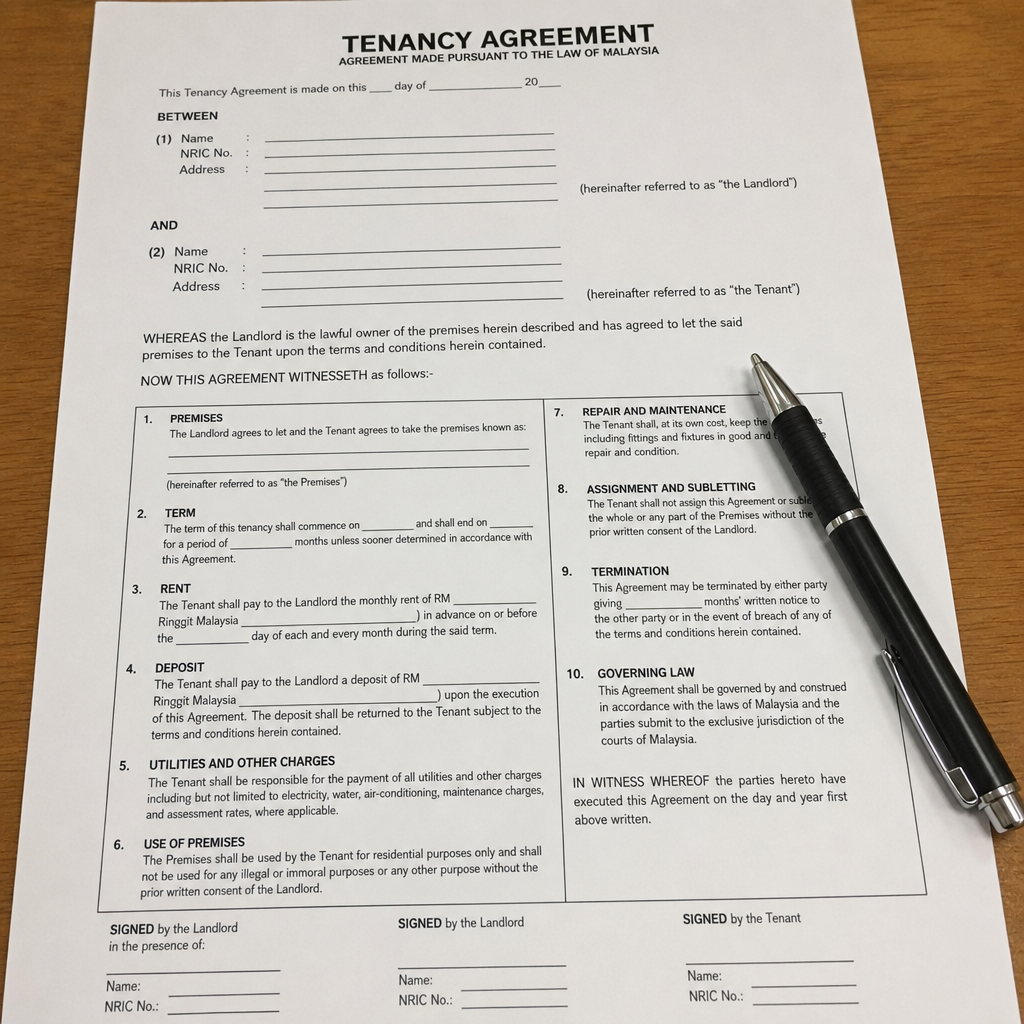
Welcome to the complete guide to Tenancy Agreements Malaysia. Whether you are a first-time landlord or a tenant looking for a home, the property rental market in Malaysia can feel hard to handle. A strong rental contract protects your rights, clears up money issues, and keeps both sides calm.
In this guide, we cover how to create, sign, stamp, and enforce a rental contract. If you want clear steps and fewer surprises, this will help.
The Legal Landscape of Renting
Malaysia does not have one nationwide Residential Tenancy Act. Most rentals fall under the Contracts Act 1950. That means the written agreement is the main rule set.
You may wonder if a handwritten rental agreement is valid. Yes, it can be, if both sides agree to the terms and sign it. But a handwritten paper can be vague, easy to lose, and very hard to enforce in court if a serious dispute starts.
Today, digital tools are changing the real estate industry. If you are comparing digital signing and physical stamping, the key point is simple: digital signatures are valid under the Digital Signature Act 1997. Even so, a rental document must still be stamped by LHDN if you want it to be usable as evidence in a Malaysian court. The stamp is what gives the paper real legal force.
Essential Clauses You Cannot Ignore
Drafting a contract from scratch or checking a template? Every rental agreement should clearly state:
-
The exact monthly rent and payment due date.
-
The lease length and any renewal options.
-
The allowed use of the property, such as living only and no illegal activity.
-
The upkeep duties for minor wear and tear and major structural repairs.
If you are an international worker moving to Malaysia, pay close attention to the diplomatic clause for expat renters. This useful clause lets an expat end the lease early without heavy penalties if they are moved without warning to another country by their employer, or if they lose their Malaysian work pass. Usually, it can be used after a minimum stay period, such as 12 months, with two months' written notice and proof of relocation.
It is also vital to separate residential and commercial tenancy terms. Residential agreements focus on safe living, the tenant's right to quiet enjoyment, and clear limits on sub-letting or using the home for business. Commercial tenancy terms are much more complex. They often include shop lot renovation rules, local council signage approval, business public liability insurance, and different upkeep duties for heavy commercial systems. Never use a home template for a commercial shop lot. That is a fast path to legal trouble.
Deposits and the Handover Process
Let's talk about the money paid before move-in. It is important to understand the difference between a security deposit and a utility deposit refund.
The security deposit is usually equal to two months of rent. It protects the landlord against unpaid rent, sudden abandonment, or major damage caused by the tenant. The utility deposit is usually equal to half a month's rent. It covers any unpaid water, electricity, or sewerage bills left at the end of the tenancy. Both deposits are refundable at the end of the lease if there is no breach of contract. Landlords cannot randomly deduct money from these deposits to pay for normal wear and tear.
To make the deposit refund smooth and fair, you need a detailed inventory list for property handover. This is an itemized checklist that covers every piece of furniture, every appliance, and the general condition of the property on day one. The landlord and tenant should walk through the property together, take time-stamped digital photos, and sign the list. When move-out day comes, that inventory helps prevent arguments over old scratches, broken items, or an air conditioner that was not working at the start.

Crunching the Numbers: Stamp Duty and Legal Fees
One of the most common questions is: how much is tenancy agreement stamp duty? Stamp duty is a government tax on legal documents, and in Malaysia it is based on your annual rent. The calculation is simple once you know the formula.
For a one-year lease:
-
Add up the annual rent.
-
Divide the annual rent by 250 (rounding up any part of RM250).
-
Multiply that number by RM1 for a lease of one year or less (the minimum stamp duty is RM10).
For example:
-
RM1,500 a month means RM18,000 a year.
-
RM18,000 / 250 = 72 (rounding up any part of RM250).
-
72 x RM1 = RM72 stamp duty for a one-year tenancy.
For a lease of more than one year up to three years, use RM3 for every RM250 of annual rent instead of RM1. For more than three years up to five years, use RM5, and for terms beyond five years, use RM7 - every tenancy agreement still carries a minimum stamp duty of RM10, however the calculation works out.
Alongside stamp duty, you may also need to calculate legal fees if you hire a lawyer or a licensed property agent to draft the contract. In Malaysia, fees for drafting tenancy agreements follow the Solicitors' Remuneration Order 2023, tiered by monthly (not annual) rent: 30% of the monthly rent, subject to a minimum fee of RM500, where the monthly rent is RM10,000 or below; 15% to 25% of the monthly rent where it exceeds RM10,000. Both are subject to 6% SST on top. You can draft the document yourself to save money, but a small legal fee can help keep the terms tight and checked.
Once the document is signed and the fees are paid, you need to know how to register tenancy agreement at LHDN. Luckily, you no longer need to wait in long queues at government offices. Since 1 January 2026, this is done through e-Duti Setem, a new service inside LHDN's MyTax portal, replacing the old STAMPS portal which closed on 31 December 2025. You will need a Tax Identification Number (TIN) to log in; from there, you fill in the rental details, submit the form online, and pay the stamp duty via FPX online banking. Once the payment clears, you will receive an electronic stamp certificate. Print it and attach it to your physical tenancy agreements Malaysia.
Rights, Responsibilities, and Rule Breaking
A good rental deal comes down to the duty of care for both parties. When it comes to tenant rights in Malaysia, the landlord must provide a basically safe, liveable property and respect the tenant's legal right to quiet enjoyment. That means no surprise visits. The landlord is also responsible for major structural repairs, such as a leaking roof, a broken water heater, or faulty internal piping. For a clearer understanding of what landlords and tenants are legally responsible for, see our guide to [10 Rights and Responsibilities of Landlords and Tenants Under Malaysian Law].
The tenant must pay rent on time, keep the property reasonably clean, and handle minor everyday maintenance. That includes simple jobs like changing burnt-out lightbulbs, cleaning air-conditioner filters, and making sure drains do not clog from daily use.
What if you need to move out early? Read the early termination clause in your contract very carefully. Standard Malaysian agreements usually say that if a tenant breaks the lease before the end date, they lose the security deposit. Some stricter contracts may also claim the remaining rent for the unexpired term. Courts usually expect landlords to limit their losses by looking for a replacement tenant. If you are an expat, ask for a diplomatic clause that is available after a minimum period. Always try to agree on a fair exit clause if your future living plans are uncertain.

Managing Disputes Like a Pro
Even the best tenancy agreements Malaysia can still lead to disputes. When that happens, tenant disputes without a lawyer should still start with calm, written communication. Court action is costly, stressful, and slow.
Start with open, calm, and documented communication. If the issue is late rent because of a sudden job loss, or a fight over who pays for a broken washing machine, try to reach a fair solution. Keep everything in email or a messaging app like WhatsApp so there is a clear written record. Mediation services and local community tribunals can also help with small financial disputes without a court case.
If a tenant refuses to pay rent for several months and will not move out, landlords may have legal recourse. Under the Distress Act 1951, a landlord can apply to the court for a writ of distress. This lets a court-appointed bailiff enter the rented home, seize movable goods such as TVs, sofas, and electronics, and auction them to recover up to 12 months of unpaid rent arrears.
It is also important to remember that landlords cannot take the law into their own hands. Do not change the front door locks, chain the gates, or cut water and electricity without a court order. Self-help is illegal and can lead to claims against the landlord.
Conclusion
Navigating the complex world of Tenancy Agreements Malaysia does not have to be a headache. If you understand the legal rules, stamp the document with LHDN, and include key protections like the diplomatic clause and a full inventory list, you build a much safer rental deal.
A careful contract sets clear duties for both sides and helps prevent future disputes. Whether you are sorting out a security deposit refund or working out stamp duty, a little planning goes a long way. Take time to read, understand, and negotiate your rental agreement with care. Happy renting, and may your next property journey in Malaysia be smooth, secure, and stress-free!
Frequently Asked Questions
Question: Is a handwritten tenancy agreement valid in Malaysia, and what makes it enforceable?
Short answer: Yes. Under the Contracts Act 1950, a tenancy is binding if both landlord and tenant agree to the terms and sign it, even if it is handwritten. But handwritten agreements are risky because they can be vague, easy to misplace, and hard to enforce. Whether you sign on paper or use a digital signature under the Digital Signature Act 1997, the agreement still needs LHDN stamping to be usable as evidence in court. Clear, detailed, and properly stamped documents offer the best protection.
Question: How do I calculate and pay stamp duty, and do I need a lawyer to draft the agreement?
Short answer: For a one-year lease, stamp duty is the annual rent divided by 250 (rounding up any part of RM250), multiplied by RM1, subject to a minimum of RM10. Example: RM1,500 a month = RM18,000 a year; RM18,000 / 250 = 72; 72 x RM1 = RM72. Use RM3 per RM250 instead of RM1 for terms of more than one to three years, RM5 for more than three to five years, and RM7 beyond five years. Since 1 January 2026, you pay and register through e-Duti Setem on LHDN's MyTax portal (which replaced the old STAMPS portal): log in with your Tax Identification Number, enter the tenancy details, submit, pay via FPX, then keep the electronic stamp certificate you receive. Legal fees, if you use a lawyer or agent, follow the Solicitors' Remuneration Order 2023: 30% of the monthly rent (minimum RM500) where monthly rent is RM10,000 or below, and 15% to 25% of the monthly rent where it's higher, plus 6% SST. You can self-draft, but a professional review helps keep the terms airtight.
Question: Which clauses are essential, and what special terms apply to expats or commercial rentals?
Short answer: Every tenancy should clearly cover:
-
Monthly rent and due date
-
Lease length and renewal options
-
Allowed use, such as residential only and no illegal activity
-
Upkeep duties, including minor vs major repairs
Expats should ask for a diplomatic clause that lets them end the lease early if they are moved or lose their work pass. It is usually available after a minimum period, such as 12 months, with two months' written notice and proof. Never use a residential template for a shop lot. Commercial tenancies often include renovation approvals, signage rules, public liability insurance, and different duties for heavy utilities.
Question: What deposits are standard, and what can be deducted at the end of the tenancy?
Short answer: Common practice is a security deposit equal to two months of rent, which covers unpaid rent, major damage, or abandonment, and a utility deposit equal to half a month's rent, which covers unpaid water, electric, or sewerage bills. Both are refundable if there is no breach. Landlords cannot deduct for normal wear and tear. To avoid disputes, complete a detailed signed inventory list at handover and take time-stamped photos of furniture, appliances, and condition on day one.
Question: What happens if I need to end the tenancy early, and how are serious disputes handled?
Short answer: Most Malaysian agreements require tenants who end a lease early to lose the security deposit. Some stricter contracts may also claim the remaining rent for the unexpired term. Courts usually expect landlords to limit their loss by seeking a replacement tenant, so negotiate fair exit terms early. For disputes, begin with calm, documented communication by email or WhatsApp and consider mediation. If rent stays unpaid for months and the tenant refuses to leave, landlords can apply for a writ of distress under the Distress Act 1951 to seize and auction movable goods for up to 12 months of arrears. Landlords must not change locks, chain gates, or cut utilities without a court order, because self-help is illegal.
Continue your property journey with our FREE monthly newspaper, featuring the latest market insights and expert analysis. Subscribe to claim your copy!
Disclaimer: This article is provided for general information purposes only. The Edge Property Sdn Bhd makes no representations or warranties as to the accuracy, reliability, or completeness of the information, including its fitness for any particular purpose, to the fullest extent permitted by law. While every effort has been made to ensure the information is accurate and up to date as of the time of writing, it should not be relied on as the sole basis for any financial, investment, real estate, or legal decision, nor should it replace advice from a qualified professional who can consider your personal circumstances. The Edge Property Sdn Bhd accepts no liability for decisions made based on this article.